



INTERVIEW – Gregory Lang, on working with Gorzo: A free jazz ensemble with the potential to travel internationally
Gregory Lang, co-curator of Dumitru Gorzo’s exhibition “Vrea cineva să fie eu?” at MARe/ Museum of Recent Art in Bucharest, talks in a curatorial interview about how he collaborated with the artist, the impression left by his art and the Romanian contemporary scene, the “rare” freedom he found in Bucharest.
Dumitru Gorzo is the first Romanian artist to have a solo show at MARe, this is also the first exhibition to occupy both the interior and exterior of the museum, with new works specially created. “Does Anyone Want to Be Me?”, curated by Gregory Lang with Dan Popescu, is on view through January 18, 2026.
Gregory Lang is a French independent curator and consultant with more than 30 years of experience in the field of contemporary art, working with both institutions and private collections. In 2008, he founded Solang Production Paris Brussels, which promotes and develops projects connecting artists, the art scene and the art market.
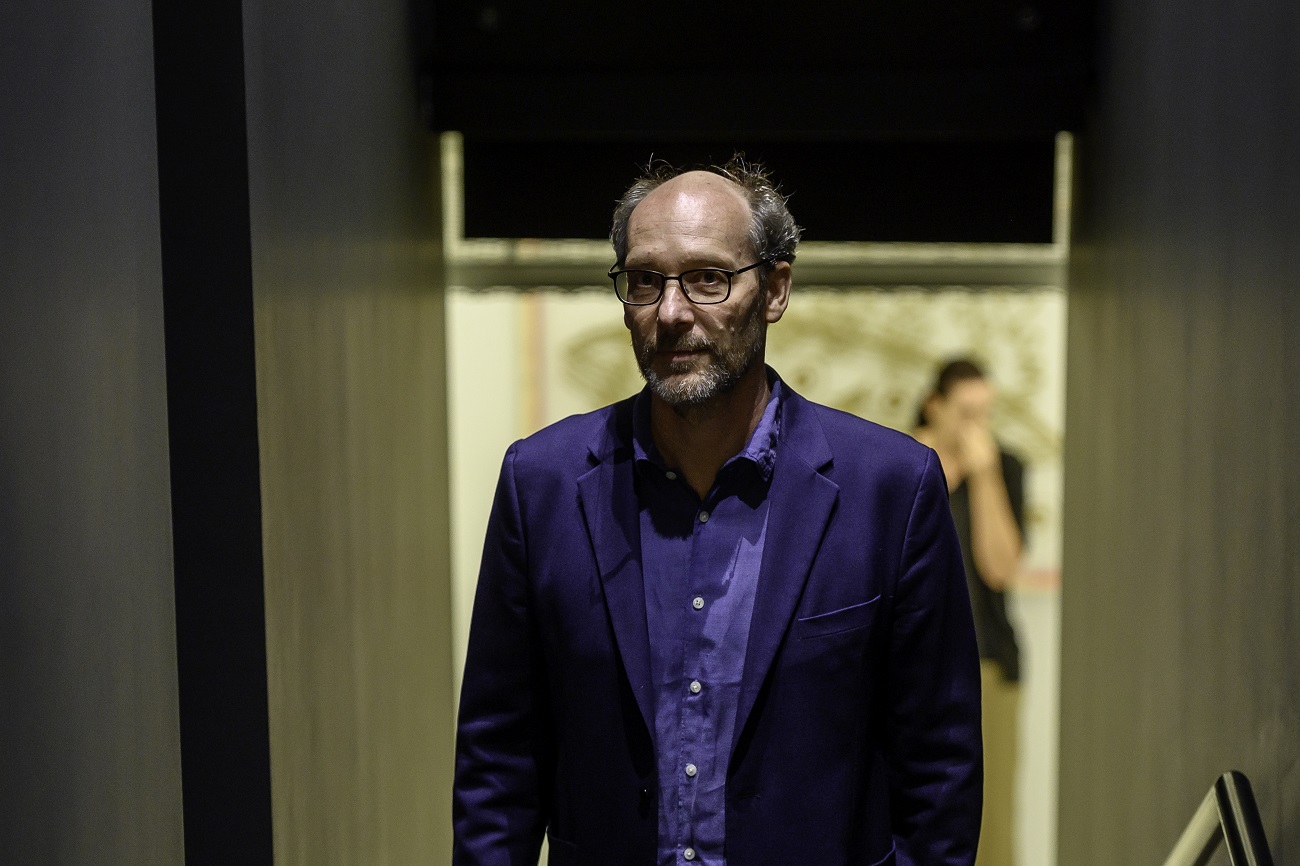
Gregory Lang
What led you to collaborate with Dumitru Gorzo and organize an exhibition in Bucharest?
Gregory Lang: I was invited as curator for my minimalist and sensitive approach, rooted in the history of conceptual art, which focuses on the artistic process and the economy of attention. I usually like to create a context dedicated to both the physical and mental experience of artworks, especially in relation to architecture.
I got in touch with the Romanian art scene internationally through galleries at art fairs, biennials, a recent visit to the Timișoara Biennial and European exhibitions of Ami Barak in France and Mihnea Mircan in Belgium, for example, as well as historical artists and some contemporary artists I met along the way, like Ana Lupaș, whom I invited to a triennial in Dunkirk, France.
I actually came to Bucharest in the winter to see an exhibition showcasing some of MARe’s remarkable international collection and to explore the dynamic local art scene.
Curating an exhibition with Gorzo was presented by the museum’s board as a challenge: collaborating with MARe, an artistic and aesthetic universe unknown to me, and with a co-curator, Dan Popescu, whom I met only once, briefly, at Arco Madrid, together with Roger Akoury. Although initially hesitant, curiosity and human connection drew me to Gorzo’s work.
When and how did you discover Gorzo’s art and what was your first impression? What impressed you? Has your perception changed over time?
Gregory Lang: I first discovered Gorzo’s work through the images in the catalog – in particular his use of traditional wooden beams and, especially, the architectural installation “Gheorghe” in the house built by the artist’s grandfather, which he began to deconstruct in three days and rebuild in three days in front of MNAC, Bucharest, in 2019, as a performative act of self-exposure and self-engagement that I could more easily identify with in my practice.
Two site-specific projects also caught my eye: one with 194 small paintings on the windows of the Universal department store in the industrial town of Resita in 2022, and another, a wall drawing, at SAC – Spațiul de Arte Contemporană, Bucharest, in 2018. His work struck me as singular, different from anything I had seen before and seemingly distant from what I usually exhibit.
Gorzo’s universe immediately evoked connections: Romanian vernacular traditions interwoven with my own art-historical references – Matisse’s Orientalist garb, the African masks that inspired Picasso, the expressionist figures of Kirchner and Macke, Central American dolls and ethnographic hymera from a globalized world.
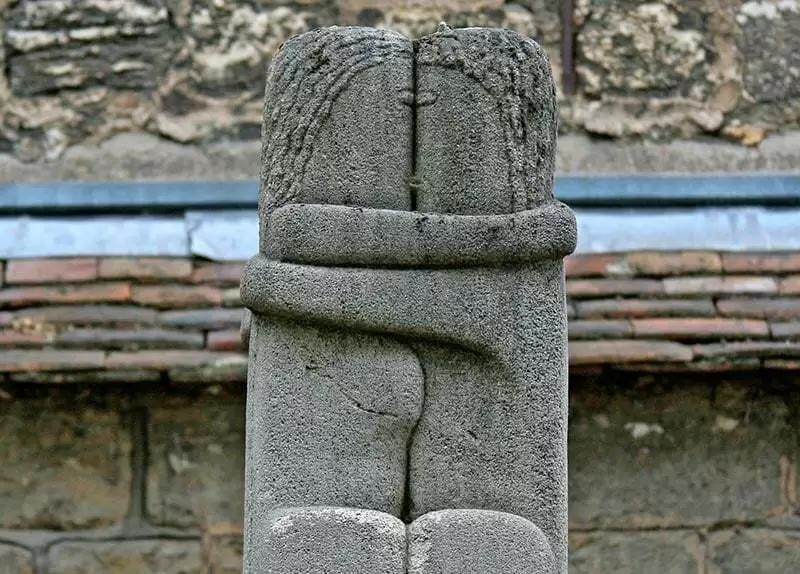
Before I saw any of his work live, I met Gorzo – a charismatic, deeply cultured and sincere artist, fully aware of his creative process, his vulnerabilities and the need to evolve. He spoke openly about the balance between his strong cultural roots and the desire to escape the archaic, traditional forms so prevalent in clothing, wooden architecture, Brancusi’s pillars and mythic imagery. His approach to philosophy and practice is straightforward, whether sculpting, painting or drawing without the use of his wrist.
After exhibiting his work, my initial impression deepened, transformed by knowledge, experience and confidence. His optimism and ingenuity using simple means left a lasting impression on me.
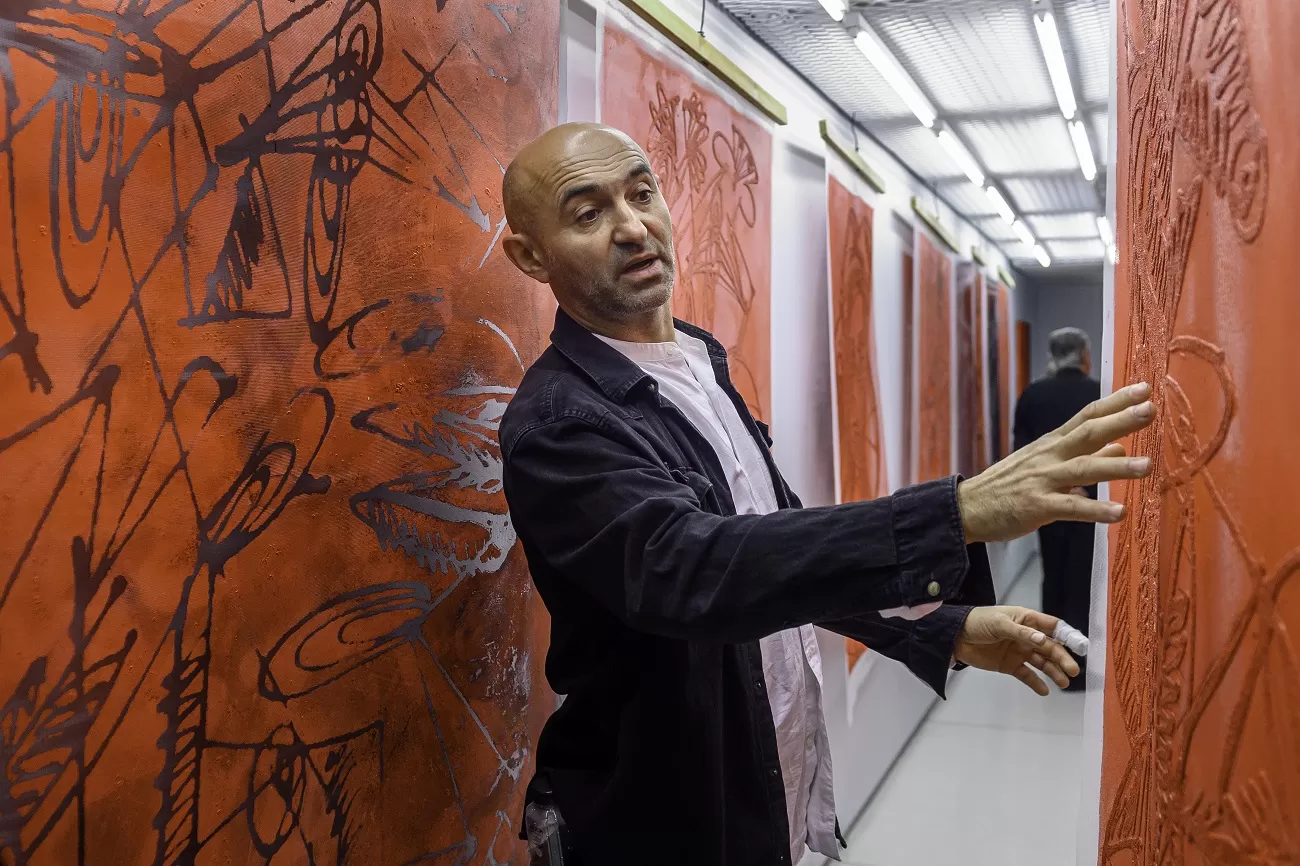
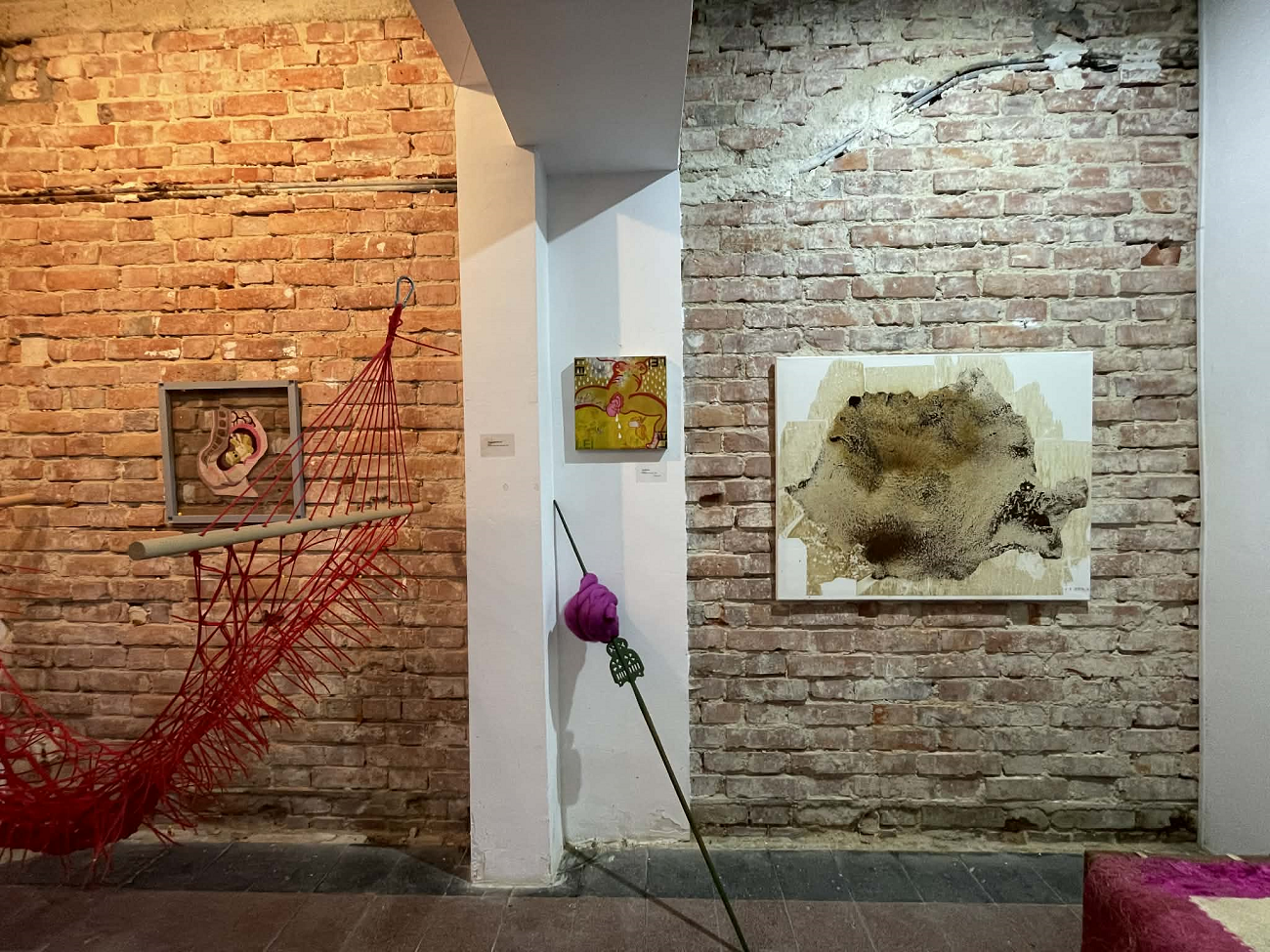
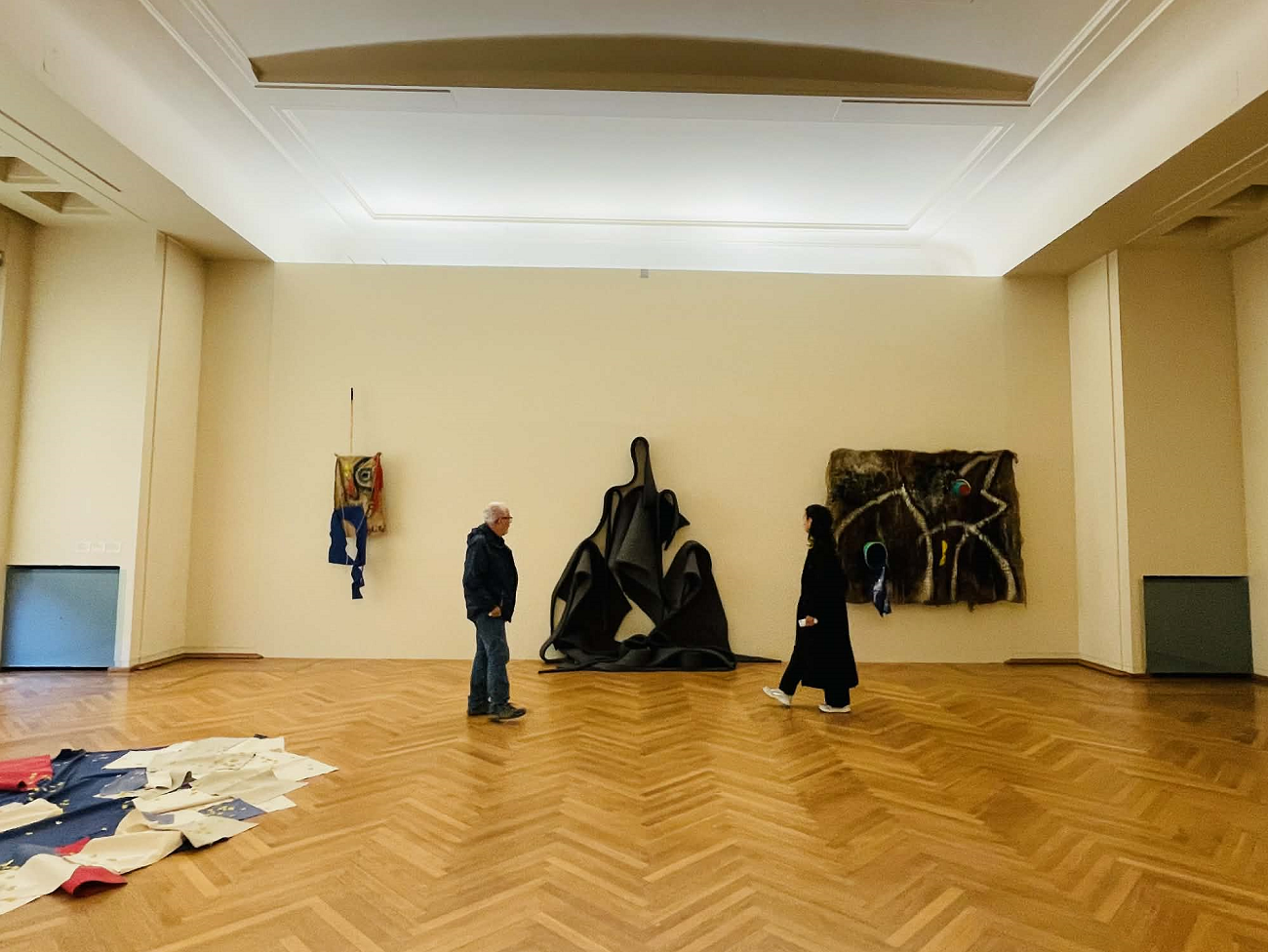
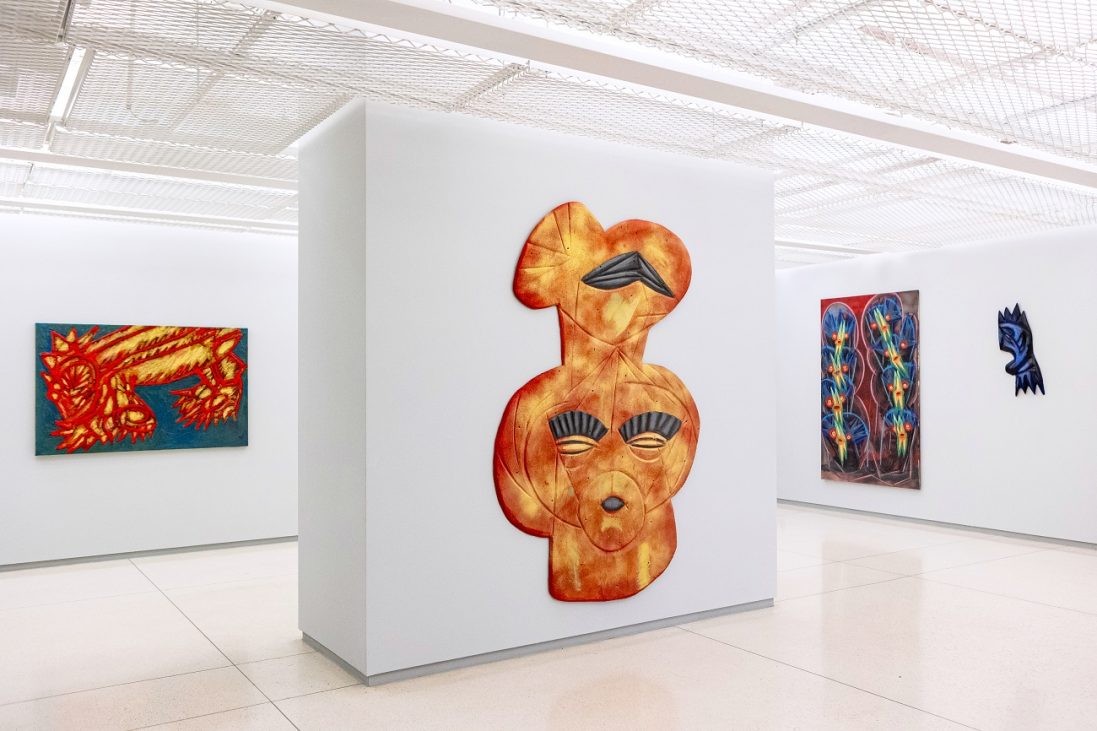
Dumitru Gorzo, in the exhibition “Does anyone want to be me?”, MARe
How did the collaboration with Gorzo and Dan Popescu develop for this exhibition? Was it a dialog, a common vision?
Gregory Lang: Our collaboration has been complementary and three-way, based on mutual dialogs between the three of us. We developed a seven-way relationship for this exhibition project. Each pair had its own unique dynamic based on mutual understanding. However, as a team, we shared a tacit trust. We knew we had a common cultural language and vocabulary, shaped by our personal creative experiences and deep understanding of art history. We brought different perspectives, but our common ground was our belief in the power of artworks as autonomous entities.
The collaboration reached its zenith during the installation. Despite the intensity, everything went smoothly, like a jazz improv. Each of us knew the rules, responsibilities and context of the museum.
What were the challenges for you?
Gregory Lang: The main challenge was to organize my first exhibition in Bucharest with an artist already established on the local scene, whose aesthetics were unknown to me. This was accentuated by the impossibility of pre-selecting the works to be projected in the space and by the long-standing complicity between Gorzo and Dan Popescu, a duo that created expectations among the public.
For my part, the real challenge was to get Gorzo to create not a retrospective but a new exhibition with completely new works for a demanding context: a full museum show with the potential to travel internationally.
We had just agreed on the importance of drawings inside and outside the museum. But the artist had total freedom to create only works for a site-specific project, under immense pressure for him, as time was extremely limited – all works had to be designed, produced and delivered in less than two months. And a month before the opening, all I’d seen were tests.
For both curators, the challenge was to discover the new works the day before the installation, with only three days to understand them, to design the exhibition on site, to find simple solutions that would emphasize their complexity, and to decide how to display them on the four floors.
We went to see the works in Gorzo’s temporary studio, some finished, some still in progress, even discovering remnants of earlier stages. We had to absorb and process this information simultaneously, like a jazz ensemble playing from an evolving score. We improvised with new works arriving at the museum from the studio two or three times a day.
I focused in particular on capturing the essence of Gorzo’s creative process, highlighting the stages of his work, the questions, obsessions and clever strategies he used to produce such a vast body of work in such a short space of time.
The biggest challenge was density: being open mentally, physically and energetically to engage in all the work simultaneously, finding the right place for each and also balancing the co-curator’s questions and obsessions.
The exhibition was realized in an intense but playful three-day non-stop marathon. We had to be fully present, making decisions about combinations, display, spacing and height to enhance each work in dialog with the others.
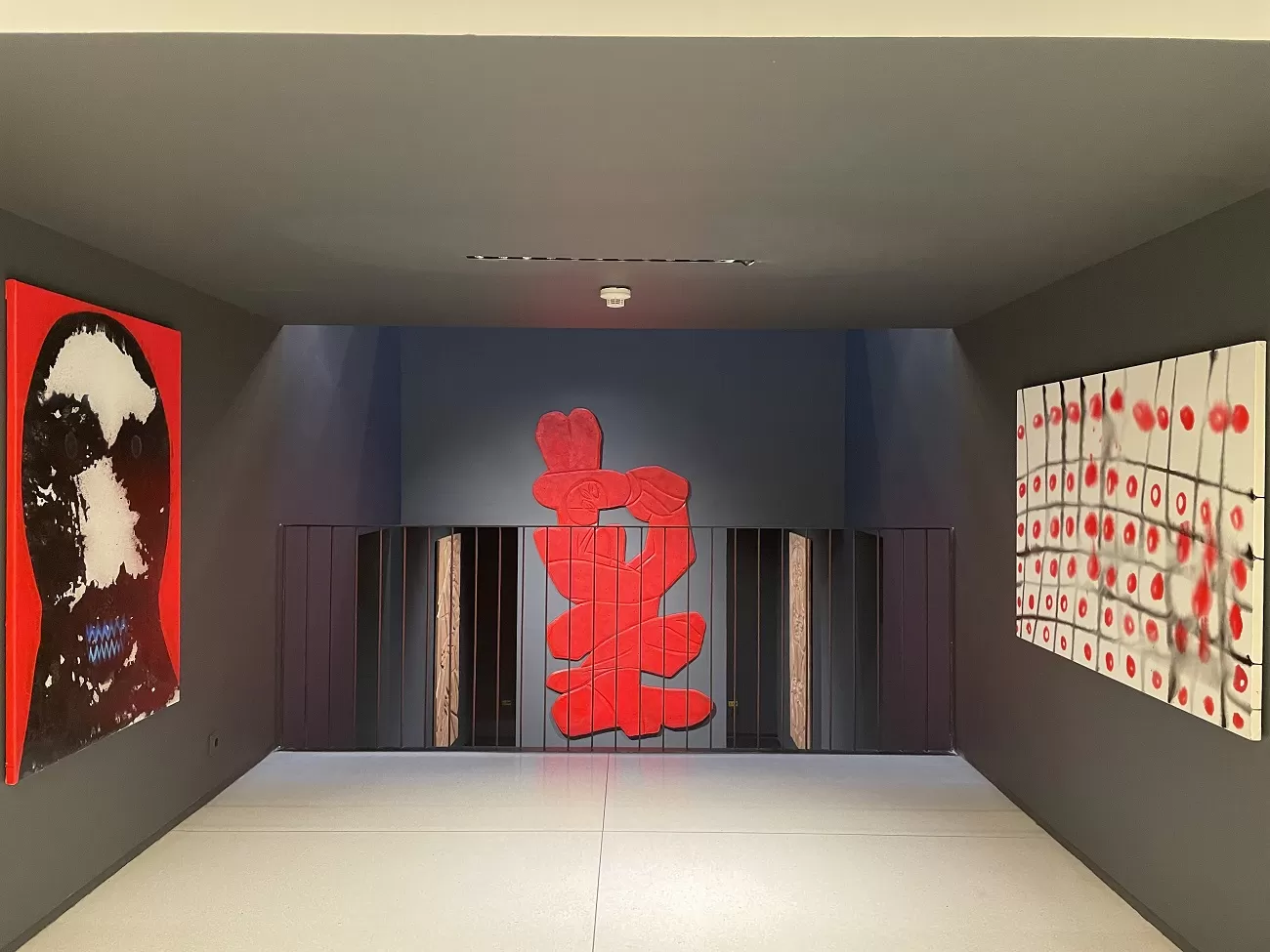
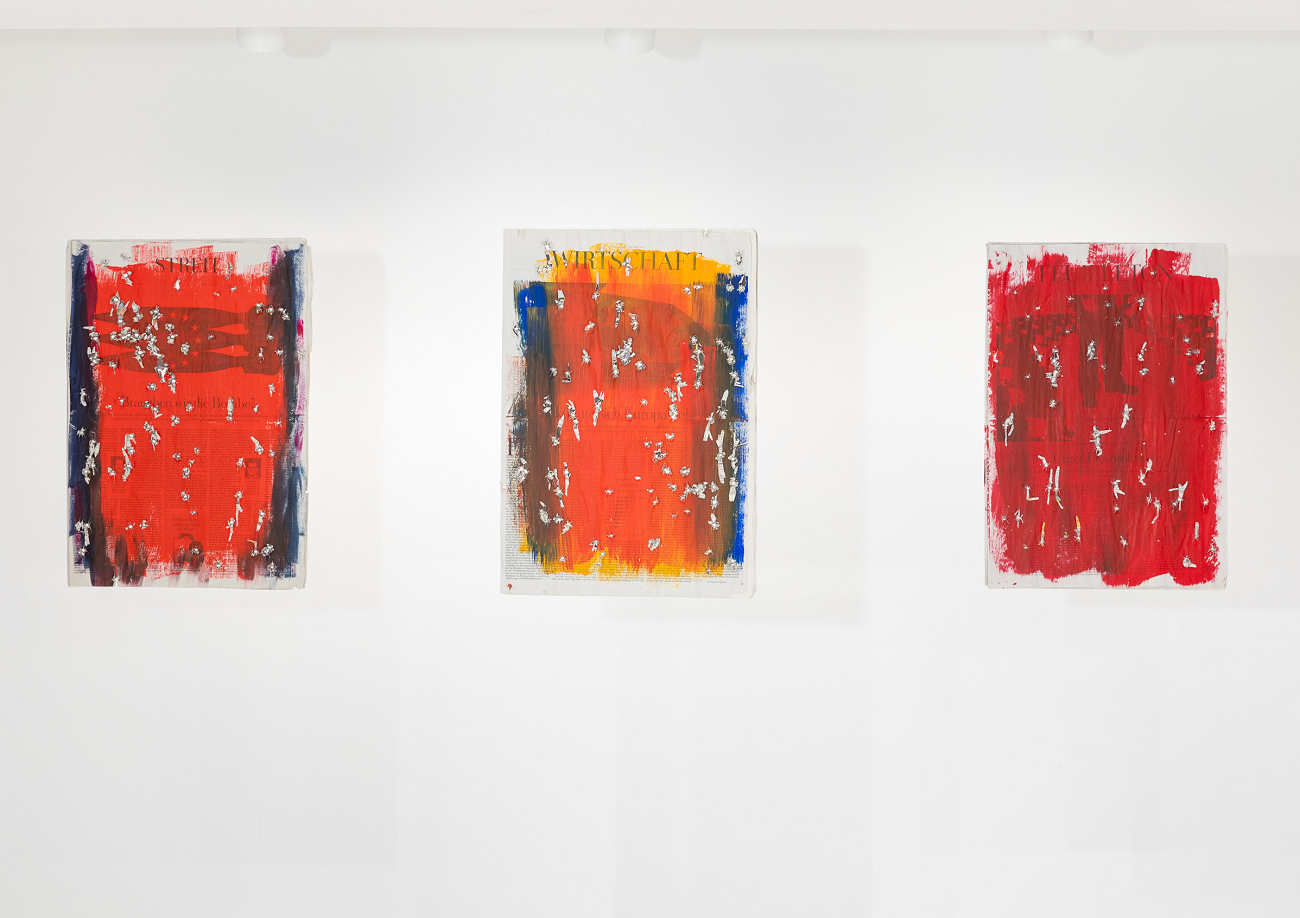
“Does anyone want to be me?”; curatorial
How does curating in Bucharest differ from your experiences elsewhere?
Gregory Lang: Every exhibition is unique, but Bucharest gave me a rare freedom: an open-minded, unconstrained museum team and a local energy that inspired the color and dynamism of the project. The huge and inspiring temporary studio provided by Gorzo in the city center was a fantastic venue for the project. This was in stark contrast to institutions such as the Museum Boijmans Van Beuningen in Rotterdam, MAAT in Lisbon, Pavillon de l’Arsenal in Paris, FRAC Grand Large in Dunkirk, France, where the parameters were often more rigid, but also constructive. The creative experience with the new productions was closer to that of the Cloud Seven private collection or the CAB Foundation, both in Brussels.
What do you hope visitors will take away from this exhibition?
Gregory Lang: “Anyone Wanna Be Me?” offers an immersive experience based on exchange and reciprocity. Visitors step into Gorzo’s living studio, where drawing in all its forms is invented, expanded and regenerated before their eyes. The artist has even organized a two-week workshop in the basement of the museum, transforming it into a shared studio open to the public. We hope visitors will embrace this generous and open approach and leave with a renewed sense of curiosity and wonder.
How did your encounter with Romanian contemporary art influence your perception of the local scene?
Gregory Lang: Visiting Bucharest every two or three months since March, I have had the opportunity to explore artists’ studios, museums and galleries that I had previously only seen at fairs. This immersion revealed to me a dynamic, diverse and deeply rooted scene, engaged in dialogs both local and global.
If you were to organize another exhibition in Romania, what would you do differently or explore in more depth?
I would like to organize a group exhibition, exploring a theme through unique encounters between several artists. The aim would be to create the right conditions for viewers to appreciate each work, while experiencing the tensions and subtle connections between them – a rigorous, poetic and poetic approach.