



INTERVIEW – Julie Crenn, from France to Bucharest via Maramureș: Life on the periphery remains complex for all artists
It is important not to forget the rural reality, not to despise it and to present it as honestly as possible, is the conviction of Julie Crenn, French curator and artist, who talks in an interview for curatorial about her project started a decade ago, “Agir dans son lieu”, which took place in France, but also in Romania – through an artistic residency in Săcel, Maramureș, which materialized in an exhibition brought to Bucharest.
The project combines research, residencies and exhibitions to explore the links between artists and rural environments.
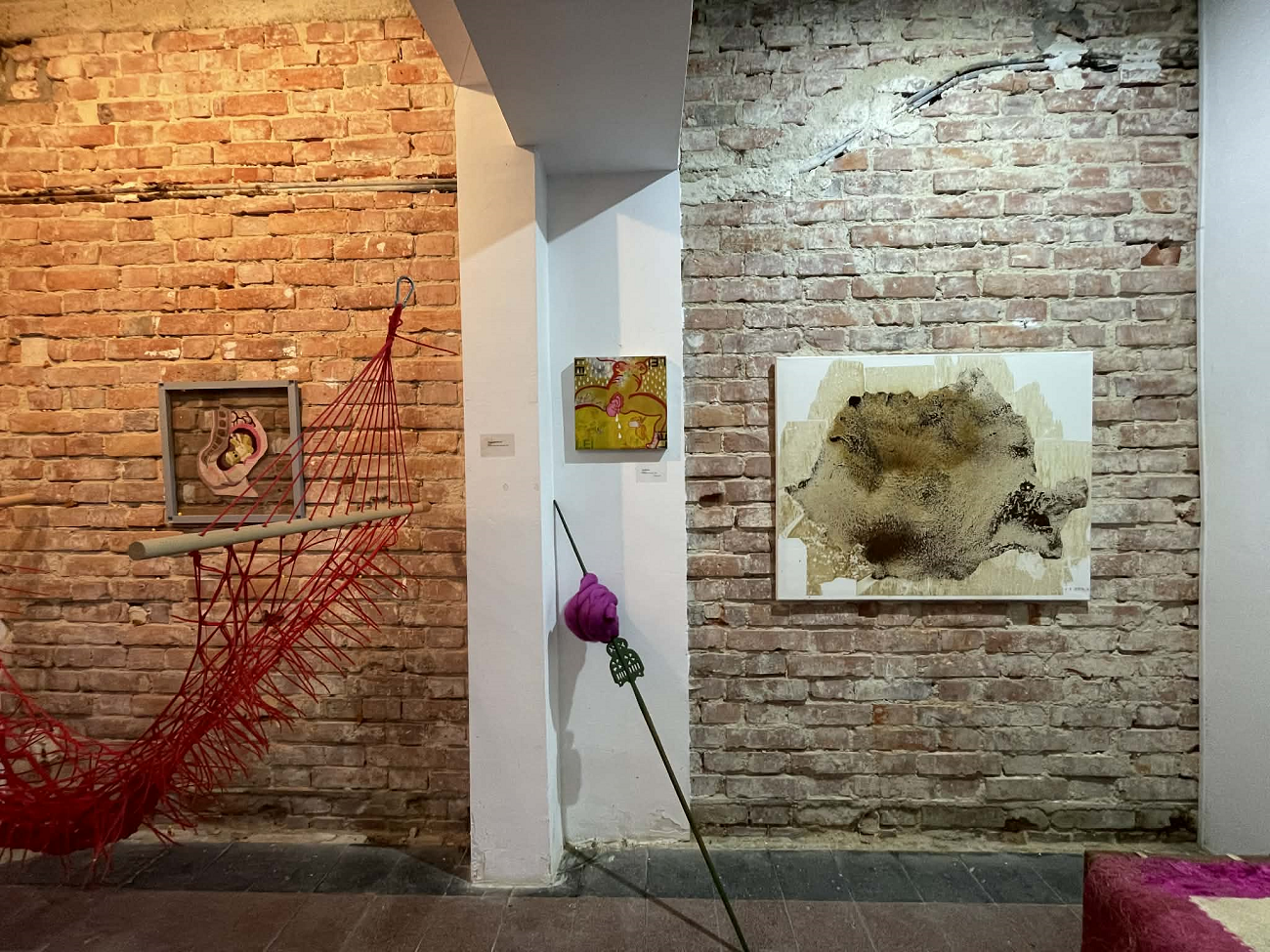
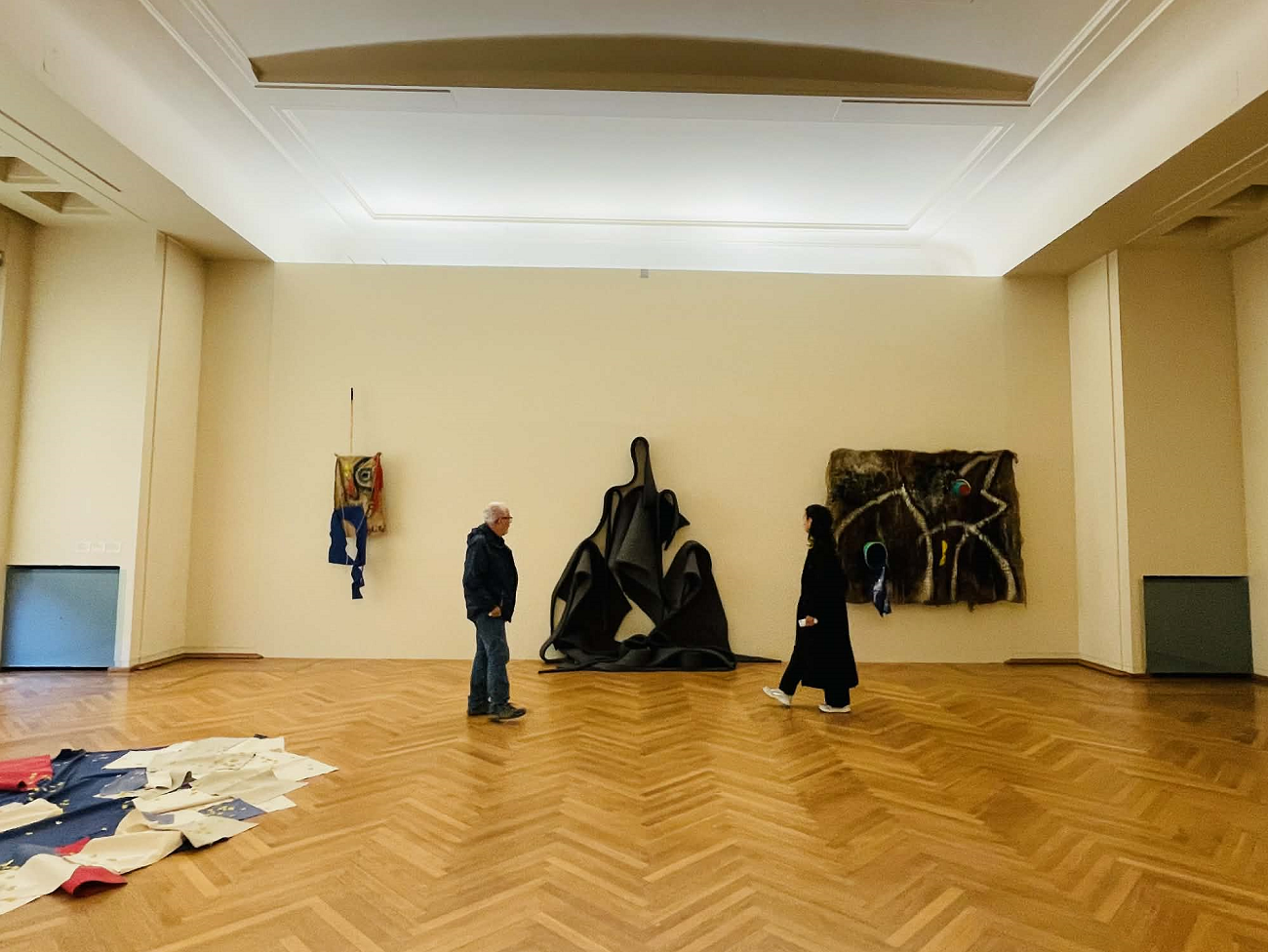
This month, she is participating in two events in Bucharest – on February 26, at Arcub, part of the French Institute’s program of debates of ideas, she will discuss exploring engagement through play and artistic creation, and on February 27 she presents “Agir dans son lieu, a group exhibition at the Anca Poterașu Gallery which brings together artists Morgane Denzler, Damien Rouxel, Delia Popa, Ioana Cîrlig, Andreea Medar, Aurelia Mihai, Ileana Mihali, Ilie Mihali and Maria Poterașu, who participated in last year’s residency in Săcel. The exhibition remains open until April 16.
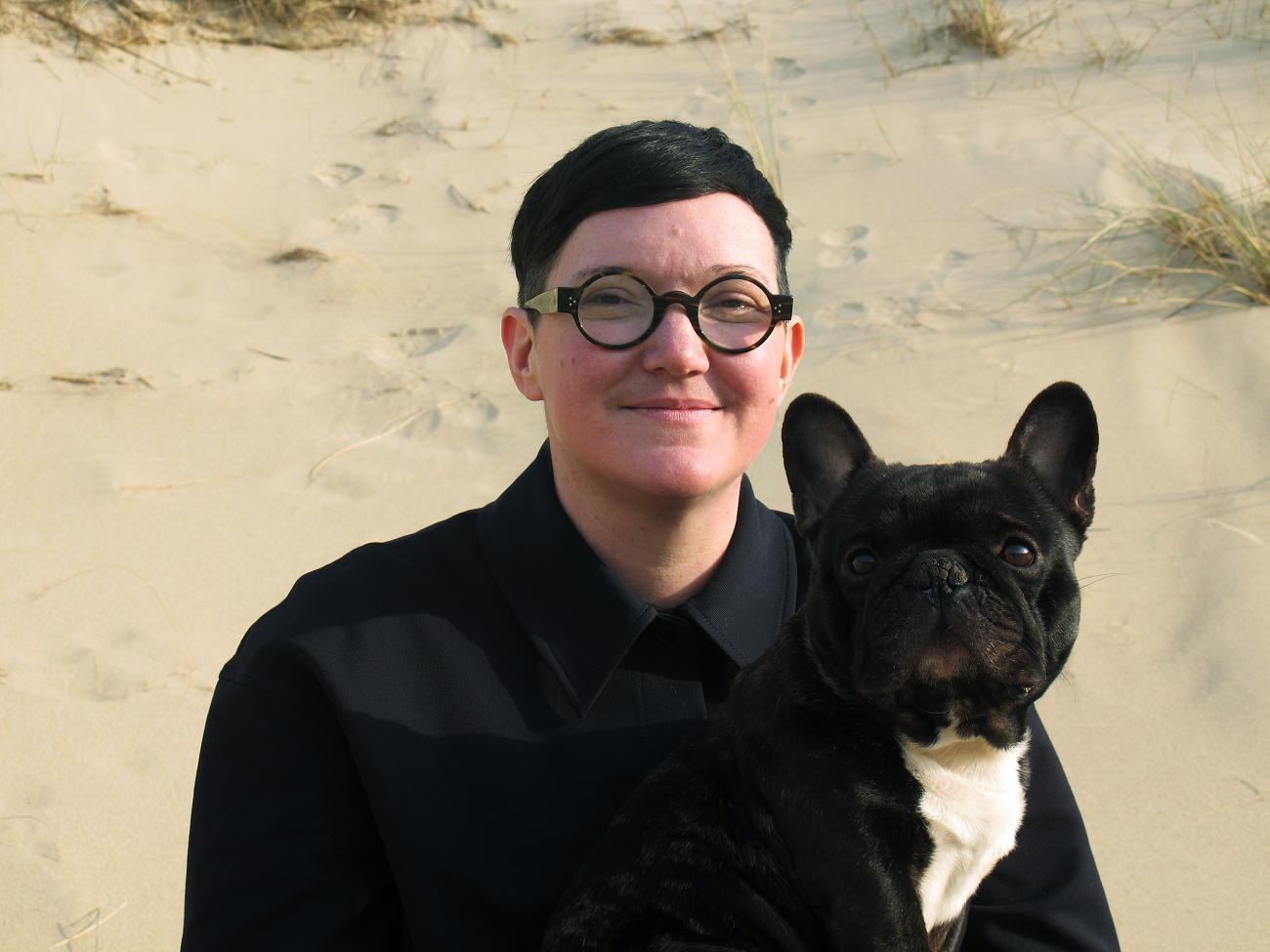
Julie Crenn; photo credit: Oursou & Charlotte El Moussaed
How has your perception of “rural” changed after working for a longer period in the Romanian countryside, in Maramureș?
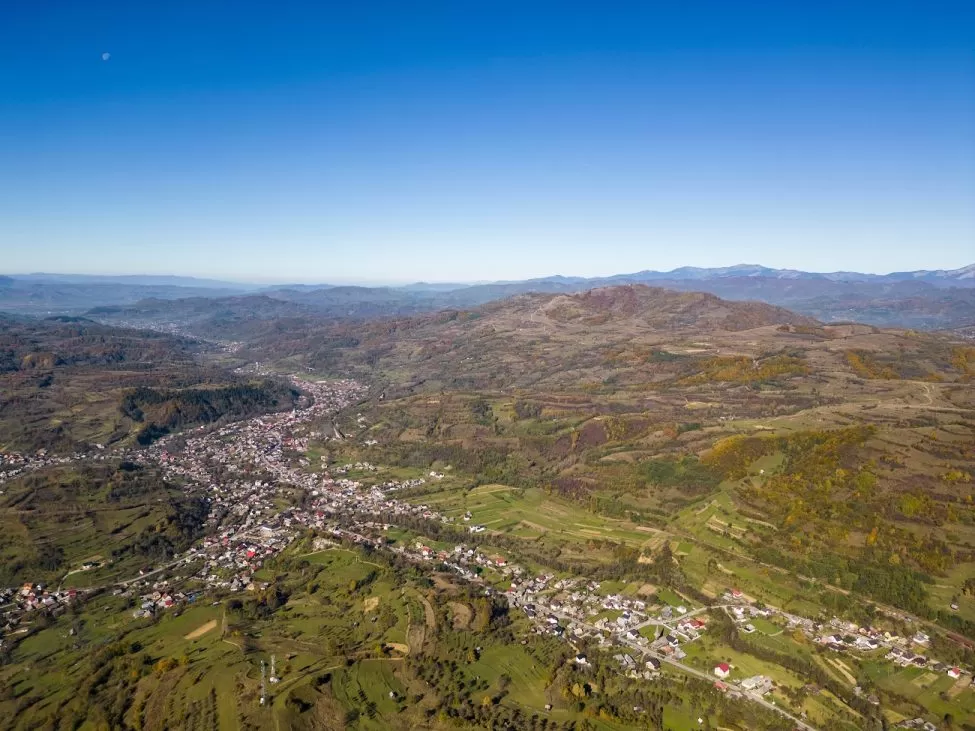
Julie Crenn: I went to Sacel in July 2025 and spent 15 days there. It was the first time the “Agir dans son lieu” project ventured outside of France and its rural realities. For two weeks, with Romanian and French artists, we talked to several people involved in the village ecosystem and spent time together. Morgane Denzler, Damien Rouxel and I stayed with Gafie, a retired farmer who spent her days between the fields, loom, cooking and caring for her granddaughter.
The agricultural realities of Săcel are very different from what we are used to in France. The topography of the village does not allow for the use of farm machinery, so the techniques used are based on ancient artisanal practices, which I would describe as environmentally friendly due to their minimal impact on the land.
Although I was aware that agricultural realities vary greatly from one country to another or even from one region to another within the same country (as is the case in Romania and elsewhere), my stay in Săcel made me want to continue the project so that we could meet other people, other contexts, other practices and other agricultural cultures.
What struck me in Săcel was the interdependence between subsistence farming, textile crafts and religion. The term ‘tradition’ was present in all our discussions and concerns.
What does it mean to you to “create with” a rural community, not just “about” it?
Julie Crenn: Since the beginning of the project “Agir dans son lieu”, the artists and I have shared the idea of never essentializing the agricultural world. We refuse to use or manipulate it for artistic purposes. We cannot simply illustrate these worlds or extract from them materials, gestures, words, landscapes, etc. We do not adopt an extractivist approach; on the contrary, the question of co-construction is fundamental. During residencies, we spend time with people who agree to do this: farmers, artisans, families, people of all ages. Artistic projects are realized through the exchange and participation of everyone involved. For example, during a residency in Les Arques, in the Lot region of France, Nicolas Tubery created a cinematic sculpture in collaboration with Michel Valéty, a farmer who had just retired when I met him. Michel agreed to carry out tasks on his farm that he had been doing all his life. Together, they built tools that allowed Nicolas to film Michel closer to his body.
Co-construction is as human and conceptual as it is technical and practical. It is motivated by an immense respect for the people who make up the agricultural world.
How does a project born in a rural environment translate into an exhibition in Bucharest?
Julie Crenn: This is an important question. When I started writing the project in 2015, it was essential to me that it was only implemented in rural areas, for obvious reasons of consistency. However, I’ve changed my mind: if the project is to exist in rural areas, it should not be separated from urban areas. If we want to combat the invisibility of farmers in the collective imagination, this cannot be done without cities. After all, we are all affected by agricultural realities: eating every day, we make food choices. We drink water. We all have rural roots, from which many have chosen to break away. My grandparents were farmers, my partner is a farmer, their journeys and lives are linked to mine.
It seems important to me to act where I am, from Săcel to Bucharest, because Romania is above all a rural country whose realities and traditions are infused in language, architecture and culture. Aurelia Mihai’s movie is about her movements between village and city, about the strangeness of seeing a sheep farmer on the streets of Bucharest. Yet this reality is very much alive in many parts of the country. That is why it is important not to forget it, not to despise it, and to present it as honestly as possible, without making it seem exotic.
Săcel’s move to Bucharest is marked by elements that have had a profound impact on us: textile traditions, benches, family heritage (the mothers of Anca Poterasu and Ilie Mihali will present textile works), spirituality and the organic and interdependent links between people and the ecosystem they are part of.
What is lost and what is gained in this change of context?
Julie Crenn: What cannot be moved to Săcel is Săcel itself and its inhabitants. We can only make visible elements that are both concrete and symbolic. Relocation makes it possible to share the experiences inherent in works created on site or afterward. Relocation allows a certain kind of reconnection between the city and the countryside, a reconnection with a history that is both intimate and collective with rural life.
From your own experience, what kind of real resources – material, symbolic, community – can young artists in rural areas capitalize on?
Julie Crenn: The word ‘valorize’ is precisely a word that is not part of our vocabulary or the spirit of the project. At each residency, the artists not only meet people but also intend to continue their respective research. Morgane Denzler reflects on sheep farming and the interdependent relationships between land, sheep and farmer. Damien Rouxel works to increase the visibility of queer communities in rural areas. Delia Popa draws links between her family garden in Cretești and the other territories where she works. Andreea Medar talks about a fragile memory that is at once familial, agricultural and vegetal. Ilie Mihali has worked with wood and earth to create a series of sculptures that re-create both his childhood in Săcel and the tools and architectural forms he observed there. There is no capitalization, but rather encounters that give rise to works that I could describe as objects that act as passages between each person’s experiences.
What have you noticed young creators in rural areas most often lack: networks, confidence, infrastructure, mentoring? How can they compensate for these gaps?
Julie Crenn: Whether in Romania, France or elsewhere, artists, young or old, living and working outside major urban centers face the same challenges: building an extended network, meeting art critics and exhibition curators for studio visits (travel outside major urban centers remains unpopular among professionals) and gaining greater visibility for their artistic practices. These planned or unplanned lives on the periphery remain complex for all artists.
I don’t think it is the artists’ responsibility to find solutions to these difficulties, but rather the responsibility of the art world and its structures to change, to rethink the places where art exists in all its forms and possibilities. From this perspective, I believe that the format of residencies can generate more encounters, exchanges and the desire to co-create projects not only in rural areas but also in cities. Residencies bring together not only artists (who mostly work alone) but also local residents who express the need to meet artists and see their work.
What models of collaboration between young creators and local craftspeople have you seen that really work, so that the exchange is mutual and sustainable, not just an occasional source of inspiration?
Julie Crenn: I have many examples of collaborations that developed during the residencies. Morgane Denzler collaborated with a sheep farmer and a mattress maker to create blankets, while Aurelie Ferruel and Florentine Guedon learned to weave rogoz to make a headdress for a wood carving.
While in Săcel, Andreea Medar met Burnar Tănase. She explains: ‘The work consists of a ceramic vessel used in the past as a milk container, made in collaboration with local potter Burnar Tănase and presented on a rotating stand. On its inner surface, a fragment of a traditional song associated with the Ruptul Ruptul delle Sterpelor is inscribed in Braille through perforation. A light source placed inside transforms the vessel into an intimate lantern. Because of the perforations, the object can no longer function as a container and becomes a kind of funnel or sieve, an allusion to loss, leakage and transformation. An audio recording of the song, sung by Mrs. Maria Catană, one of the few people who still remembers the melody, can be heard under the rotating vessel. The song becomes an audible trace of collective memory embedded in the clay”.
At each meeting a story is shared, gestures and techniques are passed on, materials are tested. The works contain this memory and this exchange.
Do you think that the dialog you propose in Bucharest between contemporary art and crafts from Săcel can encourage young people to create while staying in the countryside? If so, in what concrete way?
Julie Crenn: It’s difficult to answer that question. I don’t think an exhibition can have that kind of power. It’s more a combination of exhibitions, conferences, lectures at art school or university, exchange of references, etc. Through collective momentum, these desires can be stirred up or put into practice. Many artists from rural and peasant backgrounds are still reluctant to talk about tradition, rural life, peasantry, family, etc. In France, artistic practices dealing with these themes are fairly recent. This is because there is still a sense of shame, a desire to emancipate themselves from their environment, as these themes have long been despised, invisible and associated with a fascist and conservative political movement. However, when we talk about agriculture, we are talking about a vast range of themes which, in my opinion, form a common basis for discussing life as a whole.
What is the message you want to convey to the participants of the event that will take place at Arcub on February 26?
Julie Crenn: The artist Delia Popa and I talk about the project “Agir dans son lieu”, the links we have built together in the last two years, the residency in Săcel and the exhibition that will open the next day at Galeria Anca Poterașu.
My message will be the same as every time I talk about the project as a whole: farmers who are environmentally conscious and practice sustainable agriculture, all over the world, are people who suffer because they cannot make a decent living from their work. In France, a farmer commits suicide every day. The current economic system is suffocating them. Together with the artists and farmers involved in this project, we want to provide a platform to break the silence surrounding their lives, to restore their dignity, to talk about their realities and to fight collective violence and indifference.