


Lia and Dan Perjovschi joint retrospective, a collage as a “school of attention” / photo gallery
Lia Perjovschi and Dan Perjovschi, visual artists with four decades of activity in the public space, in engaged art, present together a retrospective of their work, for the first time in Romania.
“DRAFT for a common retrospective” is the last exhibition at ARCUB – Hanul Gabroveni, as the institution is known today, before it will be included, in two months, with six others – CREART, Proedus, Lumina Cultural Center, Expo Arts Cultural Center, Youth Center and Art School – in the Directorate General for Arts and Urban Events. This merger was decided on April 2, and is part of a process of restructuring the entire General City Hall.
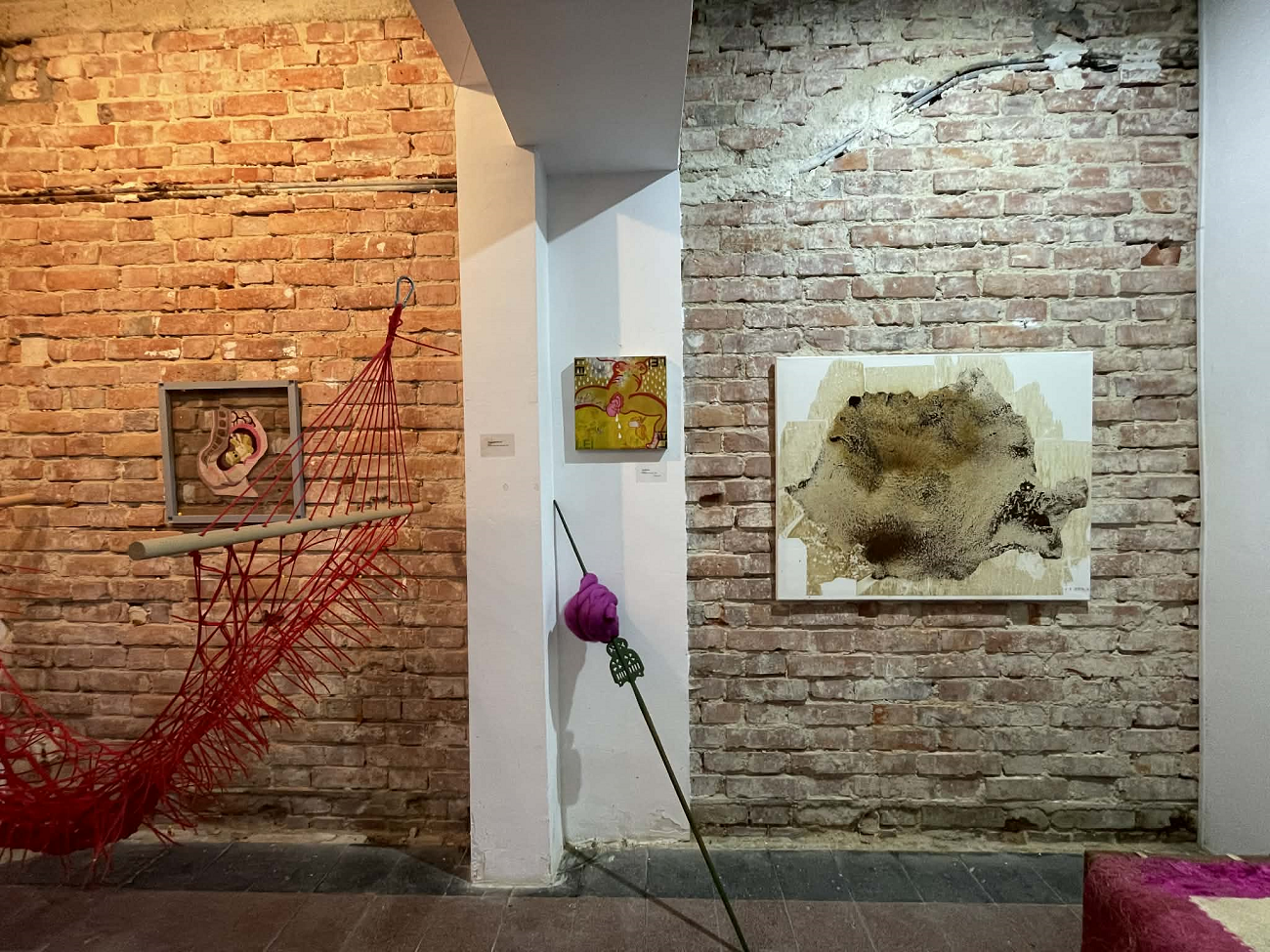
The exhibition of the Perjovschi couple is open from April 3 to July 26, in all the rooms of the Gabroveni Inn. It brings together the most representative works that have influenced the local scene and strengthened the presence of Romanian art in the international circuit.
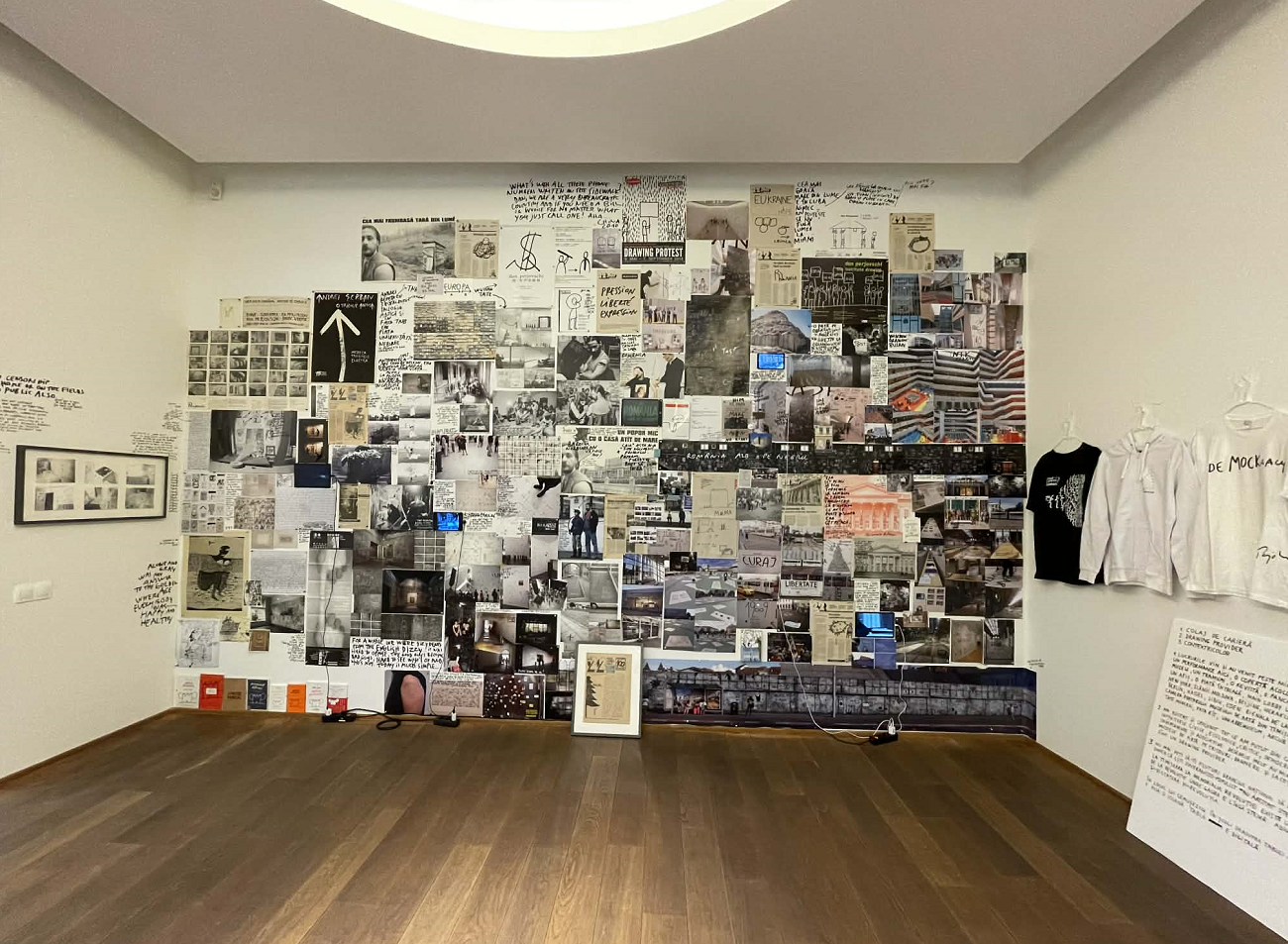
Artworks by Dan Perjovschi, curatorial
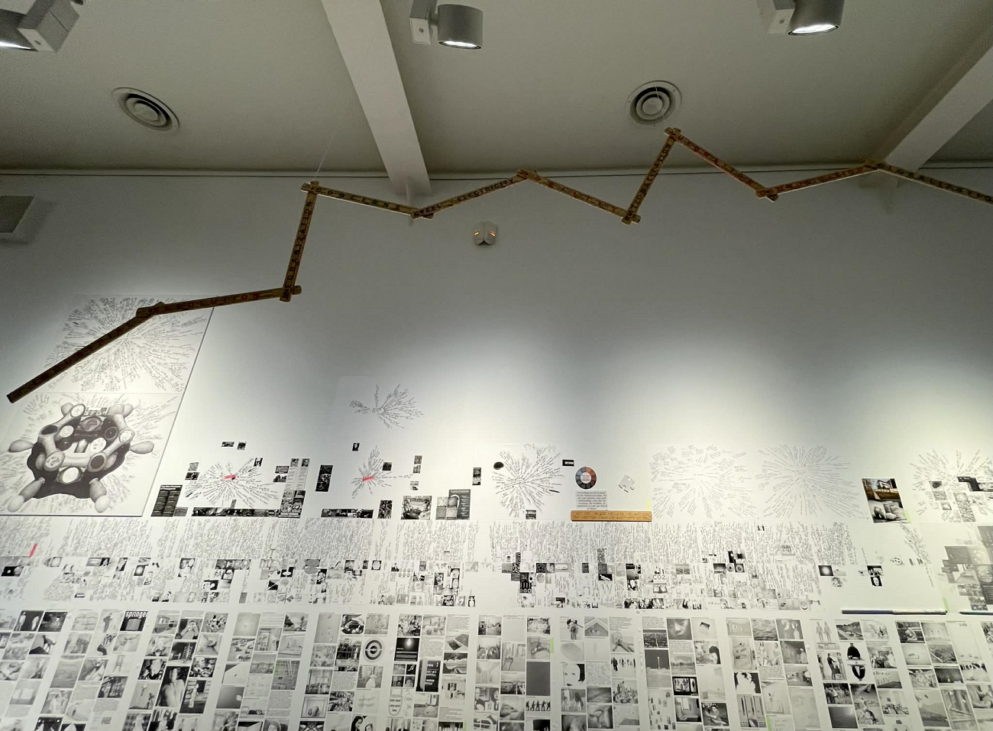
It all starts in the basement, where their pre-1990 experiments and excerpts from public debates are on display, downstairs are works from the communist period to the present day, from paintings to diagrams, from postcard drawings to photographs of art in hotels, and upstairs is where the two meet. The platforms created by Lia Perjovschi – the Archive of Contemporary Art, the Center for Art Analysis and the Museum of Knowledge, and the agglomerations, performances and projects that Dan Perjovschi has worked on are developed. Catalogs from biennials, exhibitions in which they participated, image files – all can be consulted by visitors.
While the large exhibition is open, the two will be joined by guests from abroad for public discussions about what art looks like today.
Art must be political
With impressive CVs, including hundreds of exhibitions, participations in major events around the world and awards, Lia Perjovschi and Dan Perjovschi are active critics of the authorities, cultural institutions.
“Art must be political! We have always felt an obligation to be part of society and to do something for it”, says Dan Perjovschi.
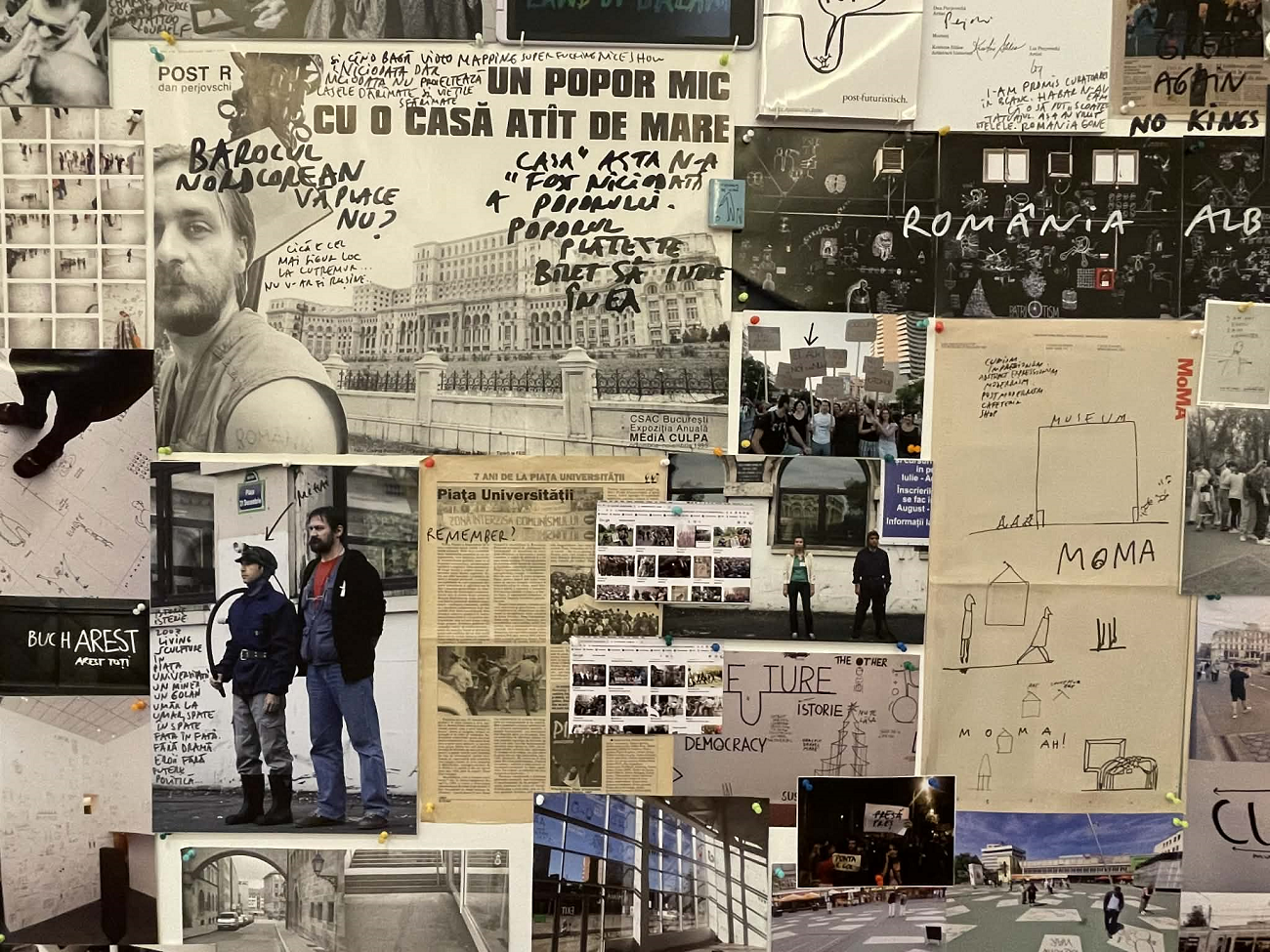
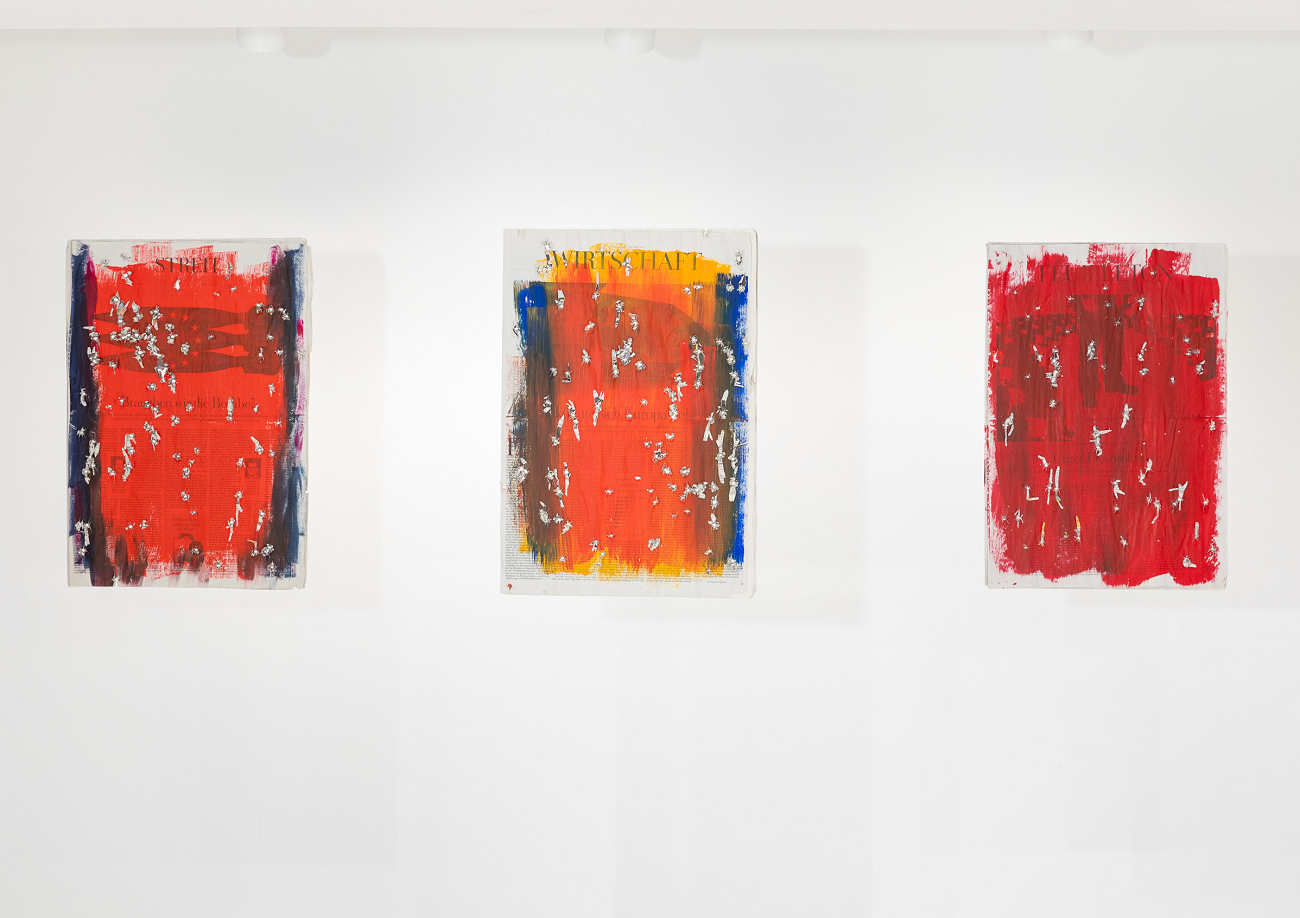
Collage Dan Perjovschi, curatorial
The motto of this exhibition is “Make the best of what you have”.
Dan Perjovschi is a self-styled drawing provider. “I have served my country for years. When someone asks me ‘have you changed anything in Romanian society?’. “Yes.” Without me it was much worse and without Lia it was even worse. We have contributed where we could to causes to which people dedicate their whole lives”.
“We cannot separate a work from its context,” emphasizes Lia Perjovschi. “I always refer to the context, because it modifies and directs. After the Revolution we stayed engaged. We ticked off all the rallies.”
At the beginning of her career, the artist says, “I didn’t know that we actually build our reality according to what we want, if we know very clearly what we want, if we work”.
Education, a global emergency
They started in the same studio in 1990, followed by traveling with exhibitions, seeing artwork abroad. “What we considered experimental in the pre-’89 period had a history. So I had to recover 50 years of contemporary art that we hadn’t seen, hadn’t studied.”
For Lia Perjovschi the chance to contribute to the education emergency is important. “Education is a global emergency, in my opinion. I am looking for solutions to make what I know available to others. Knowledge is survival, but it is also power, but we must not leave it in the hands of a few. I want to be the subject of history and not its object, that’s my motto. And by doing the archive, I believe I have also contributed to empowering others.”
For 14 years, he has been creating a diagram depicting a history from modernism to the present day. Visits to various museums – science, folklore and others – resulted in a project she has been working on since 1999, the Museum of Knowledge. Various elements are arranged in departments – Earth, body, universe, culture (with art, science, knowledge today) “I tried to recover the context, to understand contemporary art,” Lia Perjovschi adds. The focus falls on today’s issues – war and how we survive, poverty, global warming. “We can’t avoid it, because nothing gets around us. Everything affects us”.
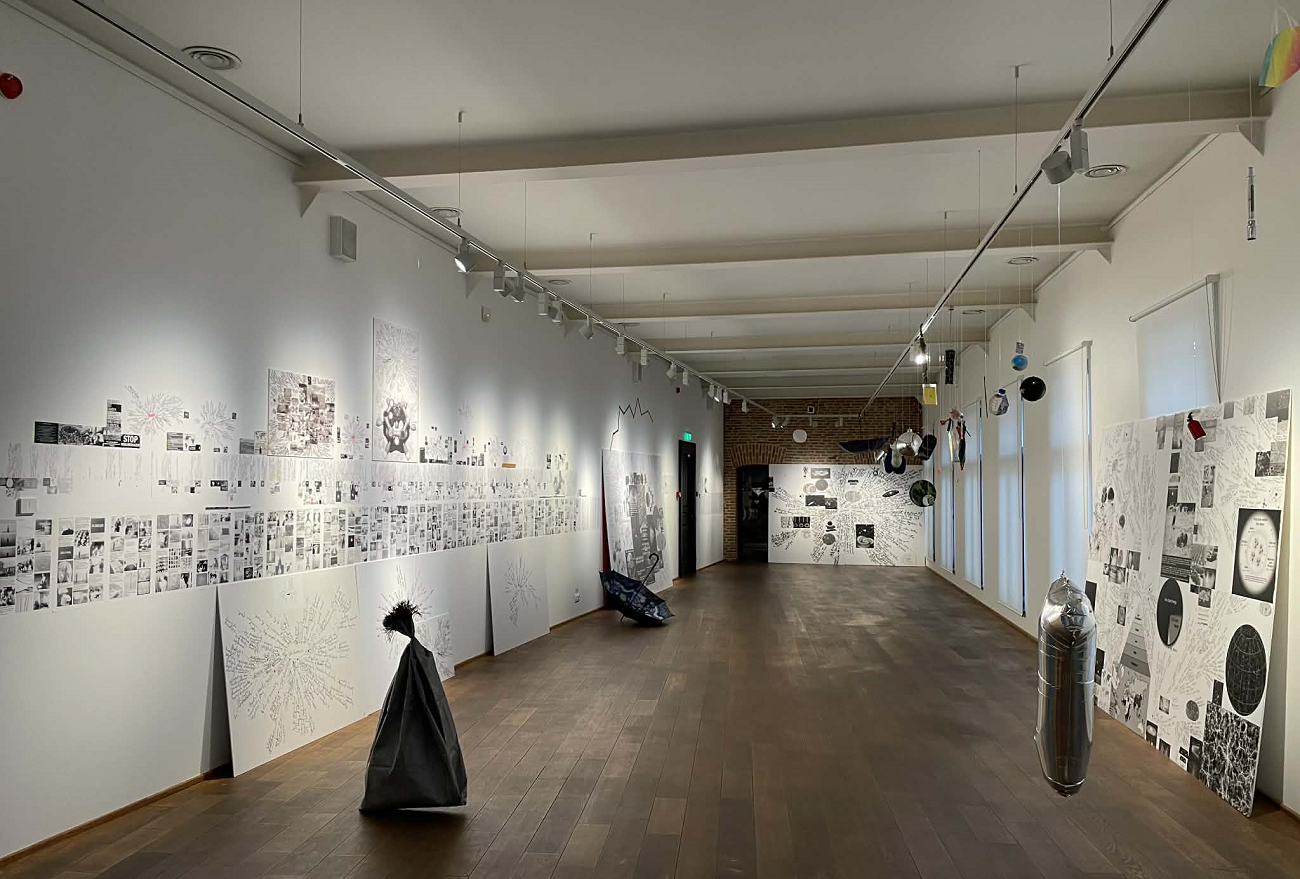
Presentation “Museum of Knowledge”, by Lia Perjovschi, curatorial
The artist, fascinated by the breadth of information in the world, works with thousands of images. “Dan generates drawings, I order images”.
Her image-driven essays are her interdisciplinary research in the form of a collage, which has countless meanings and is for slow viewers. This was one of the projects proposed to represent Romania at this year’s Venice Art Biennale.
“I want to have an optimistic message. That was my desire and ambition: to do what I want and not to depend on anyone. And that’s what I did and continue to do. I want to encourage everyone. In fact, that’s what you should do in general: if you don’t care, you are the object of history and anyone can do anything with you and your projects”.
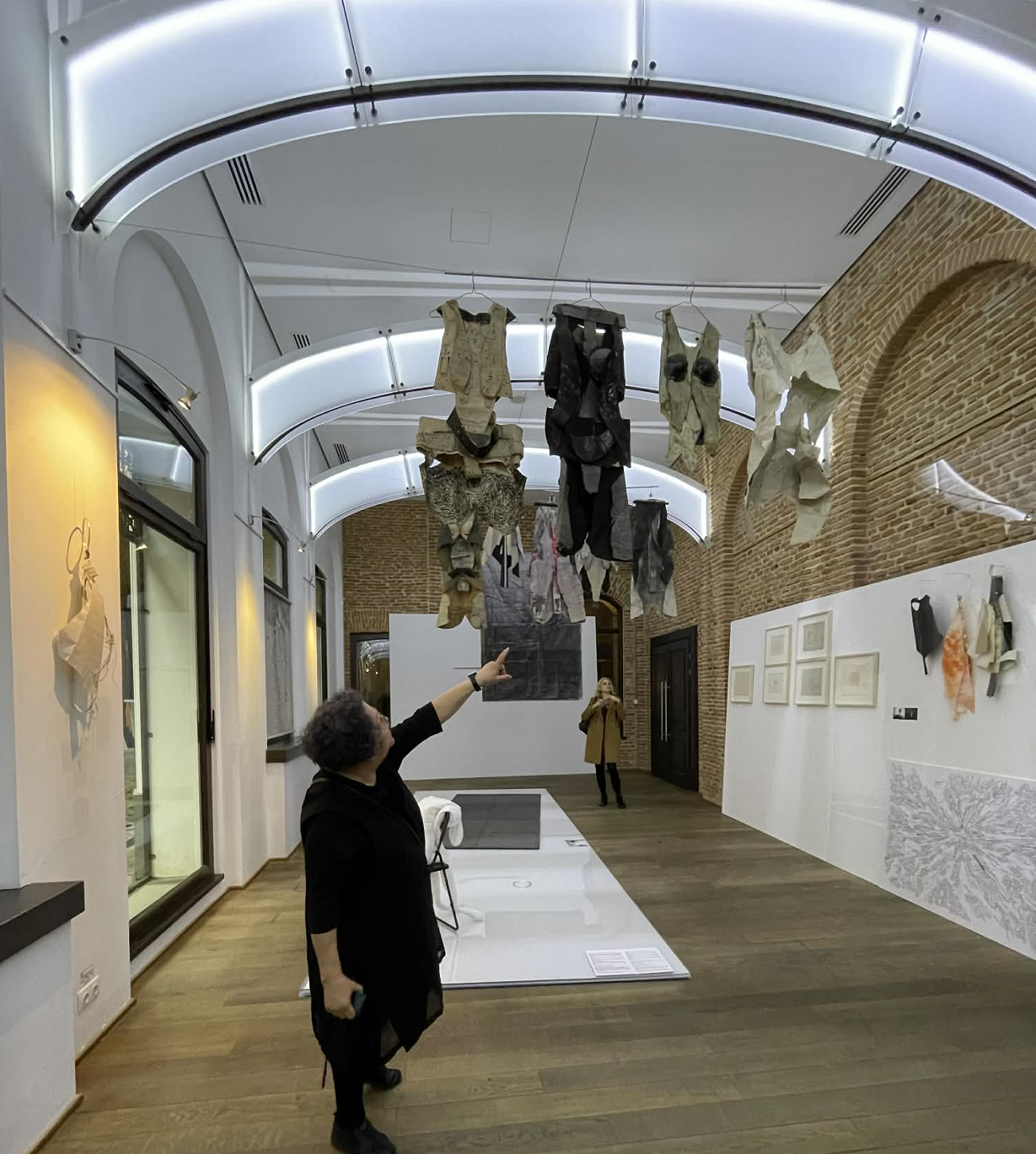
Lia Perjovschi, in the exhibition DRAFT, curatorial
A large part of Romanian culture extremely fragile
In 1986, at the height of the dictatorship, Dan Perjovschi made anthropograms, people-readers, a name given by anthropologist Andrei Oișteanu.
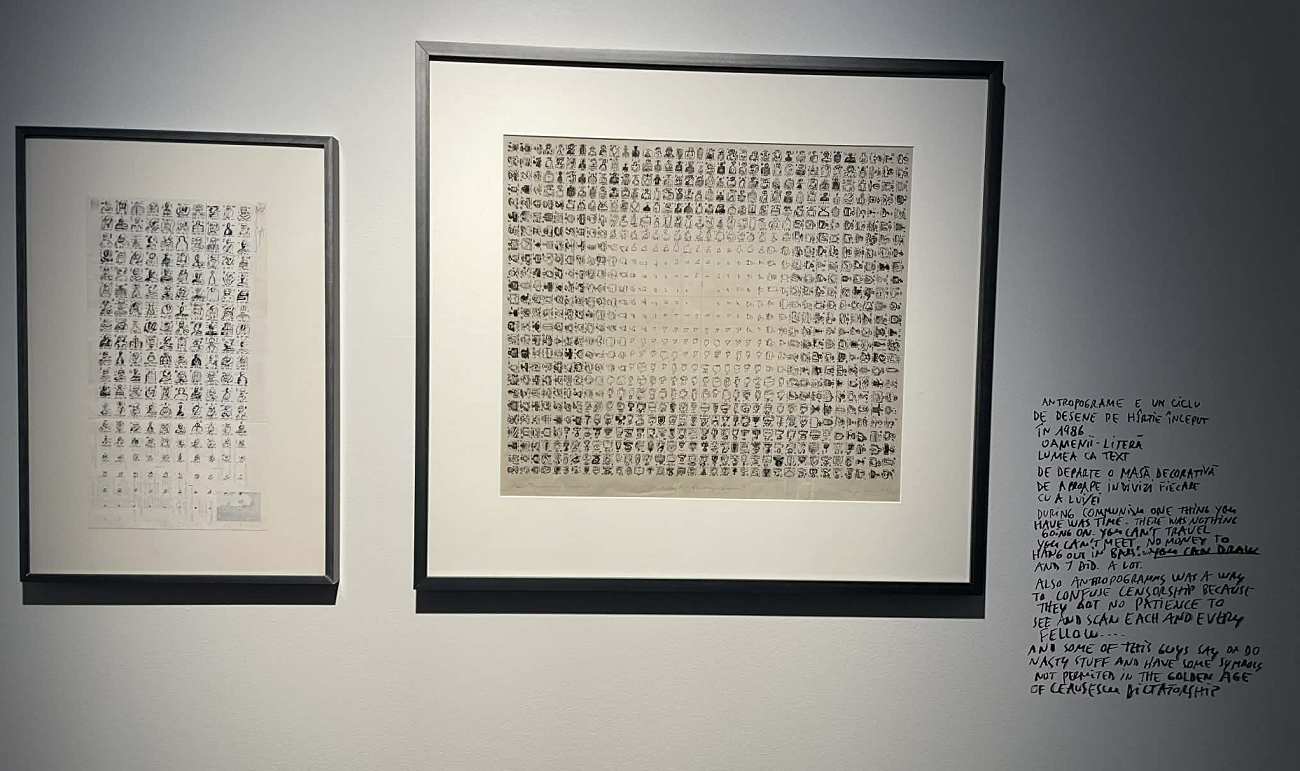
Anthropograms, Dan Perjovschi, curatorial
A very laborious kind of drawing. Perjovschi painstakingly renders dozens of people individually, writing a kind of text. He continued in the 1990s, when the drawing became a repetitive composition, and from there it went to video installation, then to performance – little men being drawn directly on the wall, including in New York. Today, from very fine drawing, Perjovschi has moved on to drawing made from wire.
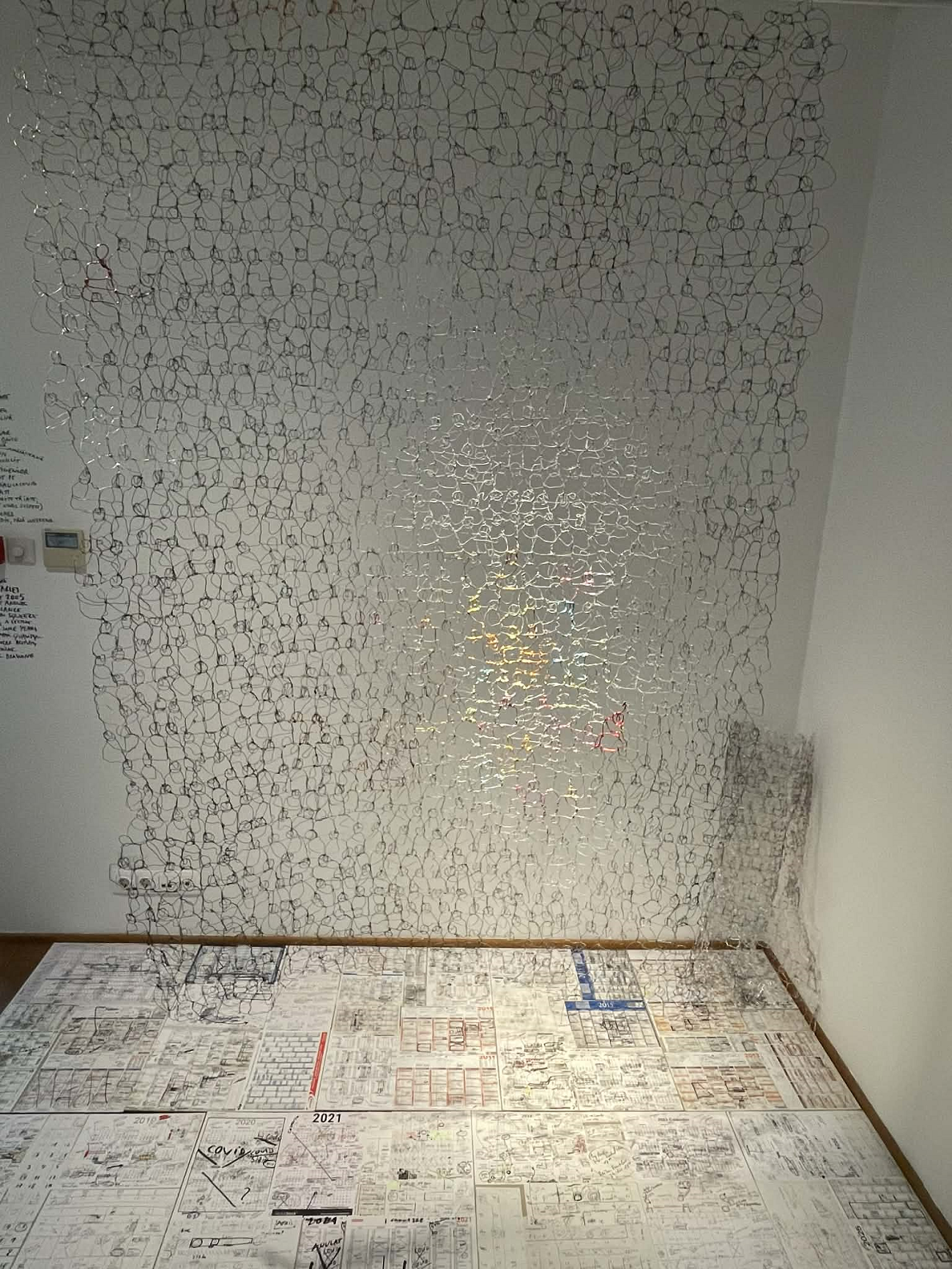
Anthropograms from wire, Dan Perjovschi, curatorial
“I’ve been drawing about Romania every week for 35 years, and I also have a work card and health insurance,” points out Dan Perjovschi, referring to most of contemporary culture. “They can’t show that they have worked an hour in their lives, they are not insured. A large part of Romanian culture and art is extremely fragile and we are discussing the merging of institutions”.
The whole exhibition – realized especially for the ARCUB space – is a collage of his career, as Dan Perjovschi describes it. “The whole exhibition we do here is a kind of school of attention – to see details where they don’t seem to be.”
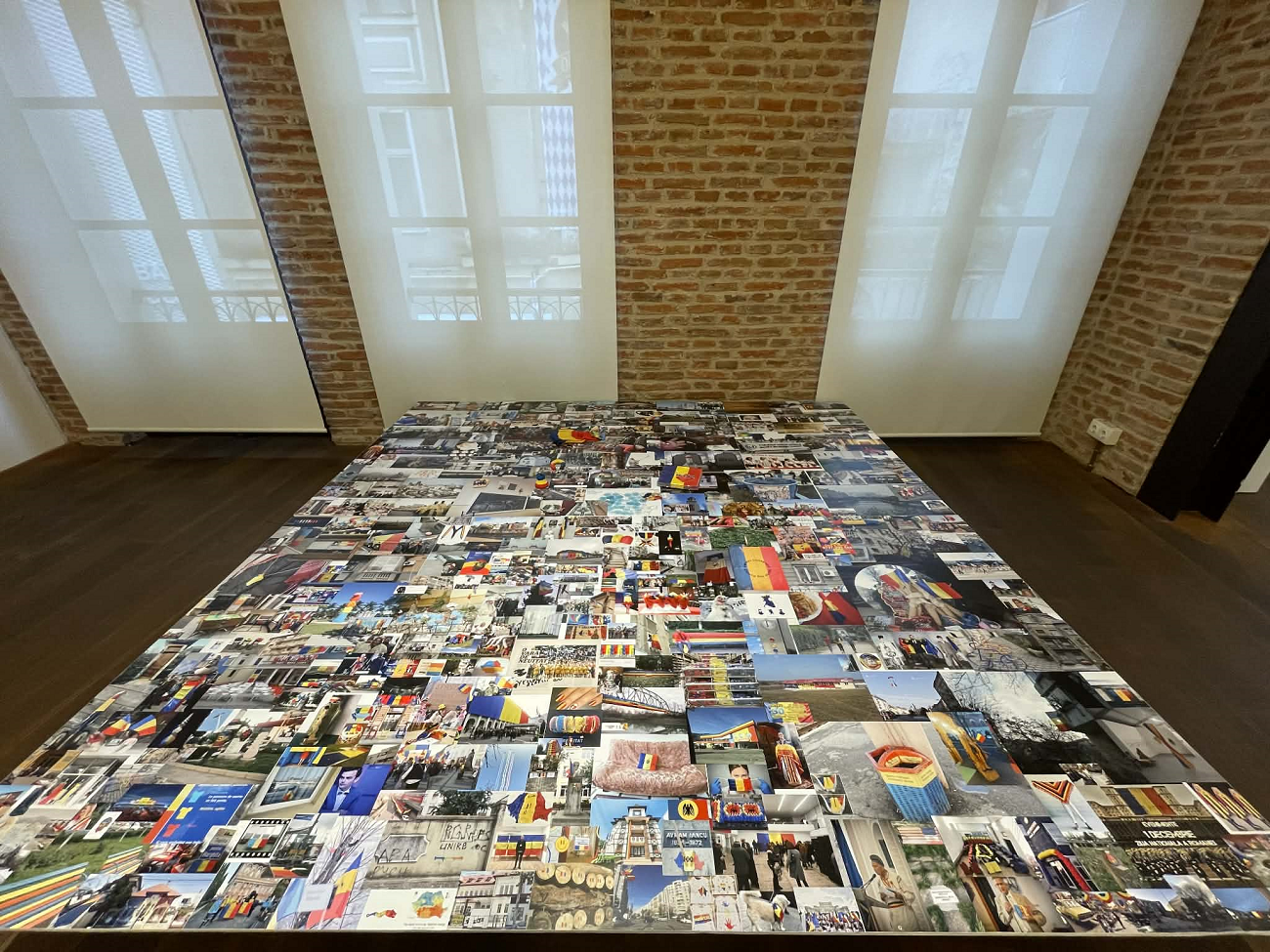
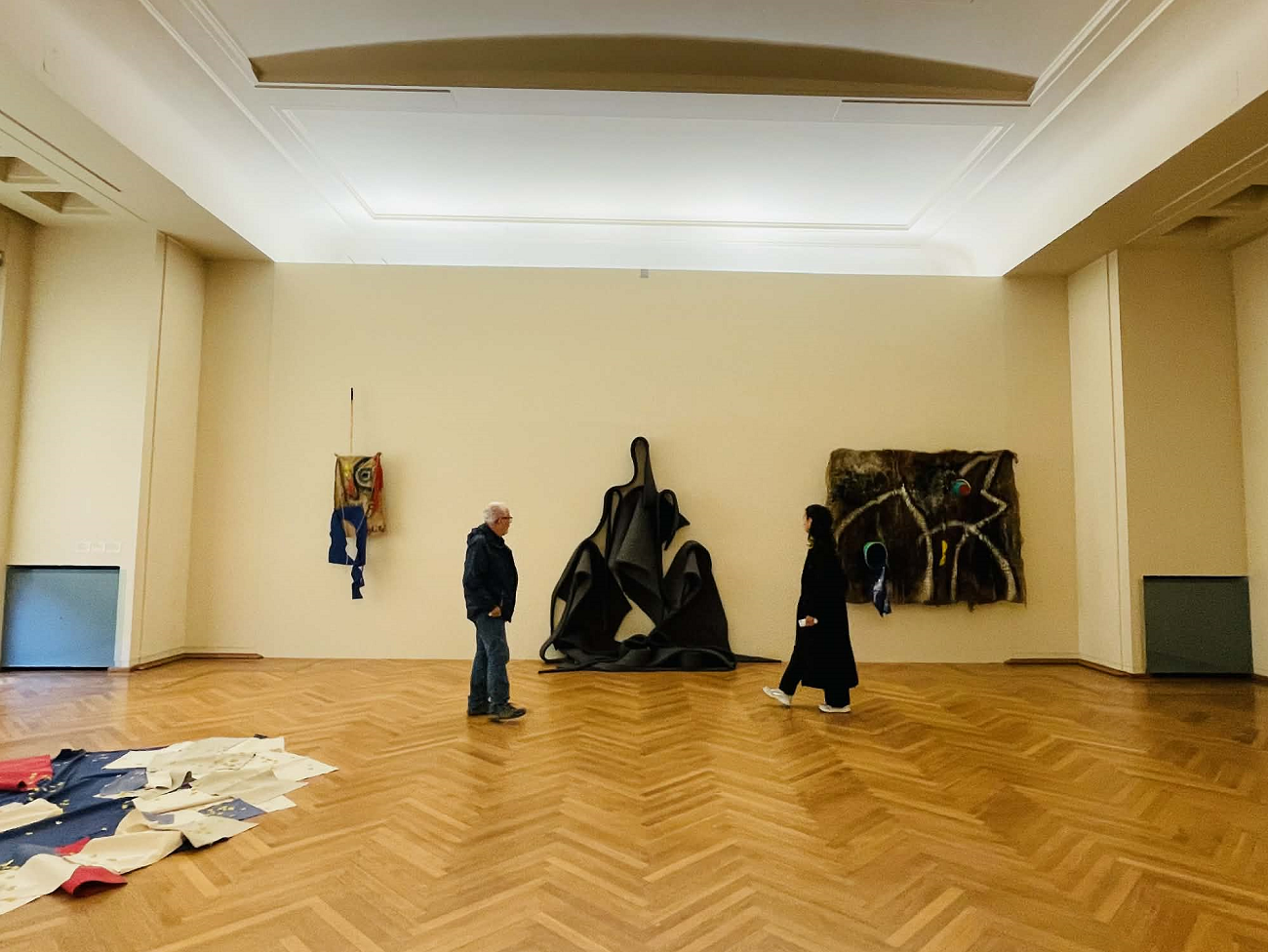
Anthology of the tricolor, Dan Perjovschi, curatorial
“As artists, we have been present at important moments in the history of this country. And we have had a say” including in how the symbols that represent our culture and identity are used now. His exhibition ends upstairs with “Anthology of the Tricolor”.
Photo credit: curatorial