



Recent archaeological finds in an exhibition dedicated to the Roman Danube
“The Danube, the river that shaped a world. Roman Territories between the Iron Gates and the Black Sea” can be visited at the National Museum of Romanian History starting February 17.
The exhibition is organized by MNIR in partnership with the Institute of Eco-Museum Research “Simion Gavrilă” – Tulcea (ICEM), the Museum of National History and Archaeology – Constanța (MINAC), the Museum of Civilization of the Lower Danube – Calarasi (MCDJ), Banatului Montan Museum – Reșița (MBM), “Paul Păltânea” County Museum of History – Galați (MJIPP), Iron Gates Region Museum – Drobeta-Turnu Severin (MRPF), Oltenia Museum – Craiova (MOC), Teleorman County Museum – Alexandria (MJTR).
Along its lower course, the Danube was one of the most dynamic frontiers of the Roman Empire. More than a line of defense, the river functioned as a major infrastructure of movement, exchange and control, shaping landscapes, settlements and communities. The exhibition proposes an updated and deeply contextualized reading of this space, from the Iron Gates to the Black Sea.
Taking as its starting point and documentary basis the album “The Danube Limes in Romania”, produced within the National Limes Program, dedicated to the inscription of these sites on the UNESCO World Heritage List, the exhibition goes beyond the framework of a known synthesis and brings to the foreground archaeological pieces resulting from recent archaeological research or reinterpretations based on the latest scientific data. These artifacts are exhibited in a discourse that restores their historical, functional and landscape context.
The exhibition brings together pieces from the collections of the MNIR, together with objects from the collections of eight partner museum institutions, reflecting the cultural and strategic unity of the Roman Danubian frontier along the entire sector between the Iron Gates and the Black Sea. This inter-institutional collaboration allows, for the first time, a coherent and comparative presentation of archaeological finds along the Danube.
Latest data, ambient and documentary photography
A distinct segment of the exhibition is dedicated to the dynamics of archaeological research in recent years. Systematic campaigns, preventive research and interdisciplinary projects carried out at sites in the Danube have yielded essential information on fortifications, civil settlements, harbors, military infrastructure and burial sites. The results of this research contribute to a more nuanced understanding of daily life, population mobility and the relationship between the Roman army, the natural environment and local communities.
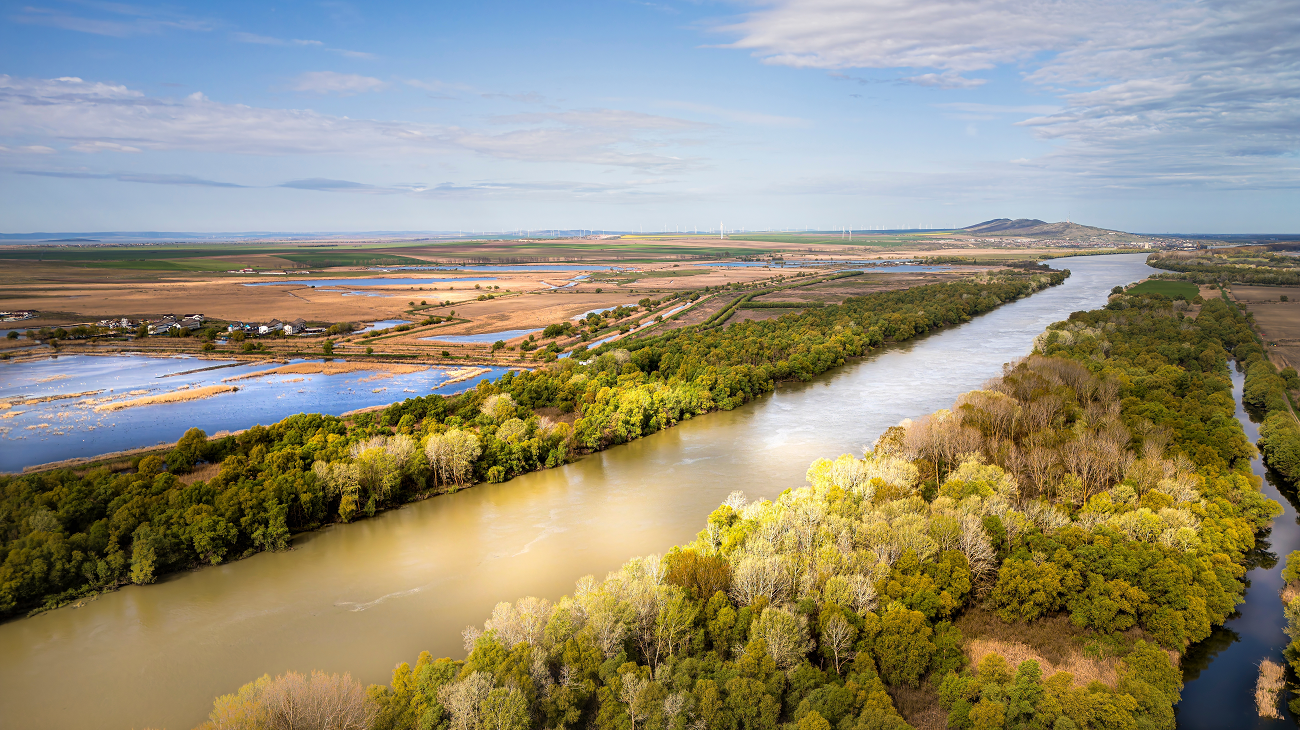
The exhibition project combines this cutting-edge data with environmental and documentary photography taken at sites along the Danube, capturing the river as a historical and cultural landscape. The images complement the scientific discourse and bring the public closer to the concrete reality of the Roman frontier. The visitor route is conceived as a journey along the course of the Danube, from west to east, and the curatorial narrative is supported by MNIR spaces reopened to the public in an area of the museum renovated almost two decades ago. The architectural details of the building are integrated into the exhibition itinerary, contributing to the idea of continuity, rediscovery and reactivation of heritage. Through this exhibition, the Danube is presented not only as a frontier of the Roman Empire, but as a living and connective space, where recent discoveries and contemporary research offer new perspectives on the past.
The opening takes place on February 17, from 13:00 in the central hall, French wing, of the MNIR. The exhibition is open until the fall and can be visited from Wednesday to Sunday (09:00 – 17:00, winter opening hours, 10:00 – 18:00, summer opening hours).