



INTERVIEW – Doina Lemny: Brâncuși’s spiritual legacy is sometimes over-interpreted, leading to “a nationalism that is not suited to his thinking”
Doina Lemny, art historian, curator and expert on the work of Constantin Brancuși, talks in a curatorial interview about Constantin Brancuși’s legacy and values and the way they are perceived and reflected in contemporary Romanian society, about the way his work is valued today and the role that the artist’s creation and thought can play in the cultural education of young people in Romania.
Constantin Brâncuși (February 19, 1876, Hobița – March 16, 1957, Paris) is evoked every year in Romania “with the same praises and tributes that lose their substance”, says Doina Lemny, who is preparing – among other things – the exhibition “Brâncuși and his Muses“, hosted by Art Safari New Museum from September 18 to December 20, 2026, a year in which several events are organized to mark a century and a half since the birth of the sculptor.
Doina Lemny was a curator at the Centre Pompidou from 1991 to 2019, when she was mainly engaged in the study of Constantin Brâncuși’s work and life, organizing exhibitions, publishing several volumes and studies dedicated to the Romanian sculptor. Among others, in 2019, he curated the exhibition “Brâncuși. Sublimation of Form” at BOZAR in Brussels, in the Europalia Festival, and in 2023, she curated the exhibition “Brâncuși: Romanian sources and universal perspectives” in the program Timișoara – European Capital of Culture.
For her work, Doina Lemny has received several distinctions, including being decorated by the President of Romania with the National Order “For Merit” in the rank of Knight.
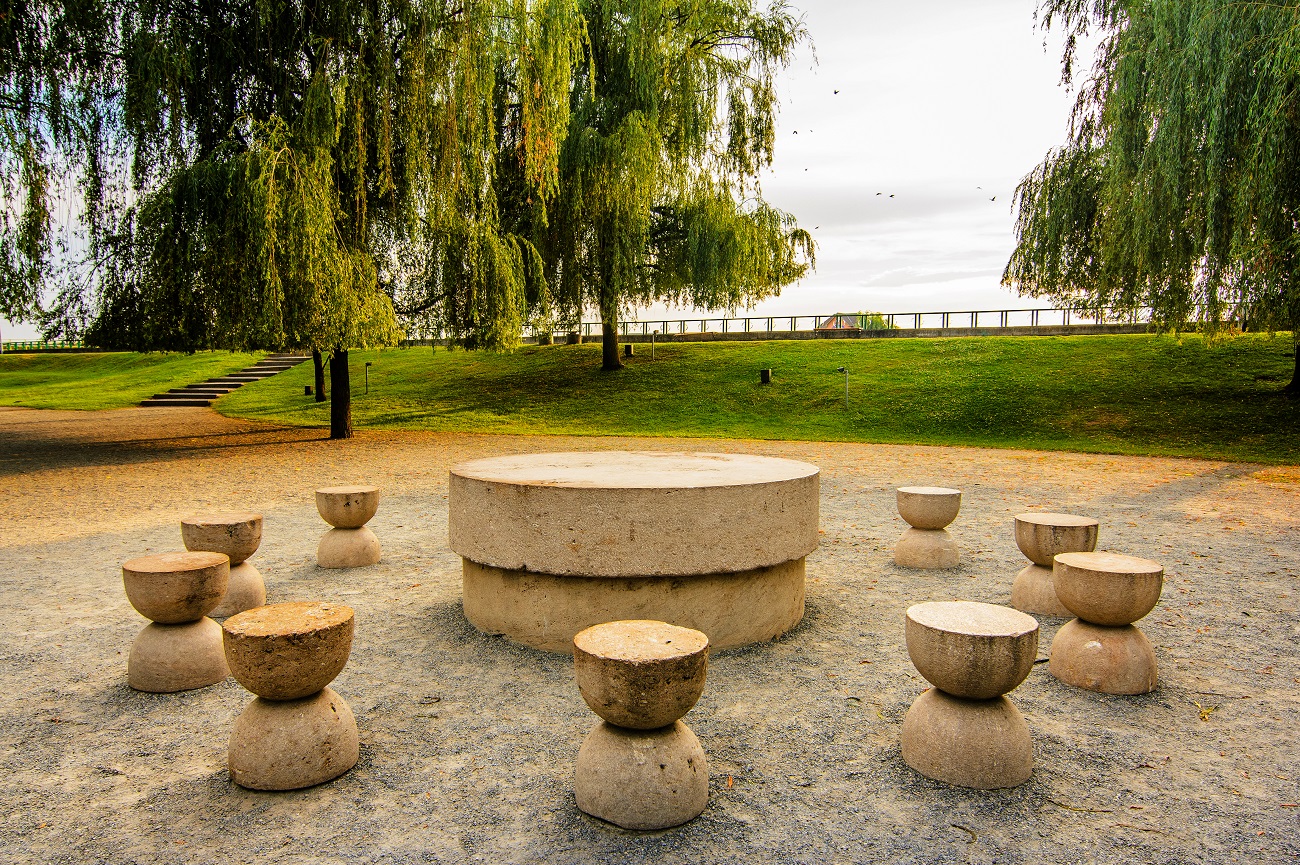
Table of Silence; Târgu Jiu
To what extent is Constantin Brancusi still perceived today as a living symbol of Romanian culture and not just as an established figure of the past?
Doina Lemny: Brâncuși was never perceived as a living symbol of Romanian culture: since his lifetime, the Romanian artist has transcended the borders of his country, geographical, cultural, temporal borders, as I demonstrate in my book published first in France, by Fage, then in Romanian and English translation by NoiMediPrint, in 2012: “Brâncusi, the artist who transgresses all boundaries”. Naturally, he drew his inspiration from his Romanian heritage, but he was also open to the world, to other cultures, other religions and other spaces. This is why he cannot be linked solely to the Romanian space, nor only to the 20th century, at the beginning of which he manifested himself. Through the revolution that he produced in sculpture, he detached it from simple statuary and opened it up to a complex creation in which the sculptor’s work is supported by research and concept. In doing so, he has become a universal artist who transcends spaces and epochs.
How do you think that the values promoted by Brâncuși – simplicity, essence – are reflected in contemporary Romanian society, marked by globalization and rapid cultural consumption?
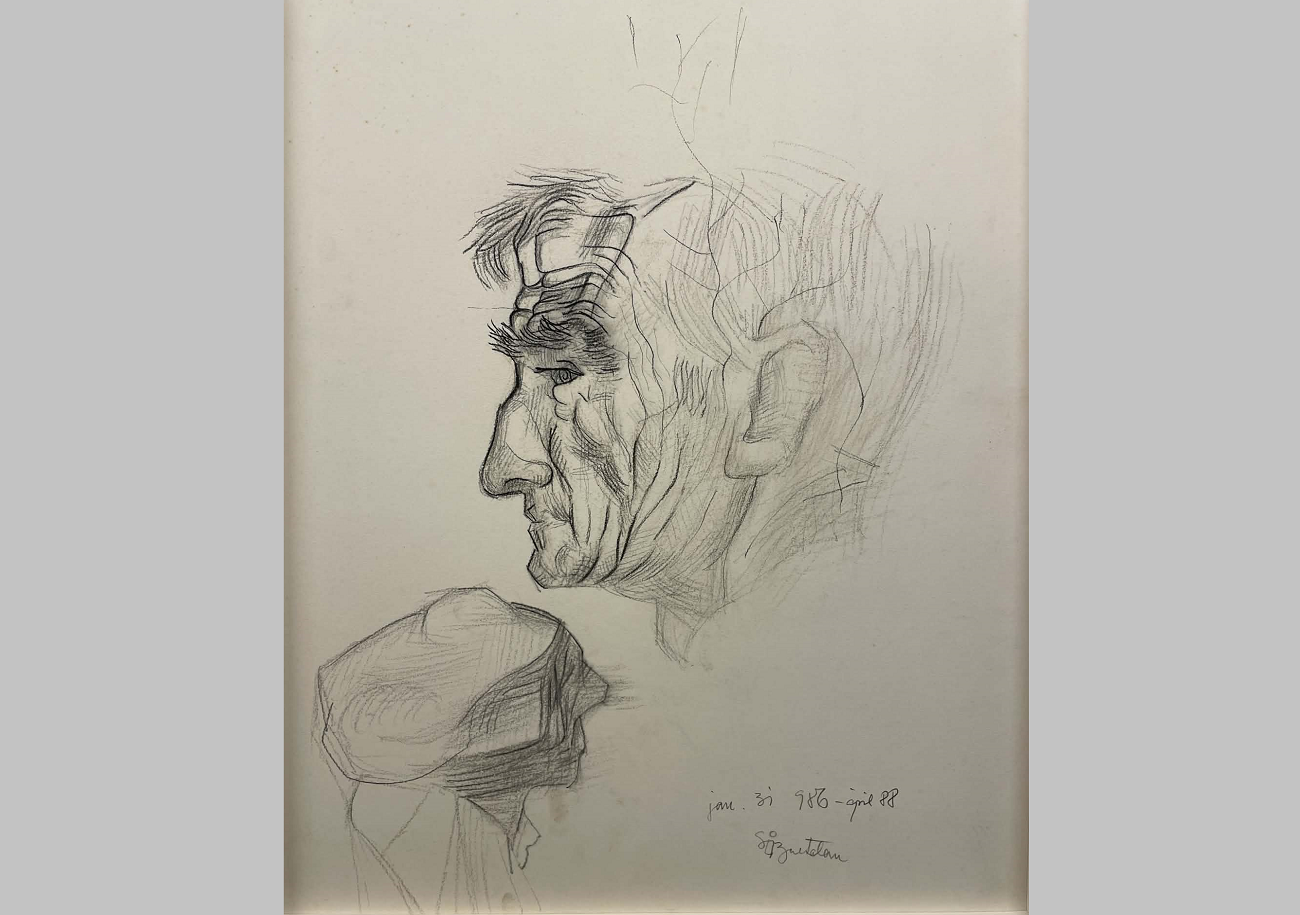
Doina Lemny: Unfortunately, these values are only sometimes said, but not lived: in the Romanian society, hungry for information, for the speed with which it is rapidly gaining ground, there is no time for reflection. Brancuși urged reflection, a return to the core of a being or a thing. Superficiality had no place in his thinking. That is why he succeeded in achieving that kernel of truth – if we refer only to the reduction of the human face to what is essential: not the features – beautiful or not – but the way we live, our position in the world, our very self. In these times, people no longer have the “luxury” of reflecting on exactly what should be done.
Is Brancusi properly valued and promoted in Romania today, compared to his international recognition?
Doina Lemny: Brâncuși is internationally recognized and placed alongside the world’s great creators. In Romania, he is elevated to the level of a “hero” ready to be “sanctified”. This stems from a great admiration for the artist who modernized sculpture after Rodin, who dominated this genre in the second half of the 19th century. For me, valorization means to look into him in depth and search for the reasons for this unanimous recognition. As for “promotion” – it needs no promotion. He is evoked every year in Romania with the same praises and tributes that lose their substance. I believe that this frequency is also harmful because those who are interested do not take the time to read certain documents, to keep up to date with new texts, new interpretations, although very rare, or to review his works. Now, with the internet, it is possible to visit exhibitions organized all over the world virtually, so even without special financial means, those interested could find ideas, answers to certain questions, up-to-date explanations.
What role can Brâncuși’s work and thought play in the cultural education of young people in Romania today?
Doina Lemny: A very important role, if we think of the artist as a person: Brâncuși added to his native intelligence, his intuition, an exceptional curiosity, boundless ambition, enormous power of work and consistency in pursuing a subject. Through these qualities he is an example to young people: you cannot succeed in any field unless you invest yourself fully in what you do. It is not for nothing that Brâncuși said in one of his aphorisms “It is not difficult to do a thing, but to put yourself in the state to do it”, published in the volume recently published by Polirom, Iași, “Brâncuși: art is the absolute truth” (p. 210), presented and edited by myself.
How can the legacy left by Constantin Brancusi be (re)interpreted in order to remain relevant in the Romanian socio-cultural discourse of the 21st century?
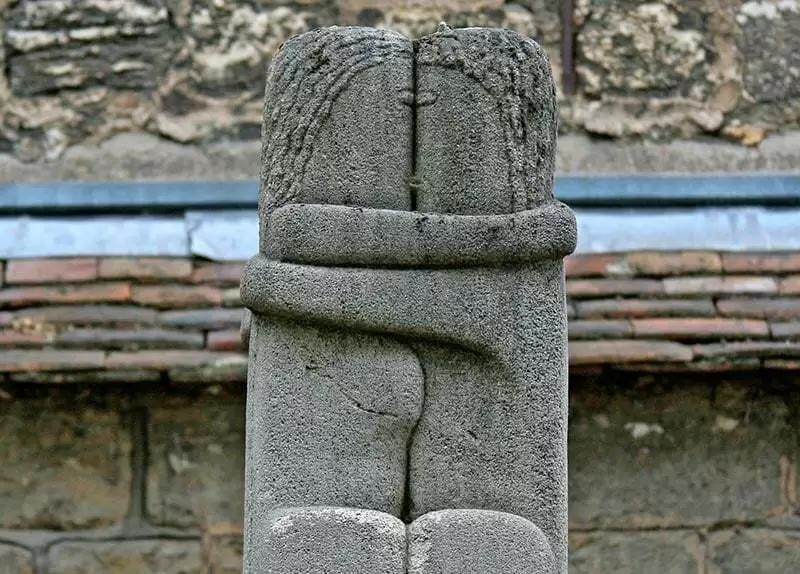
Doina Lemny: The physical legacy left by the artist to the country – the beautiful collection of sculptures at the National Art Museum of Romania, the Craiova Art Museum and especially the monumental ensemble in Targu Jiu deserve to benefit from a modernized presentation. As for Brâncuși’s spiritual legacy – also interpreted in different ways, sometimes exaggerated, which can lead to a nationalism inappropriate to his thinking – it should be used as a model of work and dignity, of the ability to adapt to the modern world through one’s own thinking and creation.
In the context of the Brâncuși Year, you are preparing an exhibition with Art Safari. What can we expect? What artworks will we see in Bucharest?
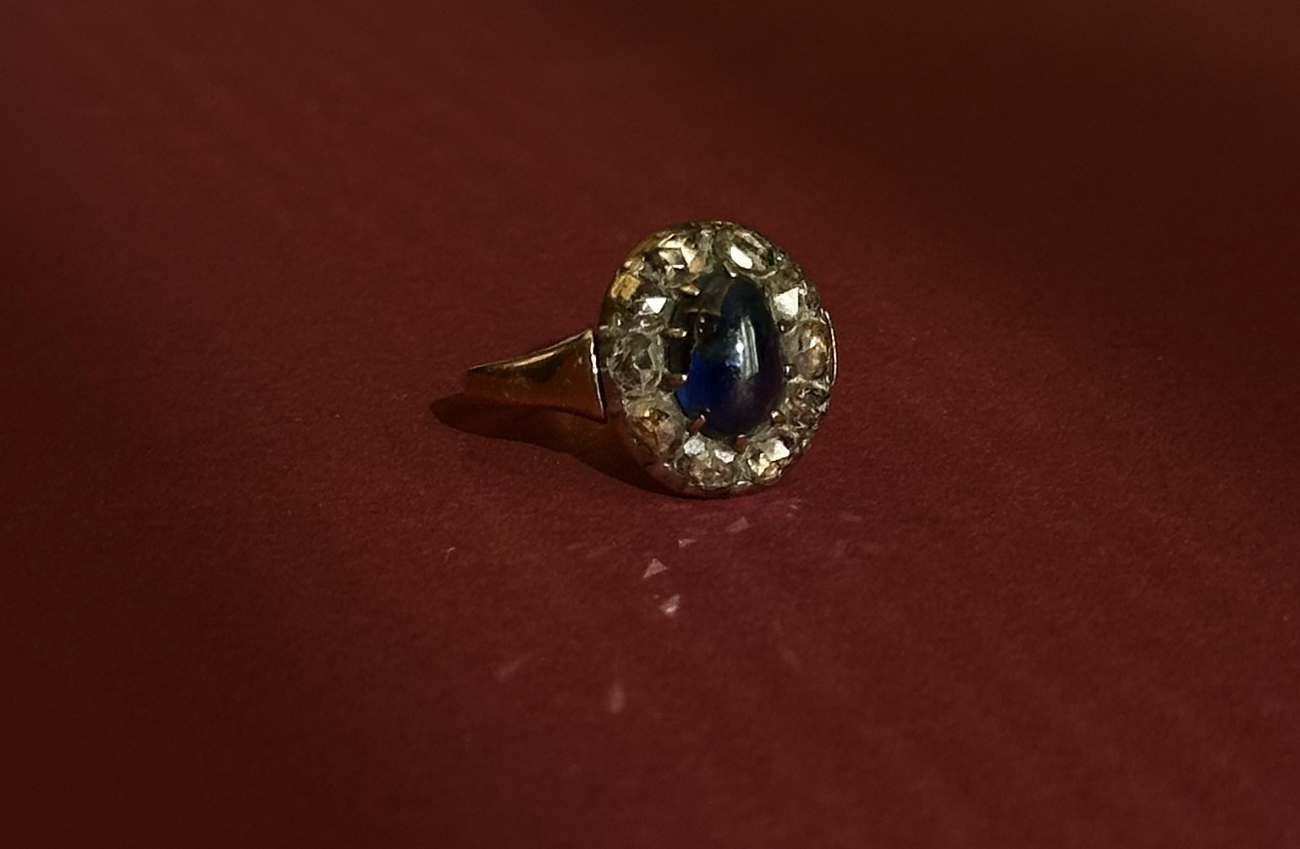
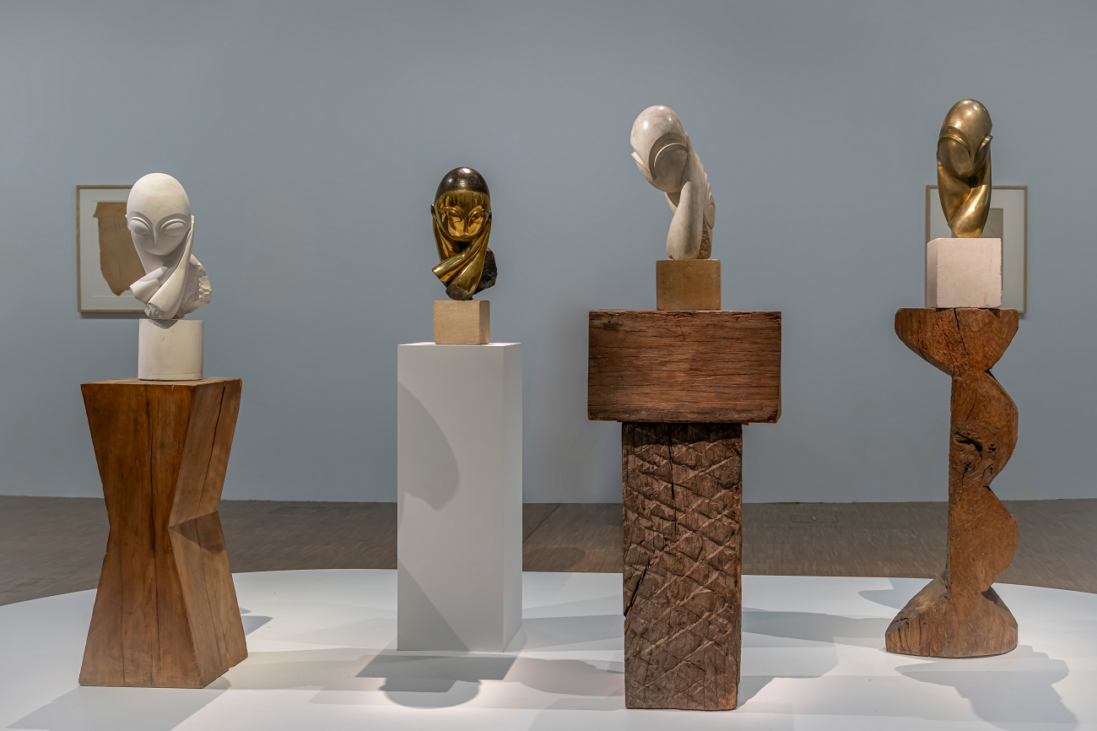
Doina Lemny: Before we know which works we will see, I think I should point out the concept which, from my point of view, is more important than a string of sculptures that we can see on the internet and that could also be seen at the exhibition I curated in Timisoara in 2023. I think that even those eager to see or revisit Brancusi’s sculptures would like to stop seeing the same works, especially as the artist worked in series, and so only those familiar with his work can distinguish between the different stages. To be fully admired, works need to be presented in context and follow an idea. So, for this year, together with the Art Safari team, we wanted to present a completely new aspect, namely Brâncuși – the man, with his sentimental life, based on my book “Brâncuși and his muses” published by the French publisher Gourcuff-Gradenigo in 2023, which I hope to see translated into Romanian on this occasion by the publisher Vremea.
Alongside some sculptures, we will exhibit many photographs, indirect documents, objects that belonged to his “muses”. This is a new way of looking at the artist celebrated this year, 150 years after his birth.