



Personification of the pure Scottish spirit commissioned by the Royal Family of Romania
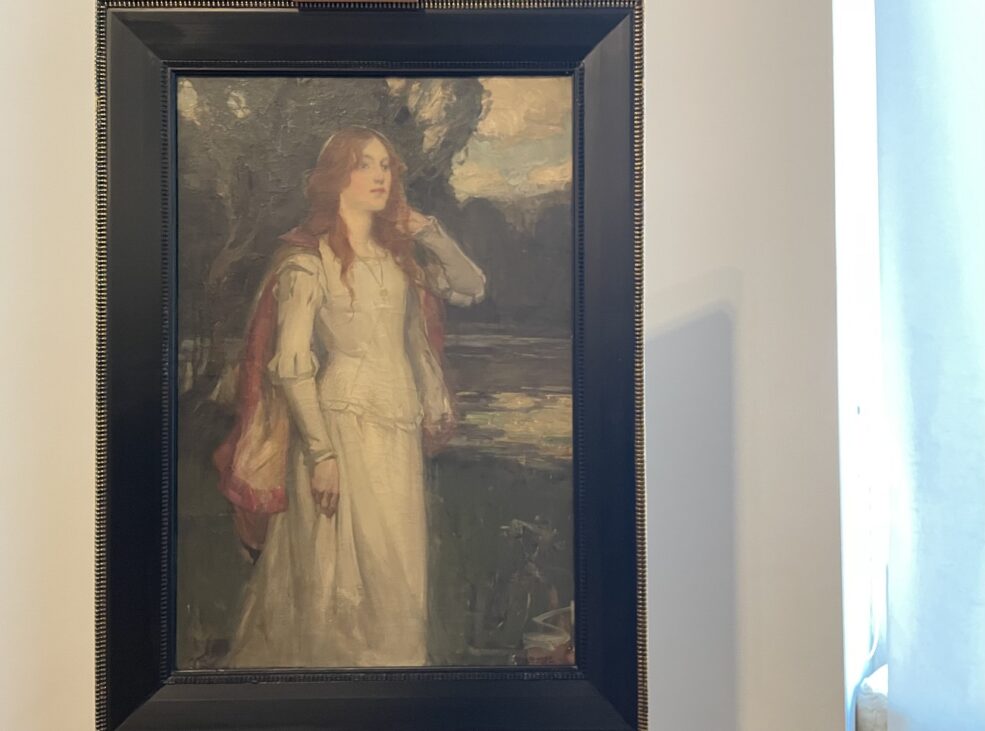
“Bonny Kilmeny” (1890 – 1910) is the only painting in the Romanian patrimony signed by the Scottish painter Robert Hope (1869 – 1936), which became part of the collection of the National Art Museum of Romania after it was transferred in the mid-1950s from the Ministry of Foreign Affairs.
Documents on its provenance are hard to find, but the Edinburgh Art Museum’s website states that Hope was commissioned by the Romanian royal family. Most probably by Queen Maria (given her British origins), says Dr. Mălina Conțu, historian and theorist of art and architecture, head of the European Art section at MNAR.
The work entered the collection as “Portrait of Bonny Kilmeny”, and years later specialists realized that it was not about a person, but about an idea. The idea of nation, of national identity.
Subsequently, Robert Hope – a Fellow of the Scottish Academy – painted another work in the same pre-Raphaelite style, entitled ‘Kilmeny’, which is on display at the Borders Textile Towerhouse in Scotland.
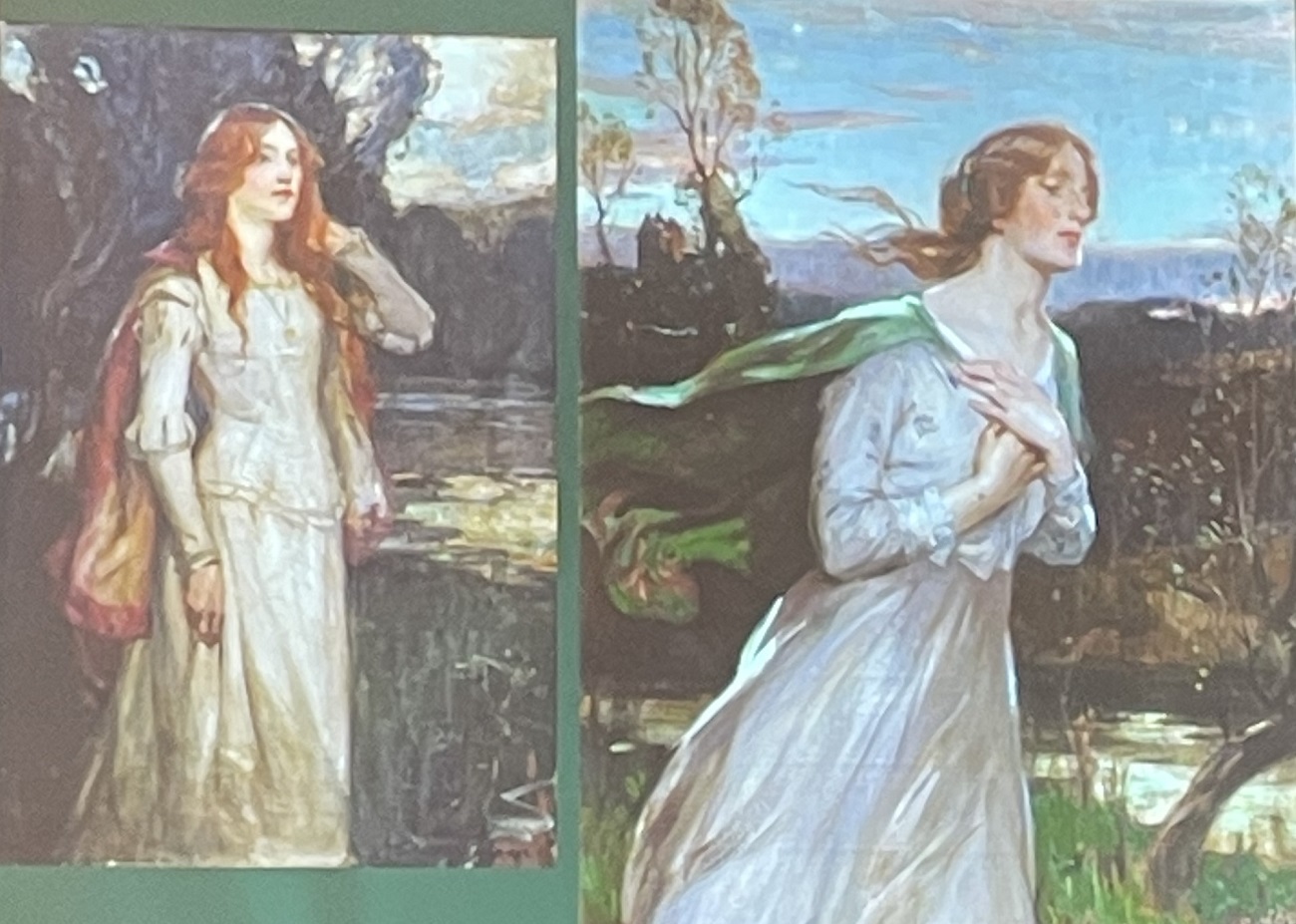
“Bonny Kilmeny” and “Kilmeny”, a reworking of the theme, by Robert Hope
Nationalist poem in pseudo-archaic dialect, source of inspiration
The 19th century was a century of change and education. French and British rule was marked socially by revolutions that changed the political landscape, followed by the industrial revolution. Europeans at the time were seeking to find their roots in myths other than the Greco-Roman. New state structures were formed, each with its own identity.
The Celts became the source, the benchmark for illustrating Britain’s national identity, but starting with the French. From Dominique Ingres to Francois Gerard and Anne-Louis Girodet de Roussy-Trioson, myths have been rendered on canvas. The medieval historical thread has fed a sense of national identity in Britain and Germany alike.
Robert Hope, an eclectic artist, initially a lithographer and book illustrator, then a church decorator and painter, produced several works inspired by Scottish ballads and songs, romantic, as well as scenes with a social message. He painted landscapes, portraits and large-scale decorative compositions.
“Bonny Kilmeny”, at first glance, depicts a diaphanous young woman in a typical Scottish landscape. The painting’s underlying title is inspired by a line from James Hogg’s poem “The Queen’s Wake”, published in 1813 in the context of the Scottish national revival.
The nationalist poem, written in a pseudo-archaic dialect, speaks of the return of Queen Mary Stuart to Scotland, and the formula ‘bonny Kilmeny’ appears in one line, the female character being Kilmeny, a personification of the pure Scottish spirit in Hogg’s vision.
The character profiling, explains Mălina Conțu, suggests the connection between the “personified spirit” of Scotland and the Scottish national territory.
The painting “Bonny Kilmeny” by Robert Hope is on display in the French Hall of the European Art Gallery of the MNAR until mid-February, as part of the “Works in the Spotlight” program.
Photo credit: curatorial