


INTERVIEW – Billy Gibney, first time in Bucharest: The intimate memory of a face, in a mixture of paint and volcanic rock
Australian artist Billy Gibney is participating in the group exhibition “In the Body Lies the Truth” at the IOMO Gallery, marking his first exhibition in Eastern Europe. This exhibition is an important opportunity for him, as it represents the launch of his art into a new market.
Billy Gibney (b. 1995, Melbourne) mixes paint with volcanic rock, marble dust, wax, and crushed glass, resulting in works that bear traces of both the creative process and memory. He is familiar with Romanian culture, as it is an element that resonates with his practice—viewing objects and legacies as symbolic representations of what we inherit.
„In the Body Lies the Truth”, a group exhibition curated by Thom Oosterhof that explores the body’s involuntary language, is on view through June 13 at the Combinatul Fondului Plastic venue.
Gibney will also participate in this year’s CAN Ibiza art fair, taking place June 25–28.
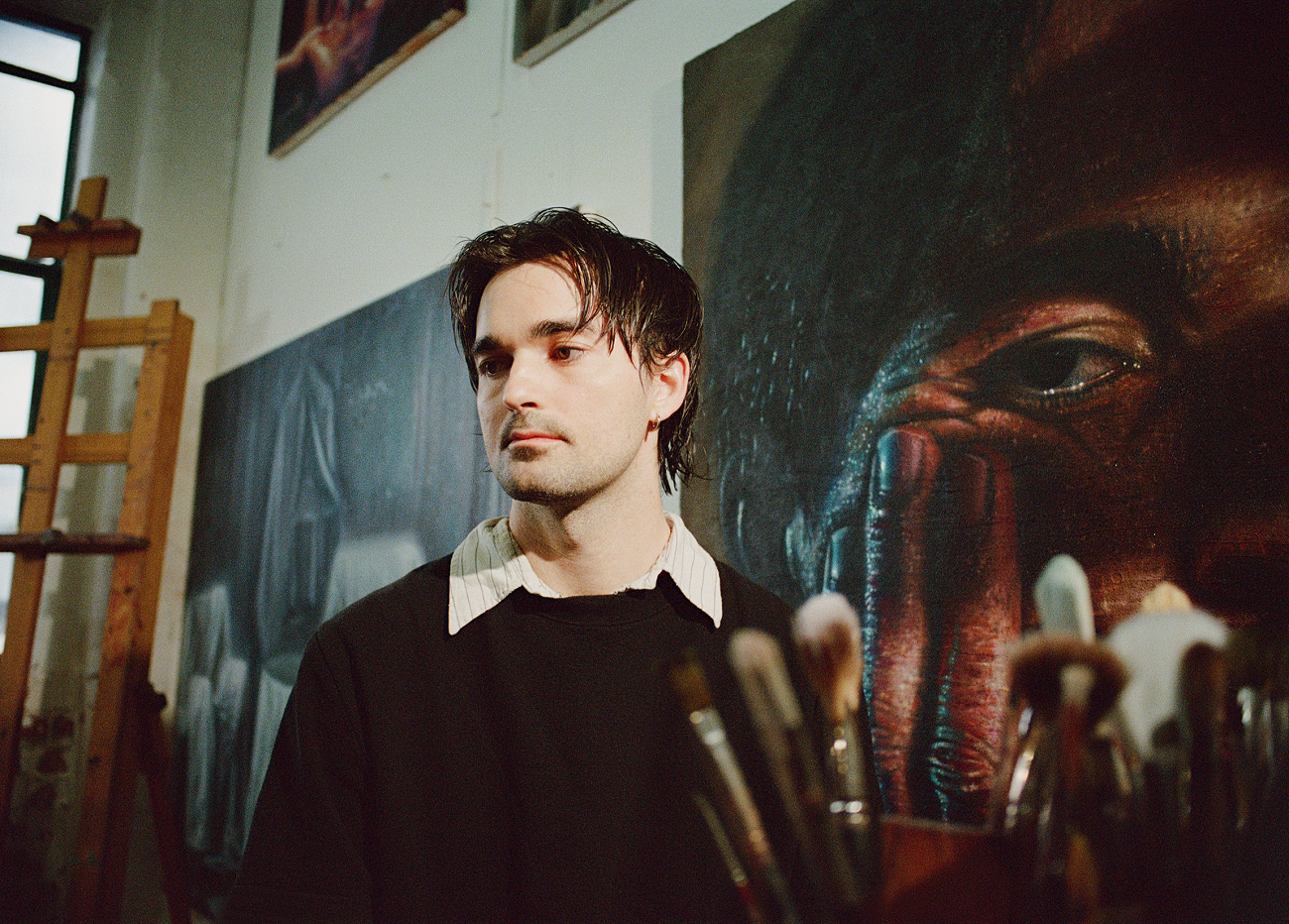
Billy Gibney
How would you describe your artistic practice to someone encountering your work for the first time?
Billy Gibney: It’s always evolving, but right now I’m interested in making works that function as kind of records of memory and identity.
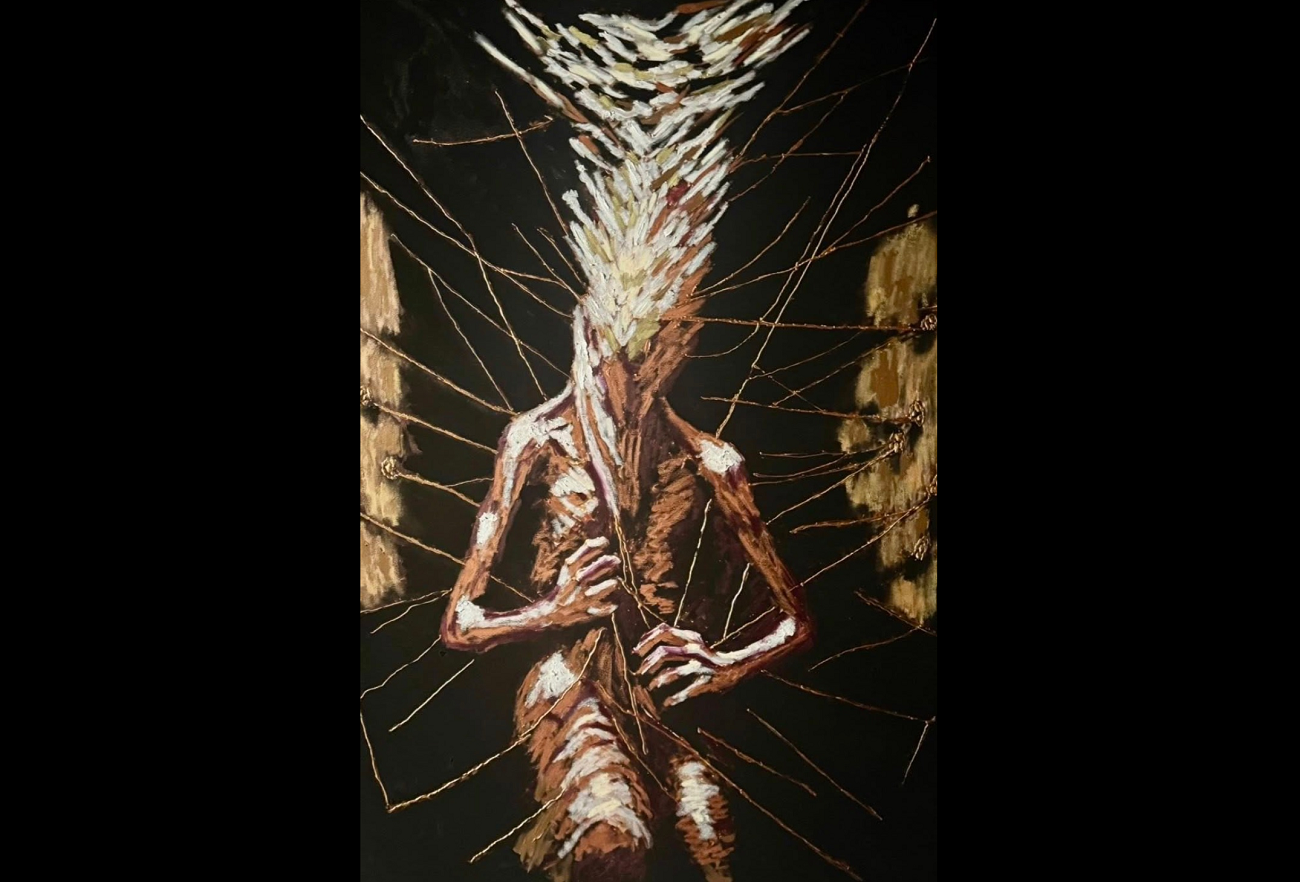
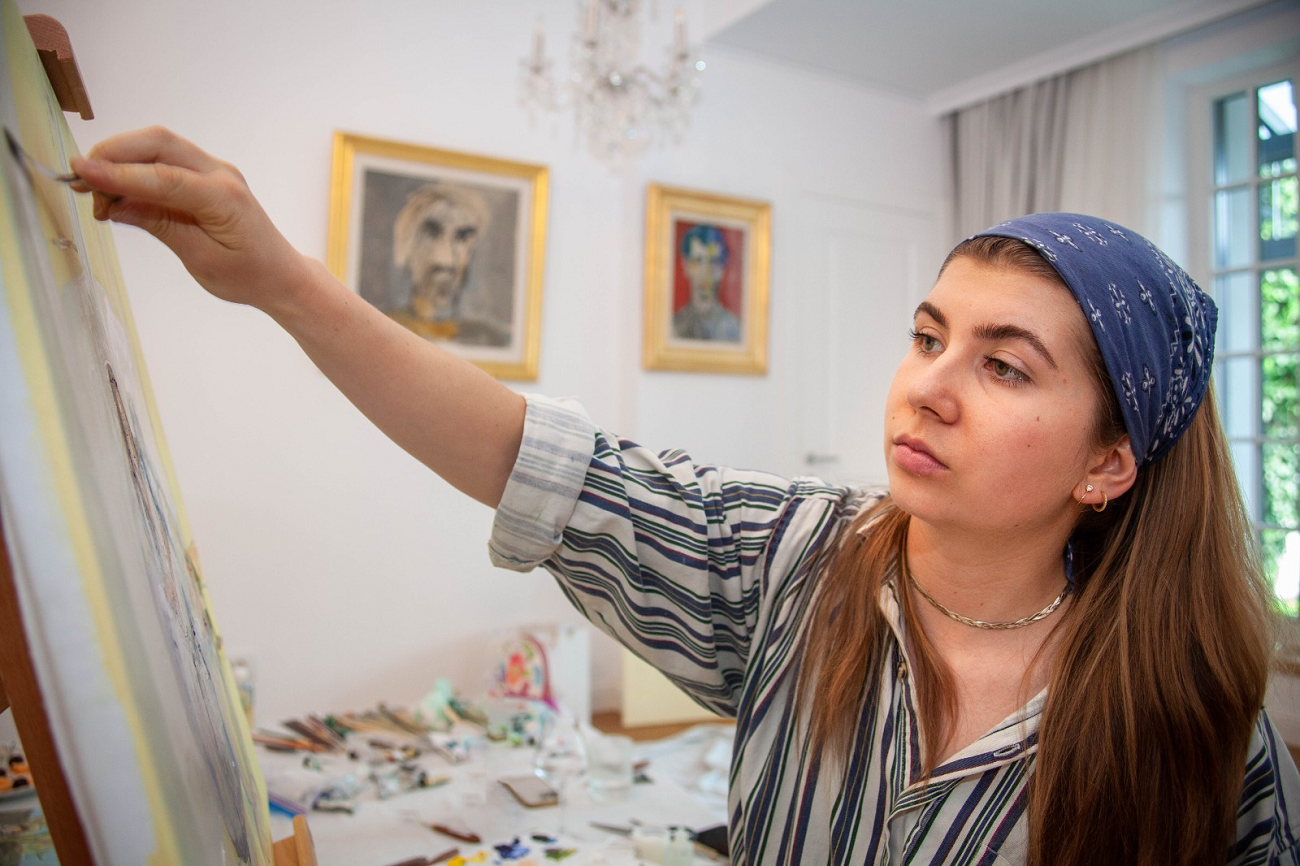
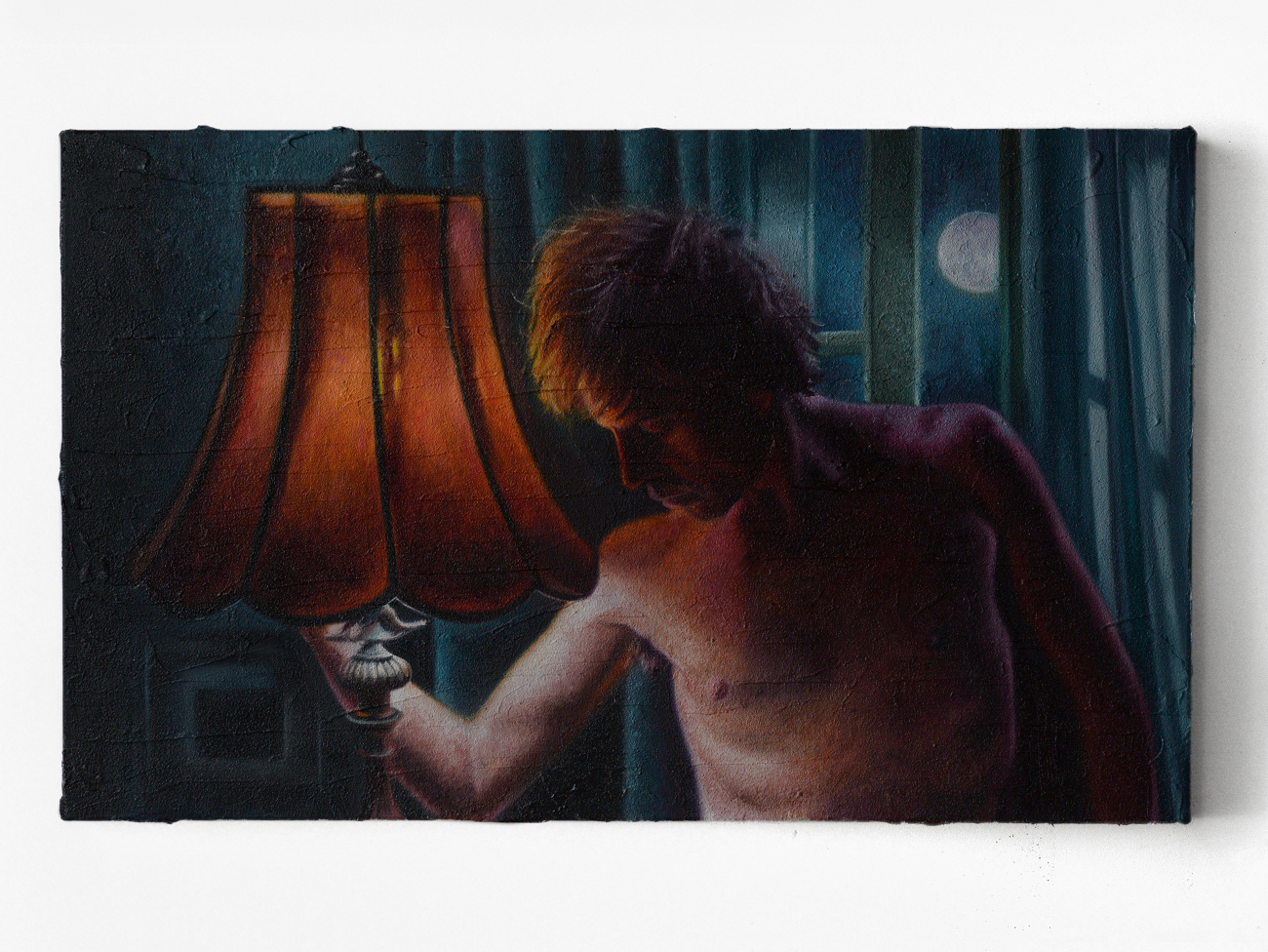
I prepare my canvases with thick layers of gesso and paint mixed with materials such as volcanic rock, marble dust, wax, and crushed glass. The result is a preserved, stone-like surface marked with scars, abrasions and accumulations.
What interests me is the tension between contemporary realism and these surfaces that feel almost fossilised. There’s a sort of contradiction there that I’m drawn to. The works end up carrying these traces of process and memory, a kind of embedded storytelling within the material itself.
What themes keep returning in your art?
Billy Gibney: The themes I return to are around memory, identity and perception and how these distort and evolve over time.
How does showing your works in Eastern Europe differ from exhibiting in other places?
Billy Gibney: This will be my first exhibition in Eastern Europe, so I’m excited to see how it resonates. I’ve found showing work elsewhere in Europe to be a rewarding experience. Coming from Australia, there’s a certain geographic isolation. We have a really strong and vibrant art scene, but it can feel somewhat self-contained. In Europe; an exhibition in one country is often seen by people from many others, and those connections tend to ripple outward: one show can lead to another, one acquisition can open the door to the next, and so on.
What can you tell us about the works you’re presenting at IOMO?
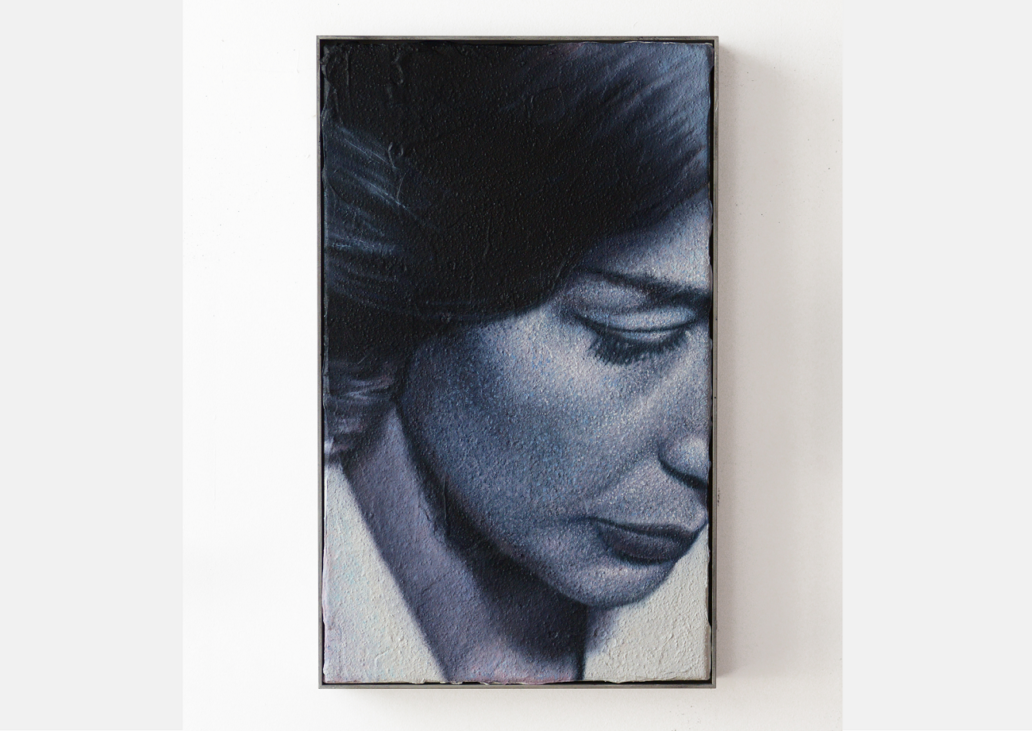
Billy Gibney: When Thom Oosterhof sent me the curatorial text for ‘In the Body Lies the Truth’ it felt very fitting to what I had already been exploring in my practice. I’m presenting two works, they are both tightly cropped portraits ‘Vestige I’ and ‘Vestige II’. They are fragments of a person, cropped in a way that both reveals and conceals. The texture of the volcanic rock merges into the skin, resulting in a very intimate view of a face. At the same time, they’re hidden by shadow and cropping. For me, these works are vestiges: distant impressions of someone you are trying to reconstruct from memory, yet can never fully piece back together.
What do you hope visitors in Romania will feel or question after seeing your work?
Billy Gibney: I try to steer away from telling other people what to feel or question about the work too much. I think one of the best things about looking at art is that one person will interpret or see something completely different to another person. People will draw from their own experiences, culture and history and will reflect that onto the work. All I would suggest is to get really close to the paintings, to the point where the image blurs and the texture reveals.
Have you discovered anything about Romanian culture or art history that resonates with your practice?
Billy Gibney: I still have so much to learn about Romania. In my early twenties, my partner at the time was Romanian and through her I was fortunate to gain a small insight into the culture, food, and history – though I really only scratched the surface.
I was reading the exhibition text about the ancestral narrative of the ia — the traditional blouse worn as memory and protection, passed down through generations. This resonated with some ideas I’ve been exploring in my practice: specifically looking at objects and heirlooms as symbolic representations of what we inherit; personality traits, memories, trauma, legacy and so on…
What do you think are the biggest challenges young artists face nowadays?
Billy Gibney: This is something I’ve talked about with other artists a lot recently. The art landscape has undoubtedly changed the past couple years: collectors have become more cautious, we’ve seen major galleries close. There’s no doubt it’s a difficult time for artists to sustain themselves through their practice alone. Nearly every artist I know works another job to support both their practice and daily life, but many feel pressure to conceal this in order to appear more commercially fruitful. The result of this is that it unfortunately leaves a lot of artists feeling alone in their experiences that are actually widely shared. There needs to be more conversation around the fact that having another job is not a failure, if anything, it can create the stability and freedom needed to be more experimental and honest in your practice.
I think one positive is that as we move through a large transfer of wealth over the next while, a new generation of collectors will emerge, one that possibly shifts away from high-end, blue-chip works toward a more accessible and sustainable art landscape centred on emerging artists and smaller, mid-range works.
Do social media and digital platforms help or pressure young artists?
Billy Gibney: It does both. It’s valuable for connecting artists with gallerists, collectors, and audiences all over the world. It gives people access to your work who may never have encountered it otherwise. At the same time, people are experiencing the work through a screen, and that comes with its own limitations. A lot of details like scale and texture can get lost.
There can also be a pressure to appear overly productive online. I know a lot of artists, myself included, have at one time or another felt this pressure of needing to produce and post work to stay visible. I think it can be a bit of a trap. I’ve intentionally slowed things down the past couple years, just posting when I need to from a desktop. I feel like it has freed up time, stopped unnecessary comparisons with other artists and allowed me to be more present and experimental in my practice.
I also think the nature of algorithms generally aren’t a good thing. It can create a kind of homogenisation, where a lot of work begins to look very similar because artists are responding to the same sort of visual economy. I realise this all sounds a bit pessimistic, sorry!
I definitely wouldn’t have the career I do today without social media so I should acknowledge that too.
What does participating in CAN Ibiza Art Fair mean to you at this stage of your career?
Billy Gibney: I had previously shown at UVNT Madrid before it merged, so I’m really excited to participate in CAN Ibiza! Art fairs are great because they allow large numbers of people to encounter works physically and in person. When so much art is experienced through screens, there’s something uniquely meaningful about gathering people together in a shared space dedicated entirely to viewing and engaging with art from galleries all around the world.
Are you preparing a specific project or series for Ibiza?
Billy Gibney: I generally just work away on my practice then present a selection of works to the gallery and let them curate from there.
The works that I will be showing are an expansion on what I am exhibiting in Bucharest for ‘In the Body Lies the Truth’.
What’s next for you after Bucharest and Ibiza?
Billy Gibney: I’m currently working toward my next solo exhibition, opening September in my hometown, Melbourne. I’ve been fortunate to exhibit mostly throughout Europe and the UK for the past while, and I realised four years has passed since I last exhibited in Australia — long overdue. I’m really looking forward to be able to have friends and family come to the exhibition!
Photos courtesy of IOMO