



“My paintings are my memories” – Samy Briss, at the age of 96
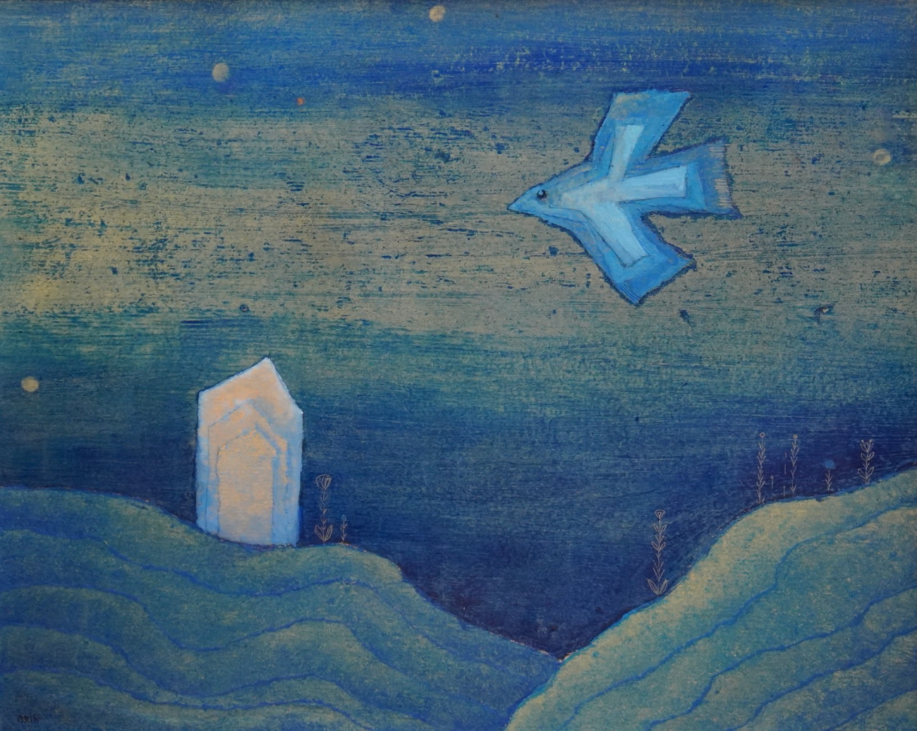
Samy Briss seems to have always been juggling in shades of gold, blue and the shapes of winged birds and fish, as if someone had put in his hands, since the beginning of the world, the brush of a sorcerer and the palette of a dreamer without cure. Samy Briss does not paint, but invokes, does not chase after style, but intuits it every time, extracting it from the hiding place of an eternal art, which he finds every time, without the slightest effort.
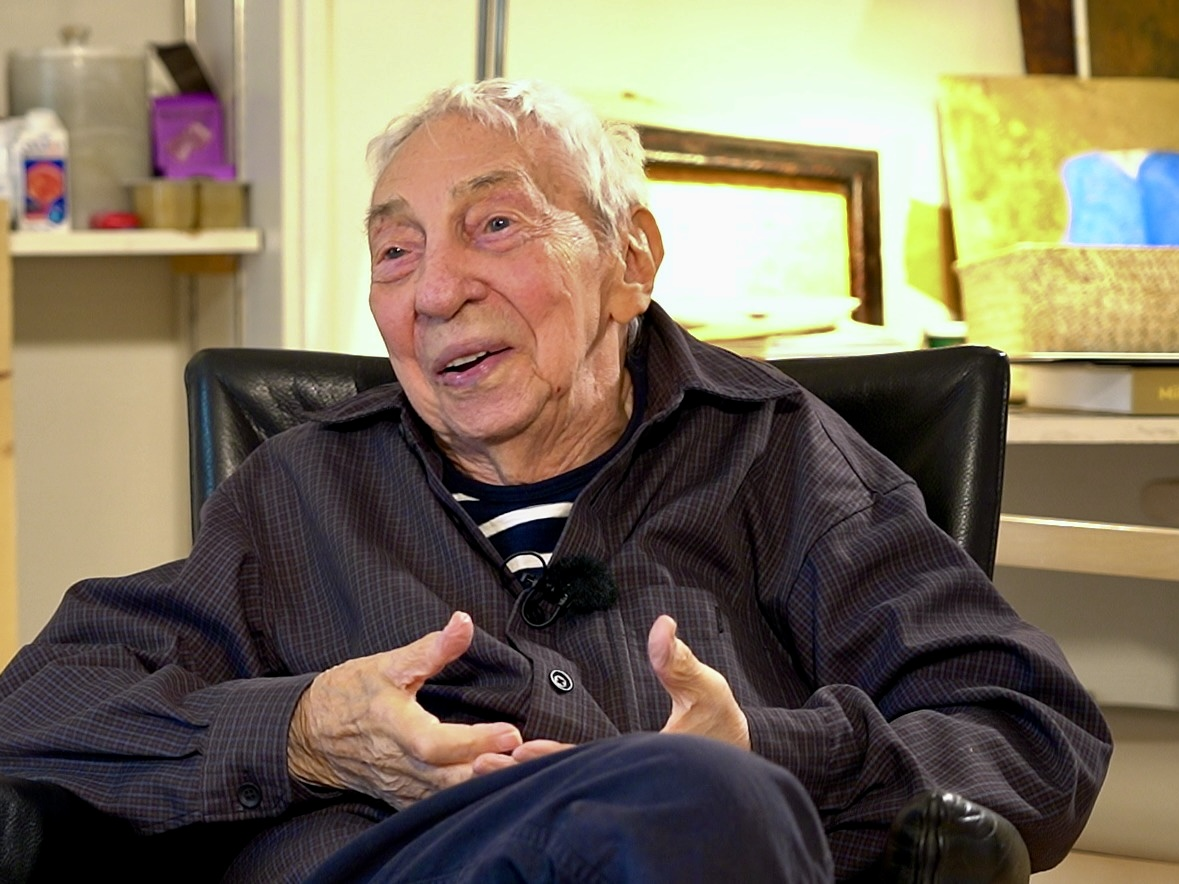
Samy Briss turns 96 years of graceful storytelling and agreed to share his creative joy with Curatorial editors, who visited him in his Paris studio.
Now at the age of disarming sincerity, Samy Briss recalls his journey through the three eras and three periods that have marked his life and his art. The Romanian language is impeccable, the phrasing is elegant, and the subtle French accents in the speech only add to the charm of the conversation. He is elegant, he loves company, he engages in conversation with the enthusiasm of a young artist on the verge of making a name for himself.
Samy Briss is classic, he is modern, he is abstract and descriptive all at once. Samy Briss is a little-known contemporary, but he carries his magic with the dignity and joy of a complete artist who has passed through the portals of three worlds and countless adventures in color. In his perpetual juggling there is never a fall, never fatigue, only the slow grace of one who has understood that beauty is not to be conquered, but whispered.
Samy Briss
Three worlds and one universe
The first world was Romania, with the Iasi of his childhood, the capital of Moldavia with the cosmopolitan air of the 1930s, suddenly interrupted by the tumult of history. The communist curse banned his first painting exhibition, a moment that in 1959 put him on a ship bound for Haifa.
Thus, the second world was Israel, the country that welcomed and transformed him, that opened his eyes to a different symbolism. Israel perhaps taught him that roots are not a limitation, but a renewable and fluid fuel that can infinitely fuel a vision as original with each passing decade.
The third world of Samy Briss, where we also enjoyed meeting him, was France. In 1974, his work was noticed by the André Romanet gallery, and Samy Briss found himself at the stage of a crucial decision, which was made almost instantly. He was to settle in Paris, the site of all the major events in 20th century European art. To the delight of us, his unreserved admirers, Paris not only did not undo the accumulations of his childhood Romania and adult Israel, but added a new layer of refinement and consistency.
From all these three worlds, Samy Briss has built a universe. One that doesn’t exist on any map, but that can be recognized at a glance, anywhere in the world, in his canvases of rare delicacy.
The contradictions of suffering
Samy Briss refuses to blame, to relate to the painful past, to the pogroms of his childhood years, to communism and life in exile. Somewhat counterintuitively, each new layer of suffering has added a new crystal to his soul, a new tinge of optimism that is abundantly reflected in his work. He doesn’t seek or assign blame, he is grateful for the journey and doesn’t stumble at moments. He is also grateful to Romania, Israel and France for the training they have given him, but between the lines we sense a mixture of pride and bitterness about the very recent past, when he was reinstated in the Romanian Union of Fine Artists, but only received an official distinction from the French state.
But his art does not slide down the complicated slope of regret. Nor does his conversation, which focuses exclusively on the good moments, on fulfillments, on painting. Not only has his exile not altered his soul, but it has pushed him to transform his personal dramas into sunny, positive and nostalgic art. Samy Briss processes grief inside, in a secret organ that only great artists develop. Suffering, loss, exile, exile, prohibitions, success, all enter into an uneven mix and are silently digested in that inner chamber that Samy Briss manages with such grace. The result on canvas is a fairy-tale beauty, optimistic without being overly sentimental and wonderful to look at without veering into the decorative.
Joy and elegance
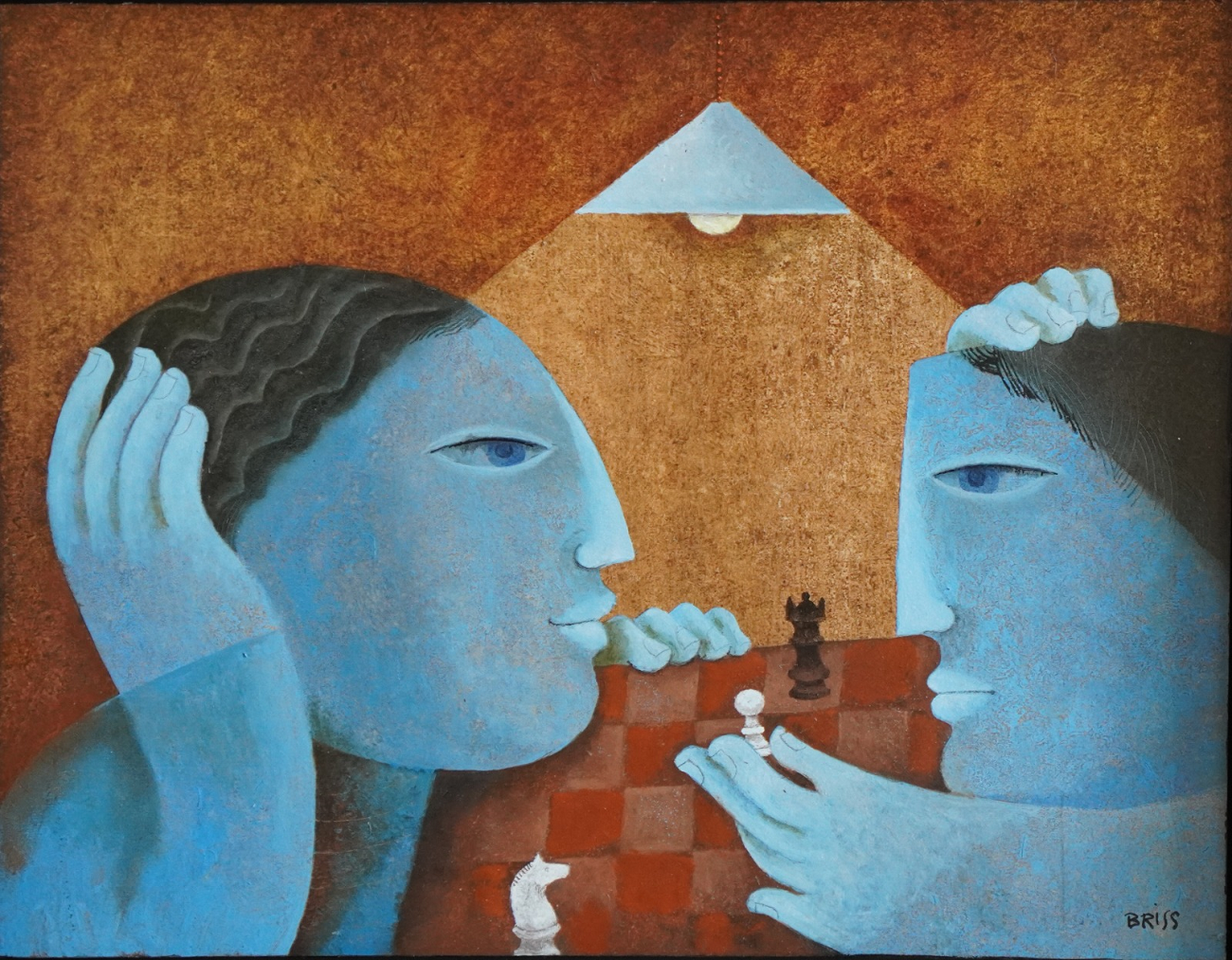
At 96, Samy Briss is at once classic and contemporary, a tribute to the joy of creating wonderful images. His work, scattered in collections in the four corners of the world, cannot be summarized, but can be truly characterized by two simple and profound terms: joy and elegance. With Samy, joy is gained at the end of a structural goodness, a profound understanding that is difficult to verbalize. At the same time, the elegance of his work is not formal but architectural, proposing simplicity in just two dimensions rather than sophisticated ramblings of light and perspective.
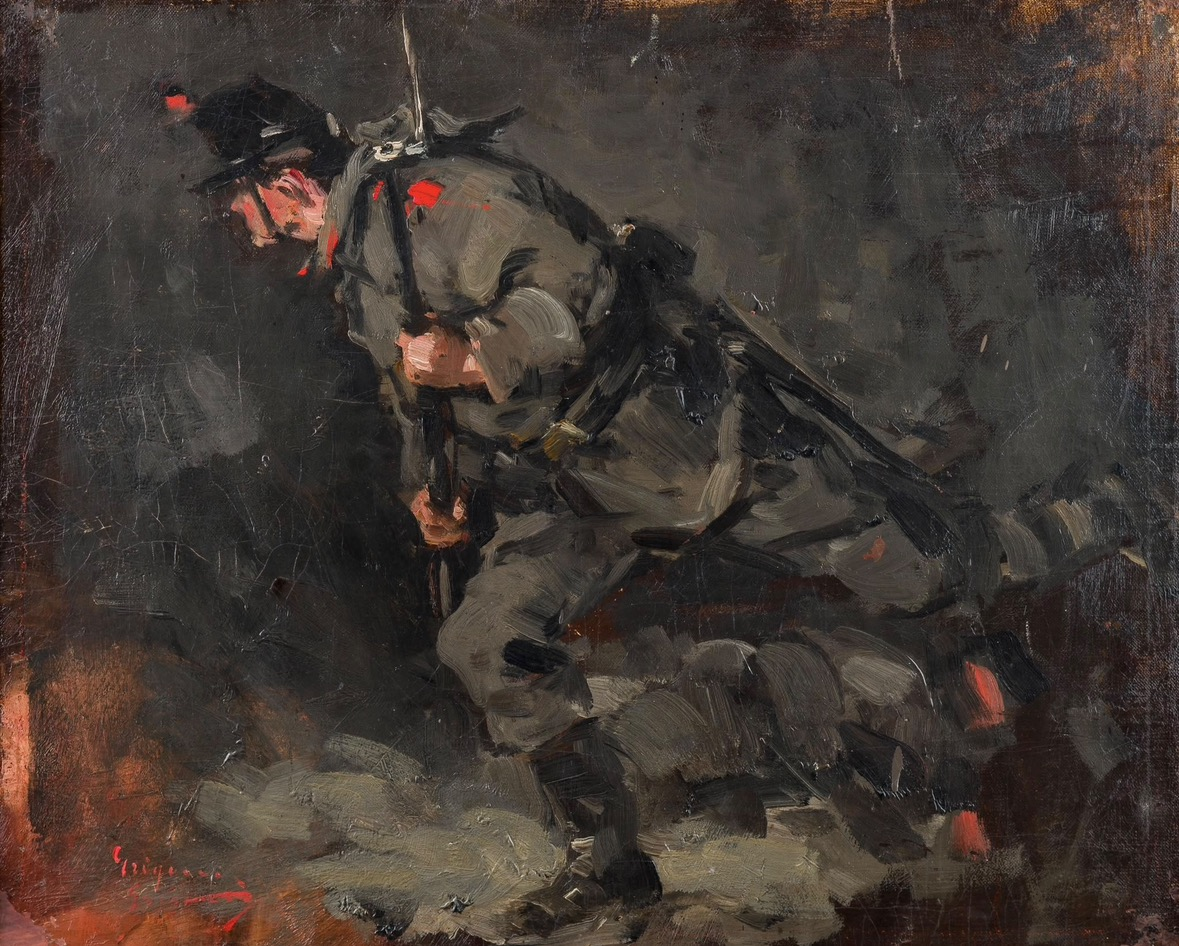
At the School of Arts in Bucharest, Samy Briss was taught by Camil Ressu, whose pedagogical influence he still remembers with reverence today, more than seven decades later. He recalls one of the most important lessons on art and life he received from the illustrious artist during his time at the faculty: “He told us that probably one or two of us will become real painters, but for that to happen, each of us must strive not to do as our teacher did, but to find our own style, our own language.
The painter needs no words
To this day, Samy Briss retains an unmistakable Moldovan humor that hints at how art surfaces. When persistently asked to explain the unique shade of blue that is so present in his paintings, Samy Briss playfully replies that he accidentally bought too much blue paint.
Samy Briss believes that art, not just his own, can be explained in words. He considers himself a visual artist who works only with his mind and hands. He apologizes candidly that words, interviews, are not his forte: “If a painter needs words to explain his paintings, then his art has failed”.
Behind his modesty, however, is a lively, honest and assertive interlocutor who, at 96, still refuses to take personal stock. We found Samy Briss surrounded by works, projects he has started, thoughts and sketches he has planned for the coming period. The style is preserved, the vision is intact, the mind is sparkling despite hands that no longer move as briskly.
He says as always that when he starts a work he doesn’t know where it will end. He closes his eyes, and his hand guides itself without apparent conscious control, in his familiar, so graceful forms. He confesses to us that even now, as throughout his career, he has preferred the quiet of the studio and working from his imagination, without models to inspire and guide him.
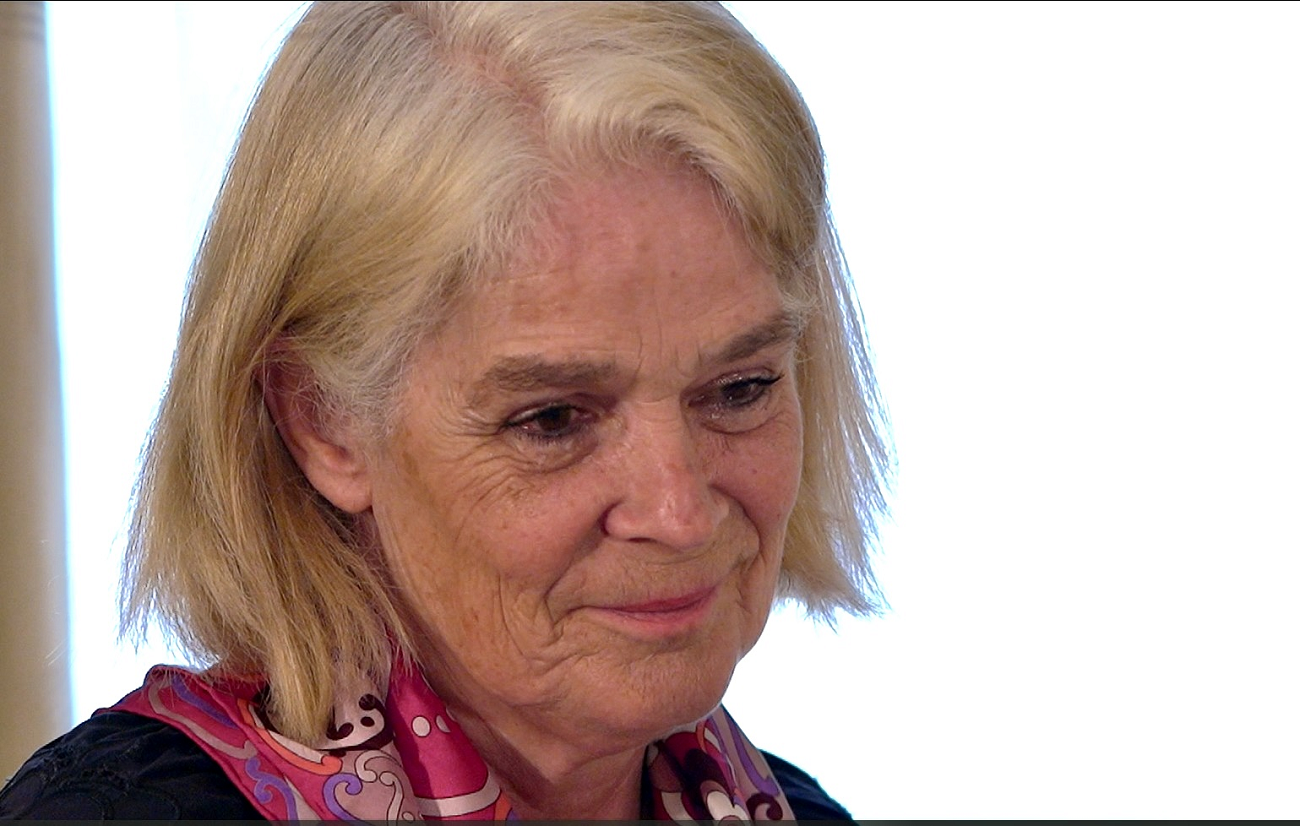
Miriam Briss
Miriam
“My paintings are my memoir,” he once said. “Memories turn into images like an autobiography, not everything is real and not everything is lived.” Yet, though gallant and discreet, in some of the works we find at least one model who inspired him and who can be guessed at – his wife, Miriam Briss, the woman who gave up a promising artistic career to be his friend, confidante, muse and support in his later decades.
I met Miriam Briss, the one who chose to be the atom that makes possible the fertile soil from which Samy’s paintings are born. Miriam does not regret for a moment her decision to give up her own vision for Samy Briss. She has been aware from the beginning that for the artist who became her husband, the concepts of love and creation are practically intertwined.
“Samy has always loved to work. He didn’t like vacations, he only really relaxed in front of his easel,” Miriam confides between the master’s paintings. “Our moments of respite were spent traveling to new openings”.
About the future
The Parisian studio is overflowing with the plethora of works on order. Many of them are part of the family’s sentimental collection, others await their turn in a future exhibition. Both Samy and Miriam remember perfectly well the exact moment and context of some of them.
To this day, the family still keeps the canvas from which it all began, the canvas from which Samy Briss realized that his path in life is art. If the beginning is clear, the continuation is open; Samy Briss still has stories, birds, fish and much love to discover.
Happy birthday, Samy!
Curatorial would like to thank Miriam Briss and curator Adina Rențea for their support in the realization of the report