



INTERVIEW – Cristian Mungiu as a photographer: “Ideally, everyone should learn to pay attention to the movie of their own life”
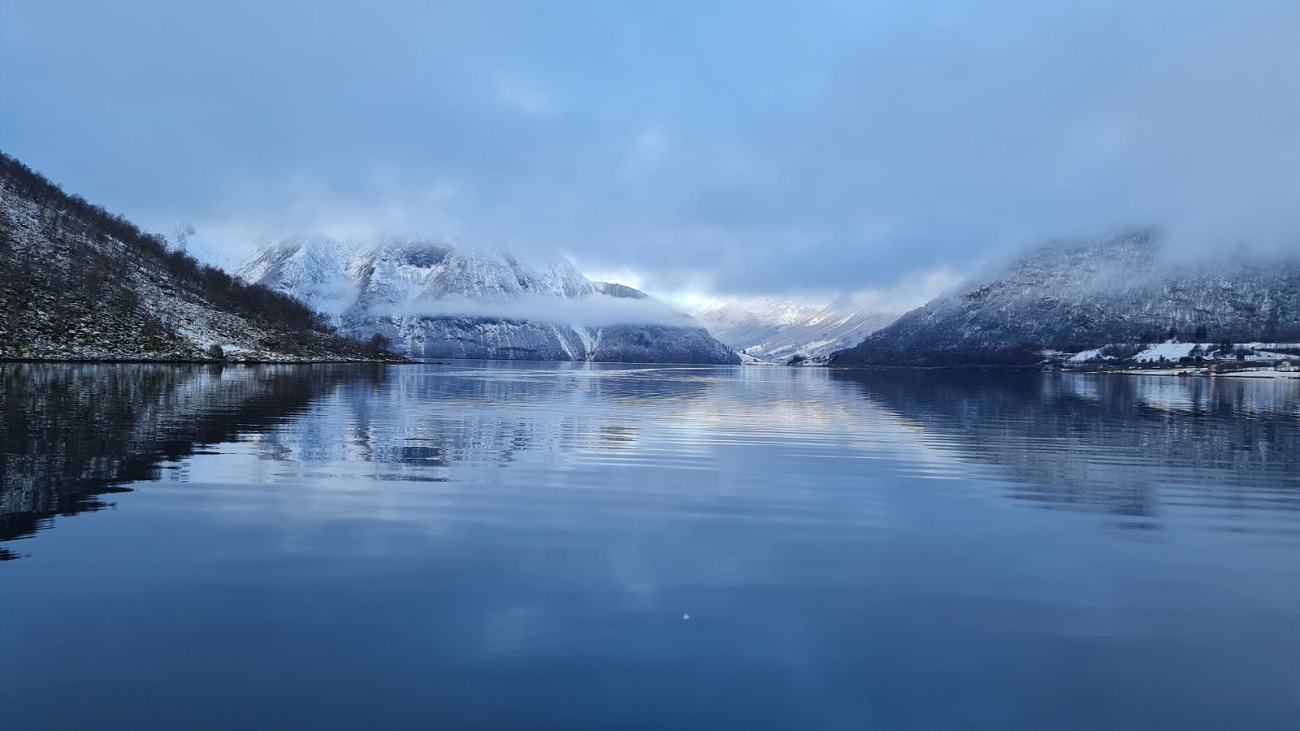
Cristian Mungiu is presenting at the new Art Safari photographs that he took while researching his feature film “Fjord,” which earned him his second Palme d’’Or of his career this year at Cannes and is a favorite to receive several Oscar nominations, including for “Best Picture.”
The exhibition“Cristian Mungiu. Fjord, Photographs”can be visited from September 18 through early November at the pavilion on Piața Amzei 13. The exhibition design is by Diana Nicolaie, and the curator is Maria Ionescu.
Behind every image lies a story, an anecdote, or a conversation, turning the process of documenting “Fjord” into an experience in itself.
“For me, preparing for a film shoot is the happiest part of the entire production process. That’s when I get to explore wonderful places and strike up conversations out of the blue with all kinds of people, under the pretense of working. I take a lot of photos during those times—not just for the film that will end up on the big screen, but also for the most wonderful film of all: my life making movies. I’m not very good at telling you about that one properly, but for now I’ll start with these photos taken during our research for *Fjord*. (They’re all accompanied by many stories and memories that I hope to share with you one day),” Cristian Mungiu describes the exhibition.
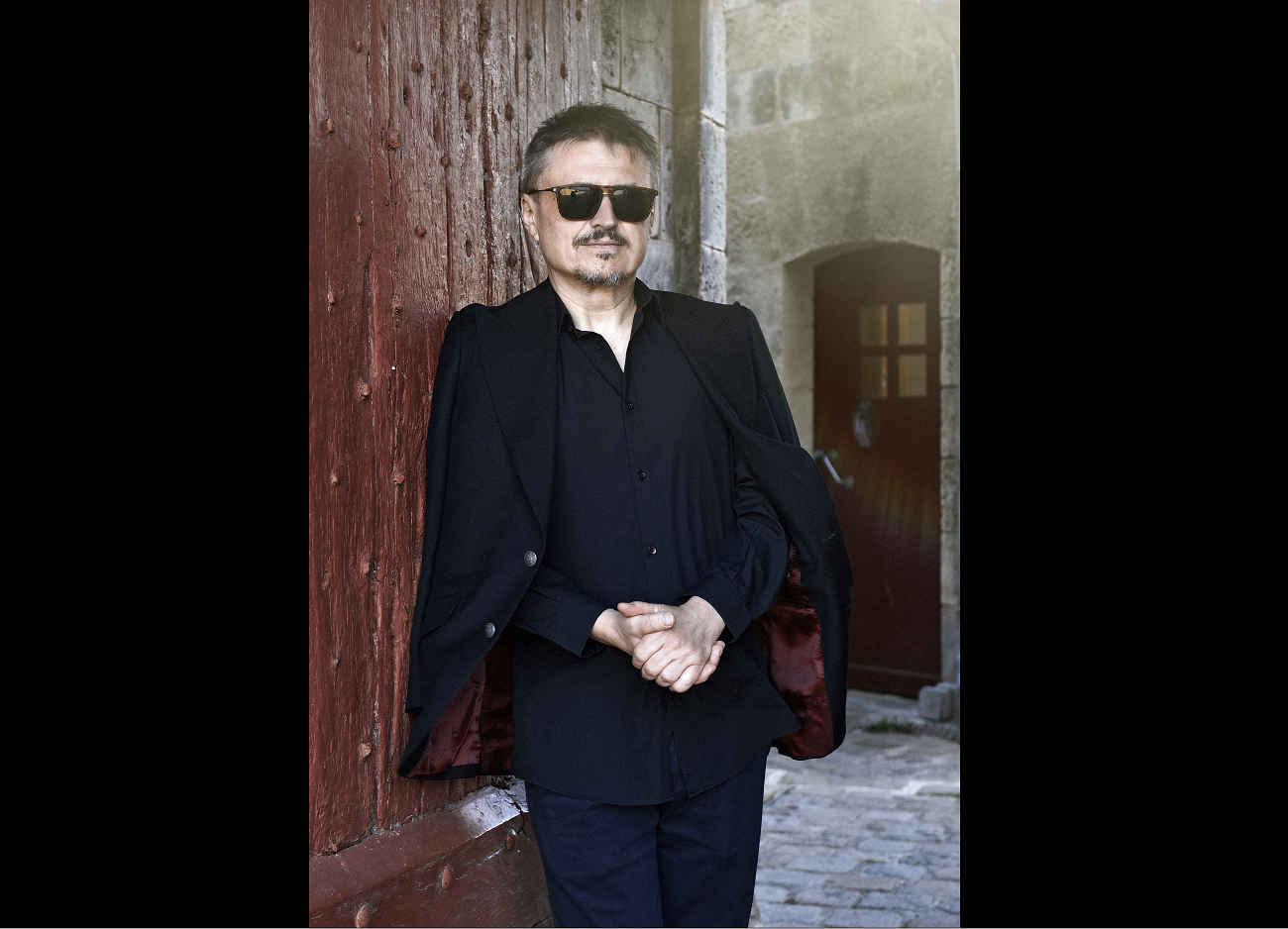
Cristian Mungiu © Photo by Lebruman 2026
About Cristian Mungiu
Cristian Mungiu (b. 1968, Iași) is one of the leading figures of the New Wave in Romanian cinema. In 2007, he won the Palme d’Or, the top prize at the Cannes Film Festival, for the drama “4 Months, 3 Weeks and 2 Days.” The film also earned him two awards from the European Film Academy and a FIPRESCI Prize at the San Sebastián Film Festival, among others.
The filmmaker has also presented the following films on the Croisette: “Occident” (2002, in the Caméra d’Or section), “Memories of the Golden Age” (2009, in the Un Certain Regard section), “Beyond the Hills” (2012, in competition, winner of the Best Screenplay Award), “Graduation” (2016, in competition, winner of the Best Director Award), and “R.M.N.” (2022, in competition).
In addition, his films have been nominated for the César, David di Donatello, EFA, and Goya awards.
This year, after winning his second Palme d’Or for “Fjord”—which stars Sebastian Stan and Renate Reinsve as the parents of a Romanian immigrant family living in Norway who are the subject of an investigation— he presented the photography exhibition “Biography of a Storyteller” in France at the La Rochelle Film Festival (FEMA), where the filmmaker was the guest of honor.
The feature film he wrote, directed, and produced is set to be released in Romanian theaters this fall.
In his interview with Curatorial, he points out that the research process is always a much broader, more detailed, and more complex experience than the resulting film—and at least as captivating. He travels extensively and believes that the farther he is from home, “the more complete the sensation of traveling in a parallel world becomes.” Mungiu has been filming and taking photographs daily for a long time, and a film he will make someday will bring together the photographs and stories gathered over the years of documentation.
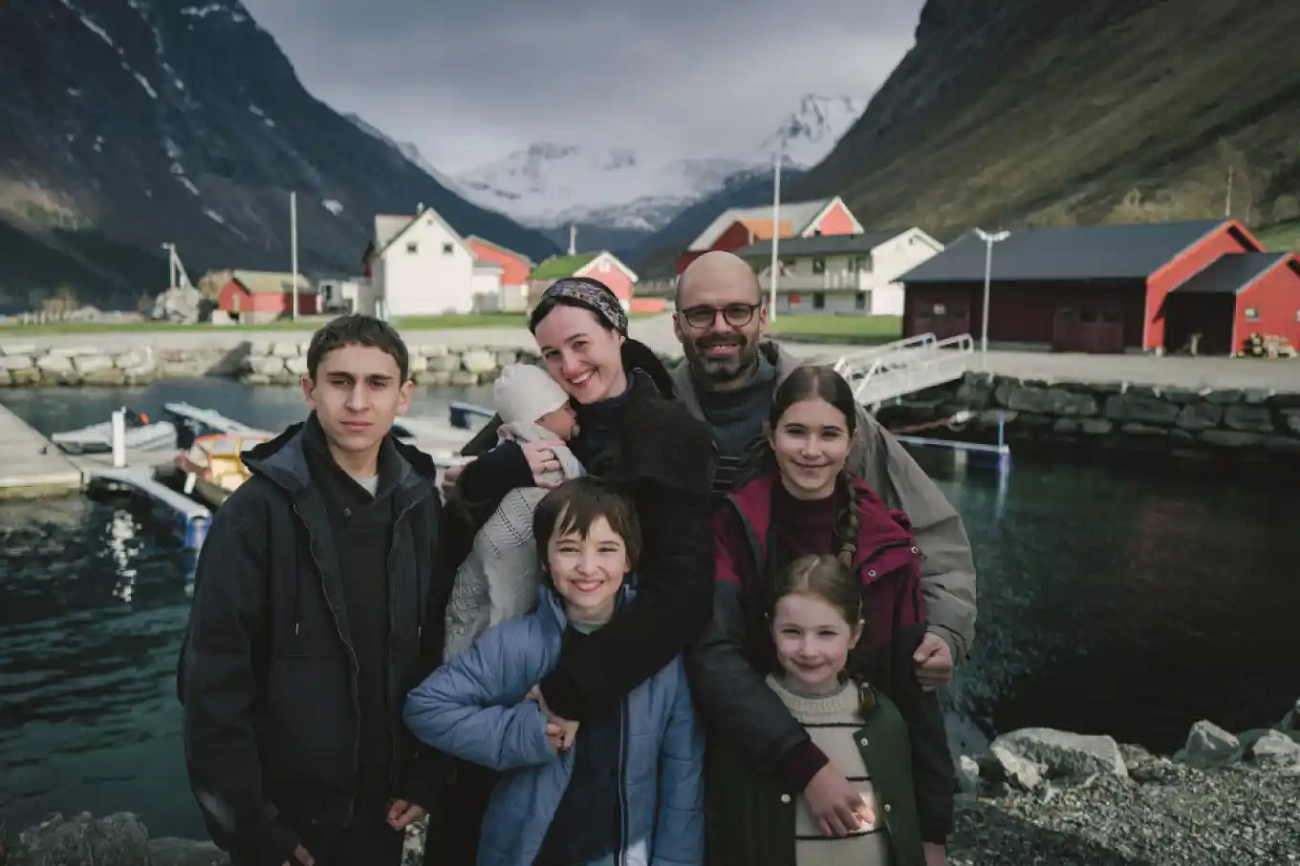
“Fjord,” a film by Cristian Mungiu
You say that preparing for a film is the happiest time for you. What do you lose and what do you gain when the research phase turns into filming?
Cristian Mungiu: Filming comes with a great deal of responsibility and stress because it’s only then that you see how much of what you set out to do actually turns out the way you intended. Every scene is the result of a great deal of hard work, and no matter how precisely you prepare each moment, success also depends on others, on the context, on inspiration, and on the actors’ performance on any given day.
When you take photos during your research, do you already see things through the eyes of a director, or are you simply an observer?
Cristian Mungiu: Most of the photos I take are for the sheer pleasure of photography and have nothing to do with film. But yes, while I’m scouting locations, I also identify the most suitable potential shots for later use.
Does the unseen film—the story of your life as a filmmaker—reveal more about the creator than the films the audience sees?
Cristian Mungiu: Unfortunately, I can’t convey that film to you well enough because it is life in real time. But glimpses of it can be found in my photographs, in what I write and tell, and also in my films, of course. Films are much more austere and stripped-down than the experience that surrounds them, because a filter comes into play—a narrative rigor that retains only what is strictly necessary. Ideally, though, each of us should learn to pay attention to the movie of our own lives—which is the most important one. I think others call that poetry.
The photographs taken during the research process capture people and places before they are transformed by fiction. What instinctively draws you to photograph, and what remains outside the frame?
Cristian Mungiu: I only take photos if the subject speaks to me and the framing convinces me; otherwise, I move on. Not everything you find interesting is worth photographing. I look for a kind of visual composition when I’m not photographing faces. With portraits, I either try to capture candid shots of people when they’re unaware of themselves, or I remember the faces that seem to tell a story and try to cast those people later in a film as extras. Every face says something about that person; their life story is written on their face.
Every photograph is accompanied by stories and memories. How important are these stories to the way we view the image? Can a photograph be fully understood without the story behind it?
Cristian Mungiu: Of course, it will be understood differently, since only the photographer has the context. But whatever you communicate will be understood differently and interpreted—that’s just the nature of things, and it’s all the more to be expected with photography. Sometimes it’s good to let the photographs speak for themselves without any added narrative; other times, I like to provide context. In the photography exhibition in France, I had a biographical section: the house in Iași, the observatory, the pottery covering the walls of the house, my grandmother’s inn in Bessarabia photographed in 1937, 1991, and 2024, and so on. Each of those photos has a whole host of stories behind them that make them complete. I hope I’ll get around to writing them down.
While researching “Fjord,” what was the most unexpected encounter that found its way, directly or indirectly, into the film? Did you consciously seek out people or the beauty of the landscape?
Cristian Mungiu: I discovered just how beautiful and spectacular Norway is through documentaries. When scouting locations, I look for places that structurally resemble what I envisioned when I wrote the screenplay. For example, I needed two somewhat isolated houses—located next to each other—at the end of a fjord, and I searched patiently until I found them. Then, of course, you adapt; little by little, the virtual location from the writing process blends with the best options you find on location, but as a rule, I choose places that are close to what I imagined and that have the atmosphere, visual impact, depth of field, visual precision, harmony, and color palette that match the tone of the film. I choose the characters from casting databases, not from brochures, but even there I look for expressive faces—actors who can evoke ordinary people, not just beautiful faces and harmonious bodies.
The exhibition can be viewed as a travel journal, a “making-of” feature, or a standalone work of art. How would you like it to be “interpreted”?
Cristian Mungiu: You’ll see it for yourselves and judge for yourselves at Art Safari. For me, these are photographs and series of photographs inspired by my experience of living in Norway, and they are part—if you will—of a broader artistic endeavor to document my experiences through photography. I also have behind-the-scenes and on-set photos, but they’re the subject of a different kind of communication.
How much do the real places you discover influence the screenplay? Has it ever happened that a place or a person you encountered by chance radically changed a character or a scene?
Cristian Mungiu: Real locations are very important, because my screenplays describe in detail actions that must be able to take place precisely in a single take at real locations. If the roads, buildings, and other elements aren’t in the right proportions, the location won’t work for depicting the action in a single shot. But we’ve already learned to evaluate locations based on these criteria, and, as a rule, once we discover them, we imagine how the action might unfold there so that we can depict everything in a single shot while trying to show as much of the space as possible.
When filming, I try to stay open and take advantage of all the surprises that the context, chance, luck, and my imagination bring my way. But generally, the scenes are conceived during the writing process and stay pretty much that way. Only their execution is influenced by the location, though sometimes that brings extraordinary nuances. There’s a scene in “Fjord” where Mihai (Sebastian Stan) is chopping wood, and Lisbet (Renate Reinsve) comes out of the house to tell him some news. It’s a pivotal moment in the film, and during filming we decided that each character would return to the house through a different door; from that point on in the film, each would go their own way, following their own ideas. This interpretation of the sequence took shape more clearly visually as we filmed, as we came to better understand what the setting had to offer. As a rule, we prepare every detail; we don’t leave anything to chance. For example, on set there’s someone in charge of luring the animals into the frame, and *Fjord* is no exception. There are many shots with birds flying through them, and that’s the result of someone’s work and our attention to these details—it’s not a coincidence.
Do you feel that, once the film is finished, some of its charm is left behind during the research process?
Cristian Mungiu: Of course, the experience is always much broader, more detailed, and more complex than the resulting film—and at least as captivating. The experience of relocating to Norway for several months was extraordinary; it was as if I were in a parallel time and space: in this world, and yet in another. It happens with every film, but the further away you are from home, the more complete the feeling of traveling to a parallel world becomes.
If you were to make a film using only the photographs and stories you’ve collected over the years of your research, what would it say about Romania and about you?
Cristian Mungiu: I hope to make it. Not just one, but several, because I have a lot of footage. I’ve been filming and taking photos for 40 years. I recently edited some footage for the introduction to the book about my grandmother in France, as well as for the photography exhibition I had there. A video about the route I’ve taken every morning for 15 years, taking the kids to school and passing through the same forest in all seasons. I often film this route, with the footage accompanied by audio from the news stories happening on that particular day, and after dozens of recordings and news stories that are “essential” at the time but irrelevant when you watch them later, a very evocative story emerges about the relationship between life and time, between relevance and the ephemeral.
Photograph taken by Cristian Mungiu in Norway; published courtesy of the artist