



Cézanne, Admired by 78 Artists / Photo Gallery
Matisse, Gauguin, Picasso, Signac, Sérusier, Doig, Warhol, Soulages, Mortensen, and Wesselmann are among the 78 artists who were inspired by Paul Cézanne’s swimmers, portraits, landscapes, and still lifes. This is evident from the impressive exhibition dedicated to the painter at the Grand Palais in Paris, which was packed with visitors during Art Basel week. Curatorial visited the exhibition.
“Cézanne is the bridge between the Impressionists’ and the Neo-Impressionists’ creative approaches,” said Paul Signac in 1897.
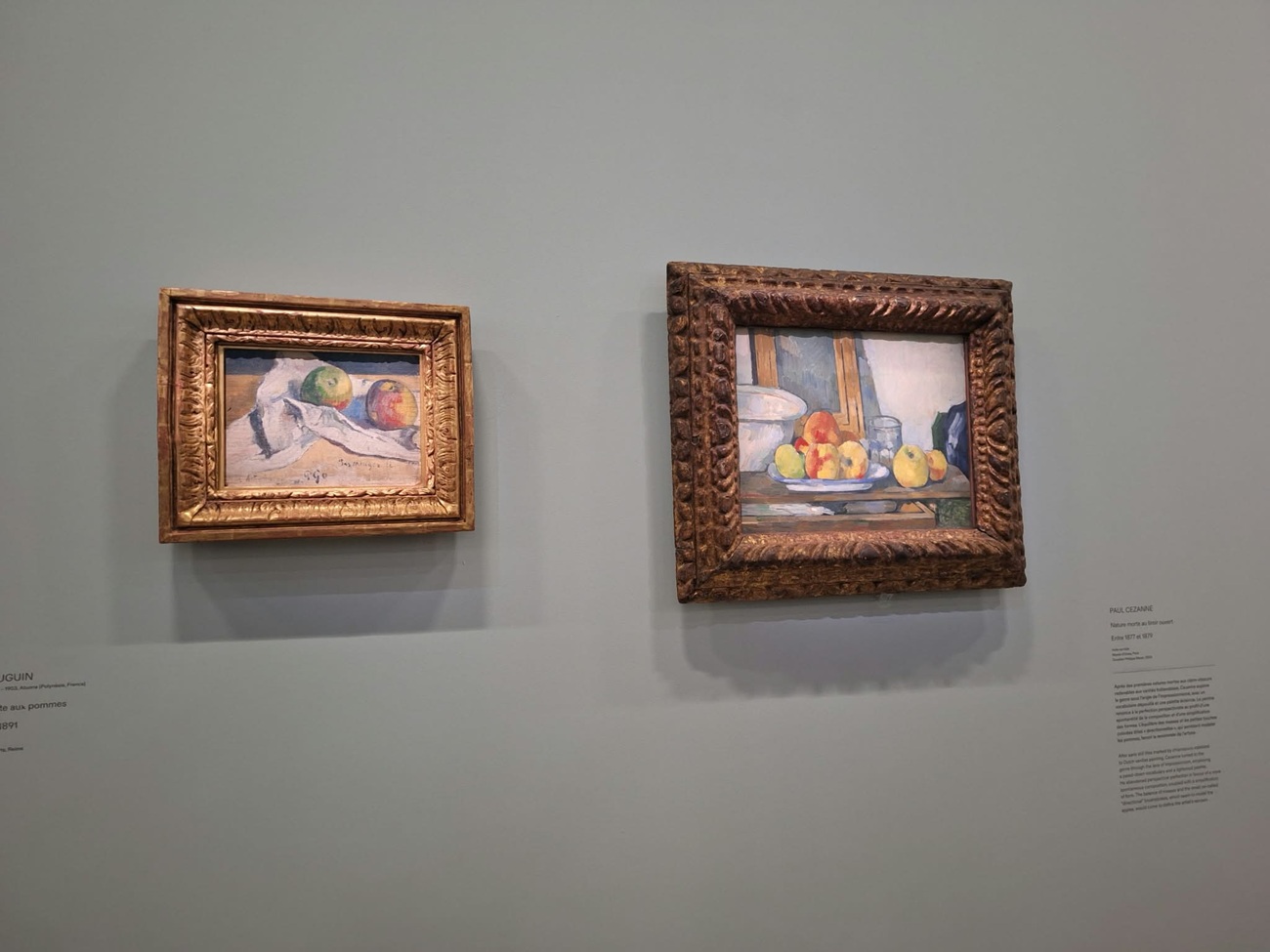
“Still Life with Apples,” Paul Gauguin; “Still Life with an Open Drawer,” Paul Cézanne; curatorial
While Paul Gauguin steered Cézanne toward Symbolism, Signac was particularly interested in his technique. According to Signac, Cézanne attached equal importance to every stroke of color.
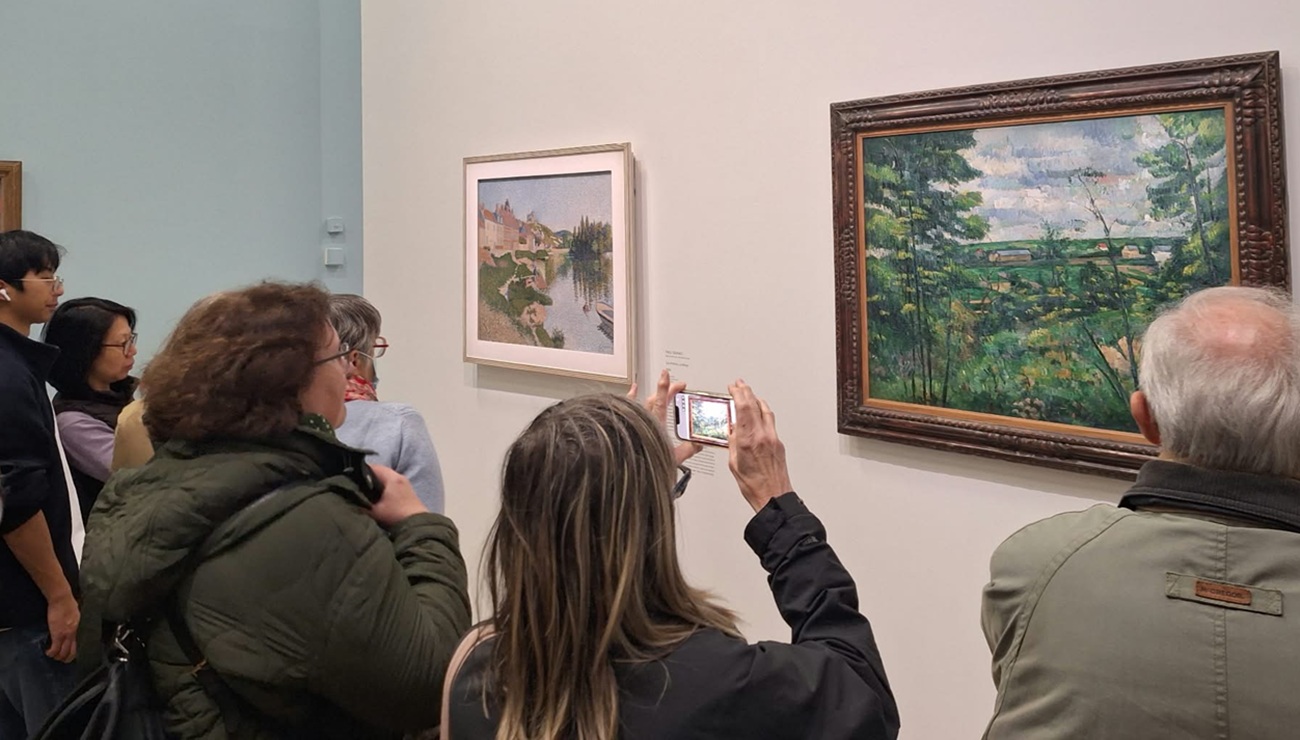
“Les Andelys. La Berge,” Paul Signac; curated by
174 works are on display at the Grand Palais—69 by Cézanne and 105 by 78 other artists who admired him.
An Artist for Artists
Paul Cézanne is often described as an artist for artists. To appreciate his painting—which focuses more on form than on content—one needs the eye of a painter. In fact, from the late 19th century onward, artists were among the first to recognize his value. Before his death in 1906, he was already a topic of discussion in studios and a role model.
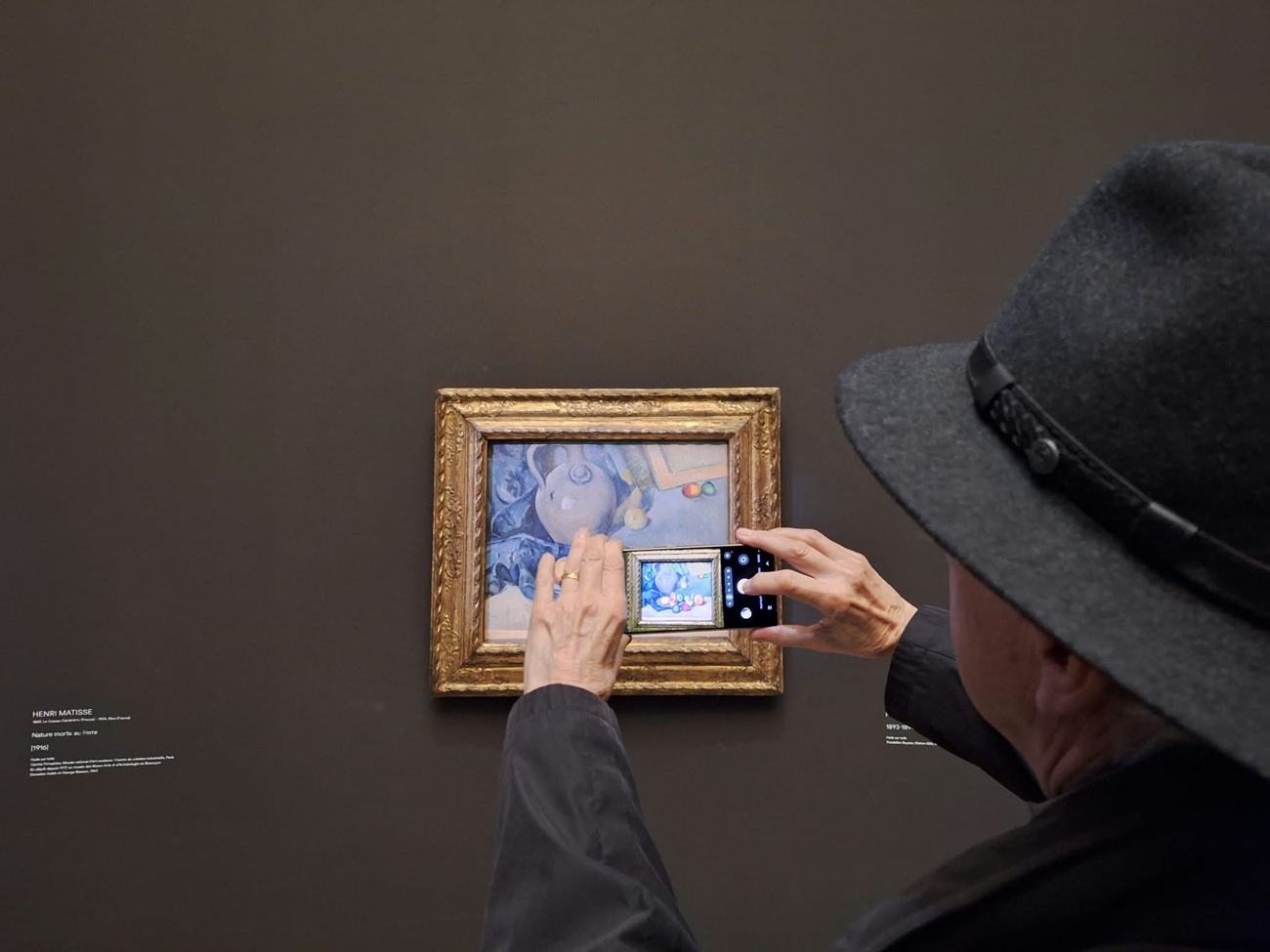
“Still Life with Ivy,” Henri Matisse; curatorial
“Cezanne and Us” is the first exhibition to tell a dual story, spanning from the 1880s to the present: that of his fundamental influence and, in contrast, that of the artists who drew inspiration from him andtransformed him into “the father of us all,” as Picasso put it.
Because Cézanne wrote his name without an accent, the exhibition organizers adopted this spelling. A tribute to the great painter.
“Cezanne and Us” thus represents “us”—the artists—and us—those who view Cezanne through their eyes, from a contemporary perspective.
Peter Doig and Cezanne
Cezanne’s *The Swimmer* (1885), part of the MoMA collection and the first painting in the exhibition, embodies the artist’s radicalism, which would go on to fascinate the artists who followed him. Its timeless strangeness resonates with the mystery of Symbolist works, from Gauguin to Doig. Its geometry and sculptural quality foreshadow Cubist nudes and herald the dawn of abstraction, as well as the canvases of Jasper Johns.
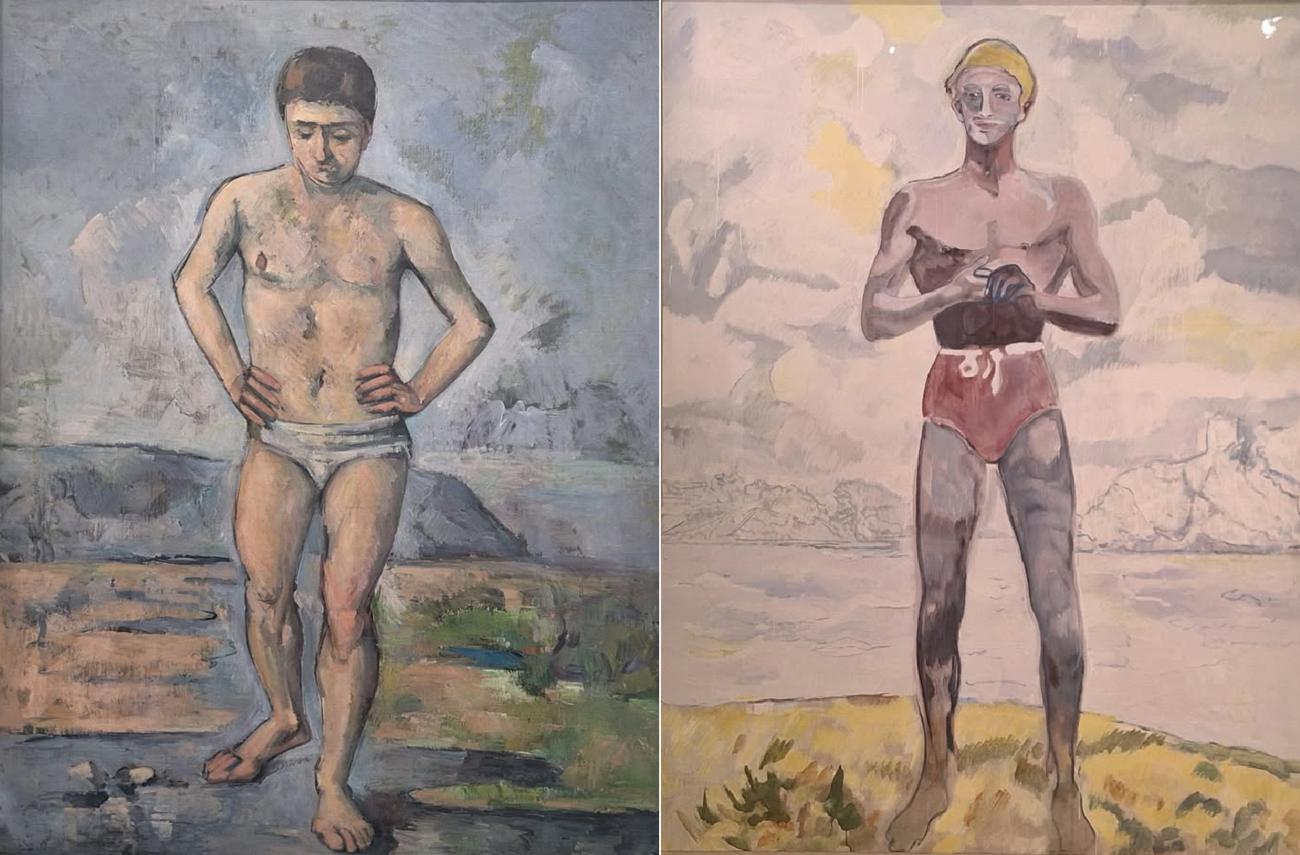
“Le Baigneur” — Paul Cézanne, “Bather” — Peter Doig; curated by
Just like Cezanne’s “Grand Baigneur,” Peter Doig’s swimmer stands alone before a landscape. But while the former tilts his head downward, with his hands on his hips and one foot stepped forward, the latter holds his head upright and his hands at his chest, motionless. Doig, a follower of German Romanticism and Symbolism, sees something else in Cezanne’s painting: not so much the brushstrokes or the permeable relationship between figure and background, but rather the enigmatic nature of the character.
Roger Fry and Cézanne
Roger Fry, a British artist and critic, played a decisive role in bringing Paul Cézanne to prominence, particularly among the artists of the Bloomsbury Group. In the exhibitions he organized in London on Post-Impressionism (1910 and 1912), he presented Cézanne as a key figure linking Impressionism to the artists of the early 20th century.
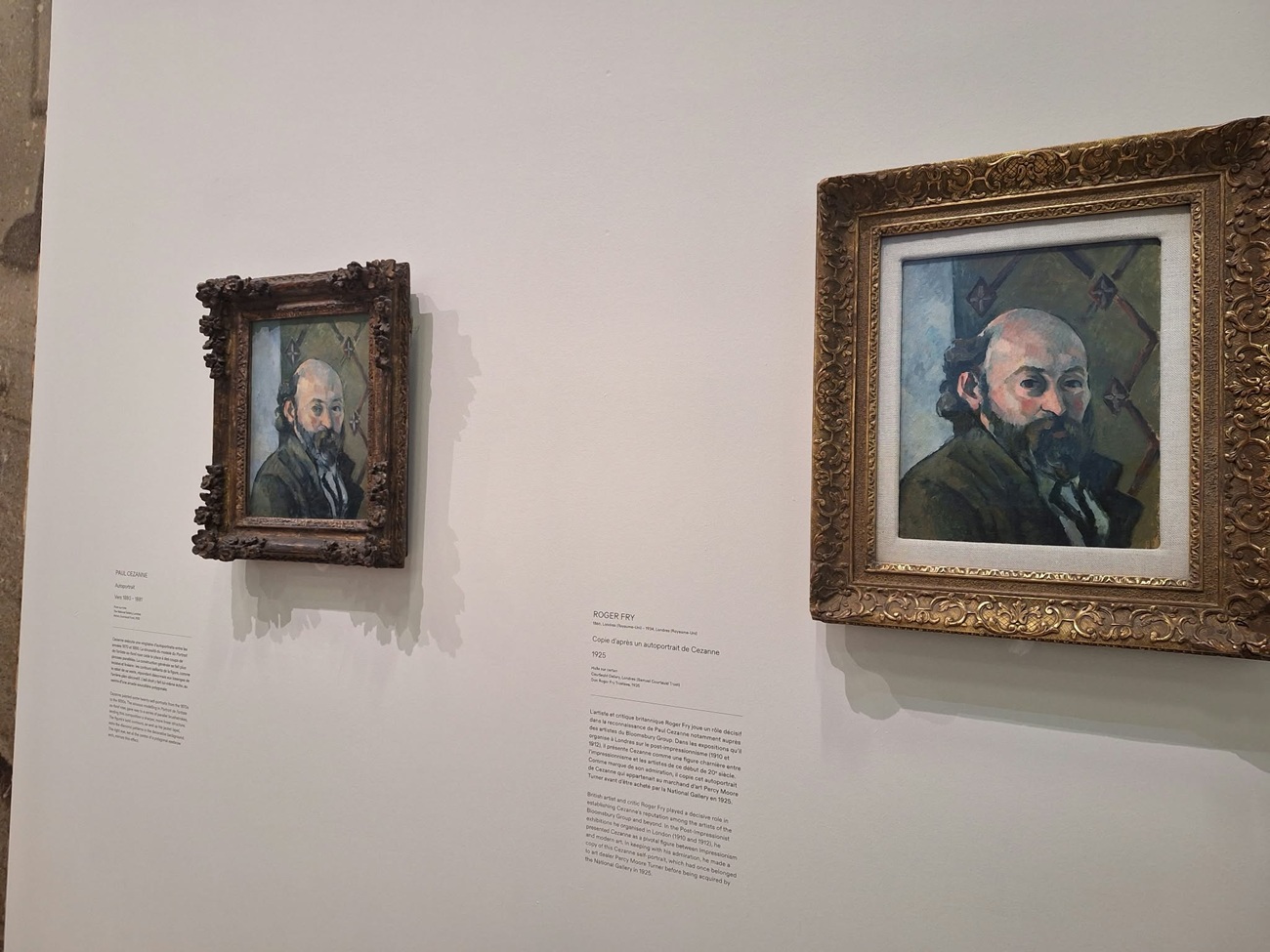
“Copy After a Self-Portrait by Ceyanne,” Roger Fry; curatorial
As a sign of admiration, he copied Cezanne’s self-portrait, which had belonged to the art dealer Percy Moore Rurner before being purchased by the National Gallery in 1925. Alberto Giacometti also created a copy of a “Self-Portrait” by Paul Cezanne in 1937, a work that is featured in the exhibition.
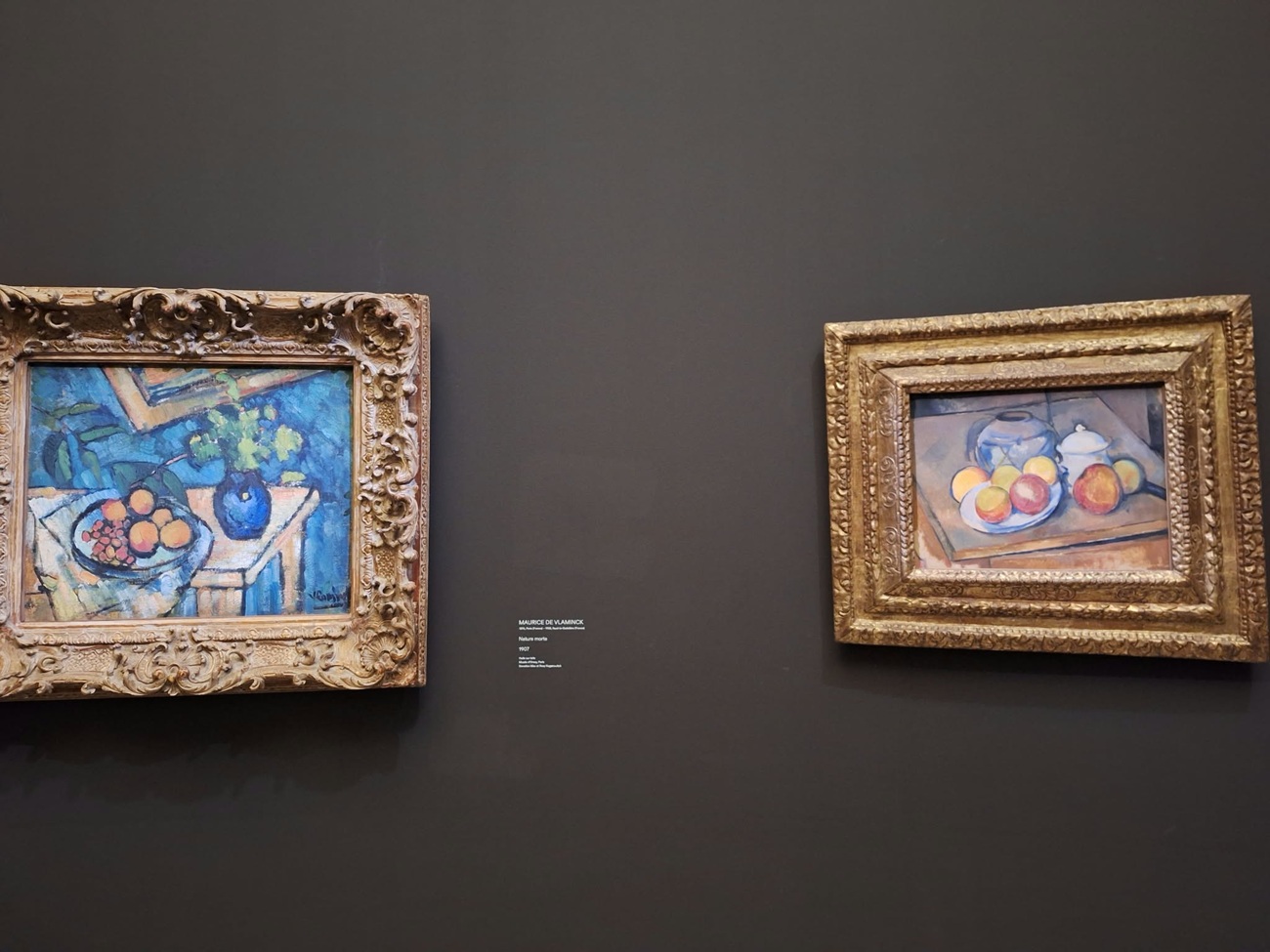
“Still Life,” 1907, Maurice de Vlaminck; curatorial
Maurice de Vlamick and Pablo Picasso drew inspiration from Cézanne’s still lifes featuring apples, and between 1917 and 1919, Modigliani painted “Le Jeune Apprenti,” inspired by the French artist’s portraits.
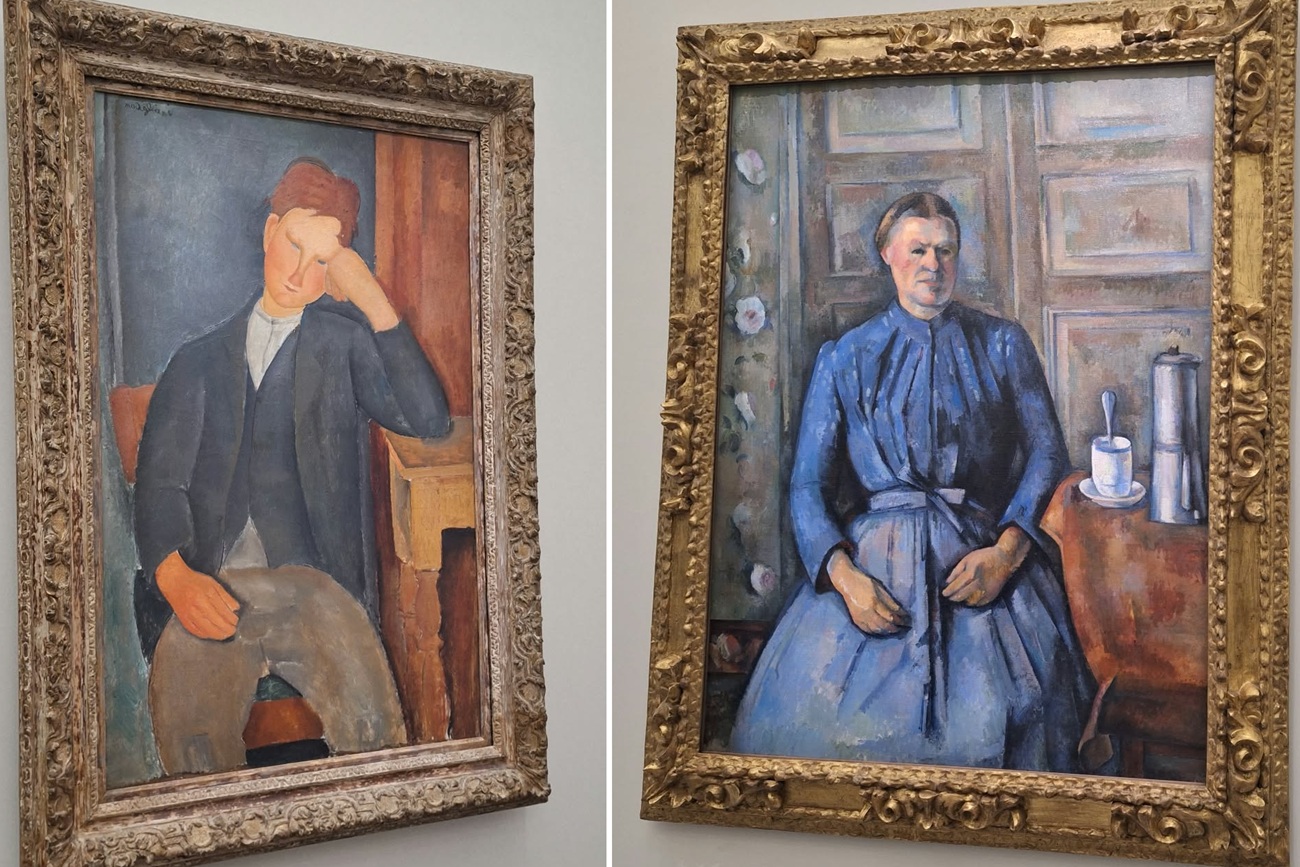
“Le Jeune Apprenti” — Amedeo Modigliani, “La Femme à la cafetière” — Paul Cézanne; curated by
“Painting from life does not mean copying, but rather capturing sensations,” Cezanne said.
Pierre Soulage and Cézanne
When he saw the “Paul Cezanne” exhibition at the Paul Rosenberg Gallery in 1939, Pierre Soulage said he experienced “the shock of living art.” He would turn to abstraction after the war.
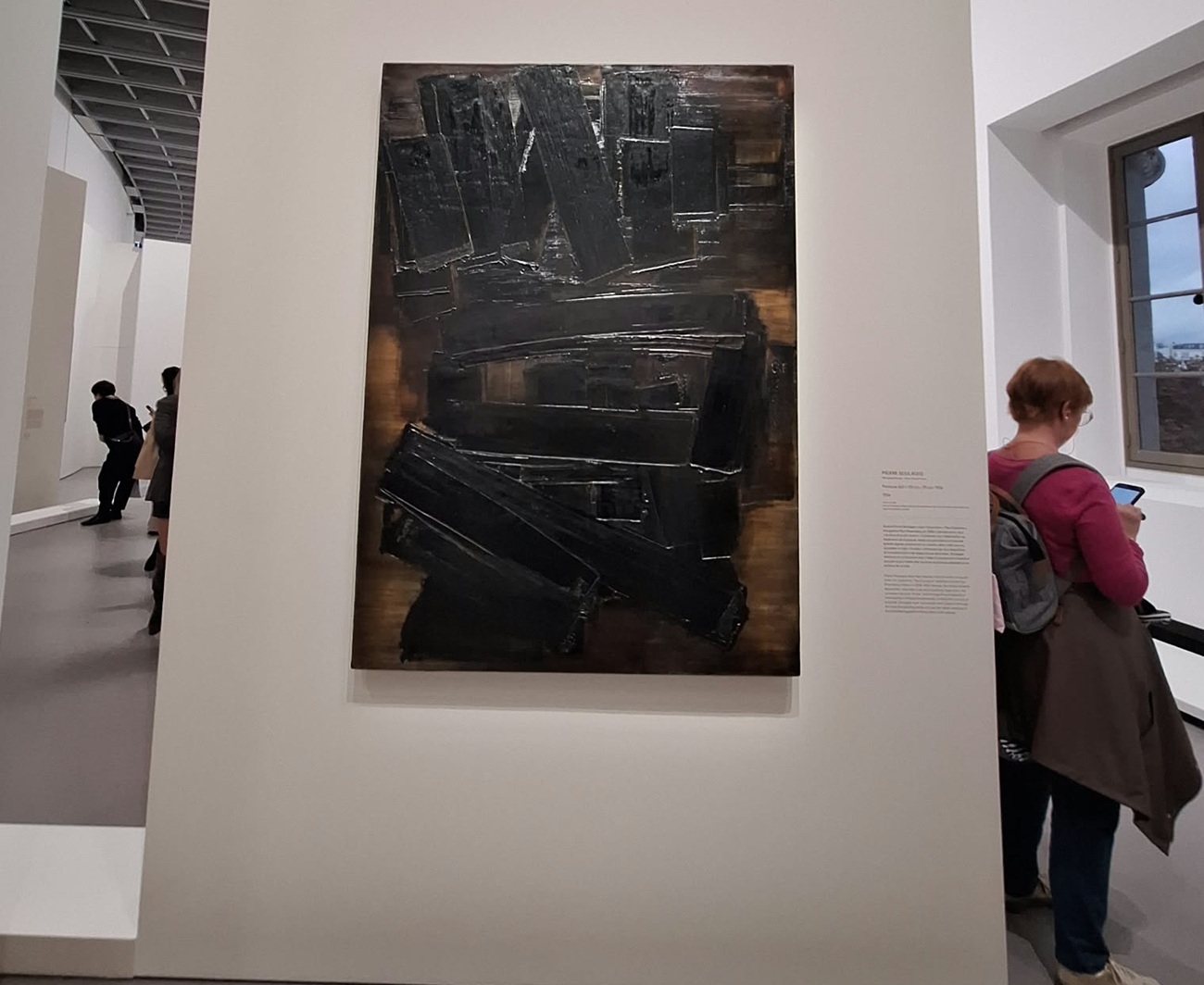
“Painting 162×130 cm, June 29, 1956,” Pierre Soulage; curatorial
In the exhibition at the Grand Palais, in the work “Peinture 162×130 cm, June 29, 1956,” from the Centre Pompidou collection, Soulages depicts a visible interplay of brushstrokes applied to the surface of the canvas.
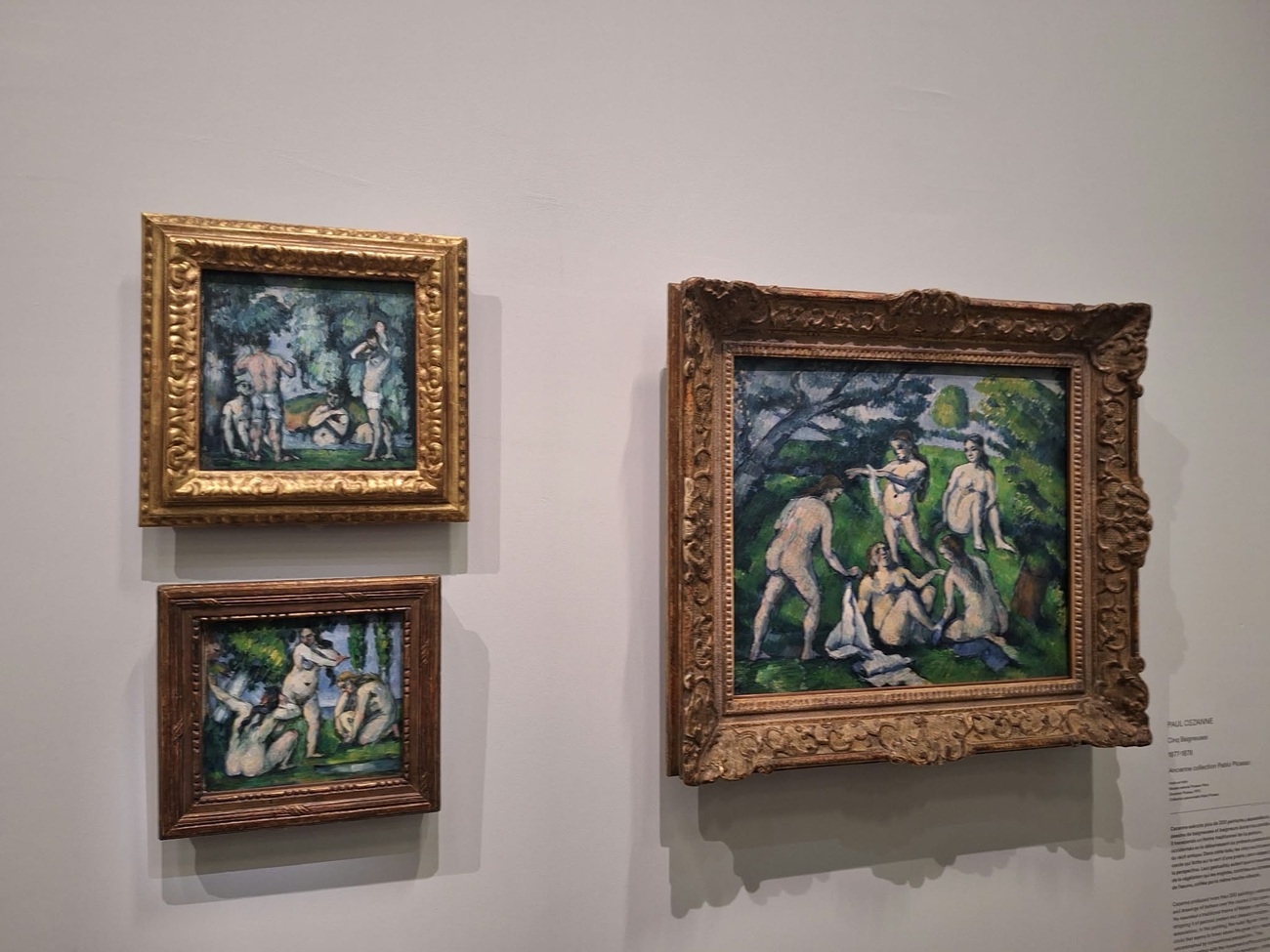
“Cinq Baigneuses,” Paul Cézanne; curatorial
The exhibition traces the history of an unparalleled legacy, which unfolds both through an interplay of influences and through the recognition of a shared master, beginning with his earliest followers: in the 1880s and 1890s, at a time when Cézanne, weary of failure, had given up trying to exhibit his works, several painters were astonished to discover his work in Tanguy’s father’s store. His formal radicalism strengthened their pursuit of a “pure” art, already heading down the path of abstraction.
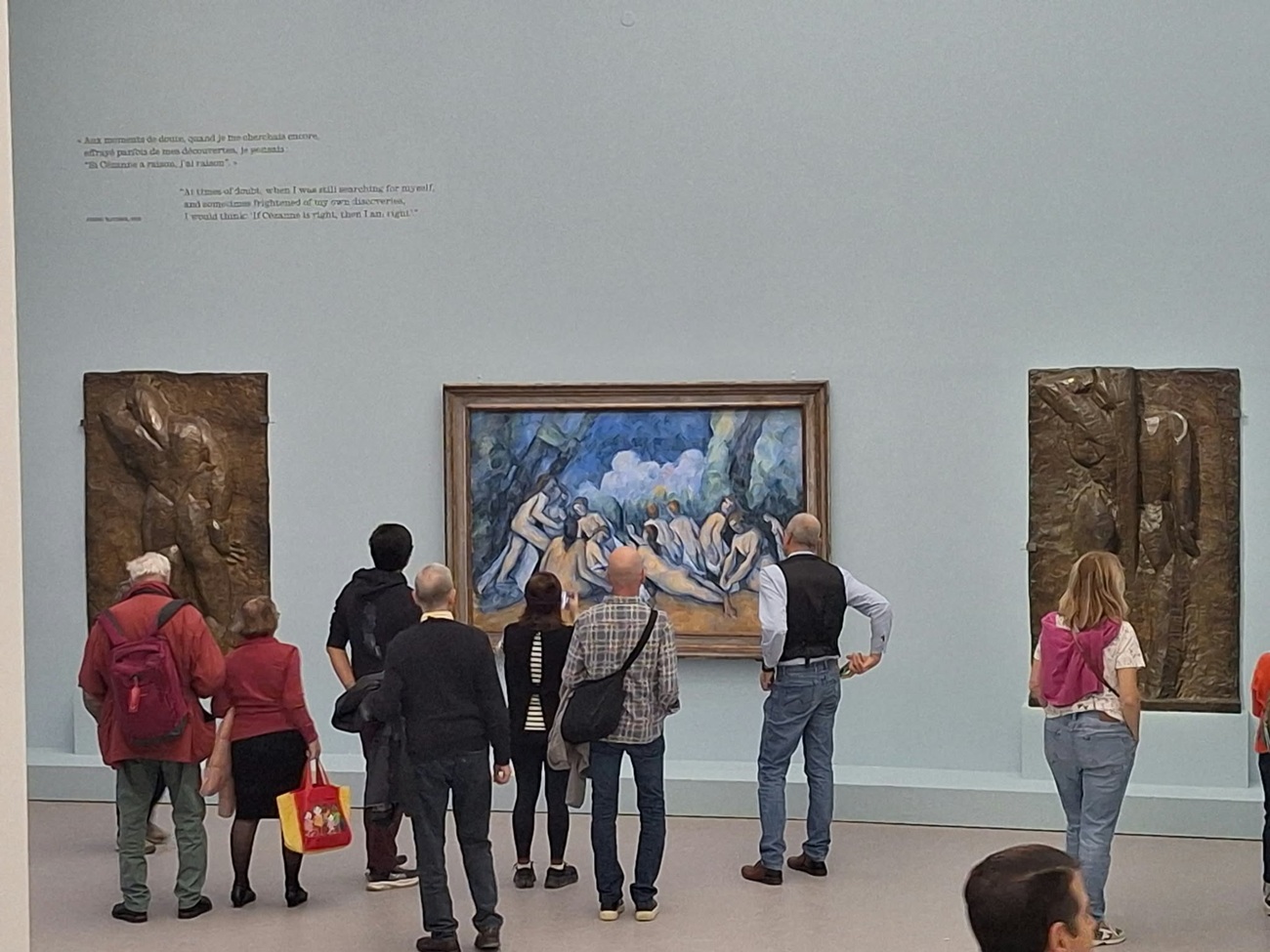
“Cezanne et nous”; curatorial
The exhibition then explores the key moments in the artist’s rise to prominence, beginning by highlighting the importance of the art dealer Ambroise Vollard, his vast collection, and the first exhibitions he dedicated to the artist between 1895 and 1906. It also mentions the first acquisitions by museums, the posthumous exhibition at the 1907 Salon d’Automne, and the major international exhibitions of the 1910s.
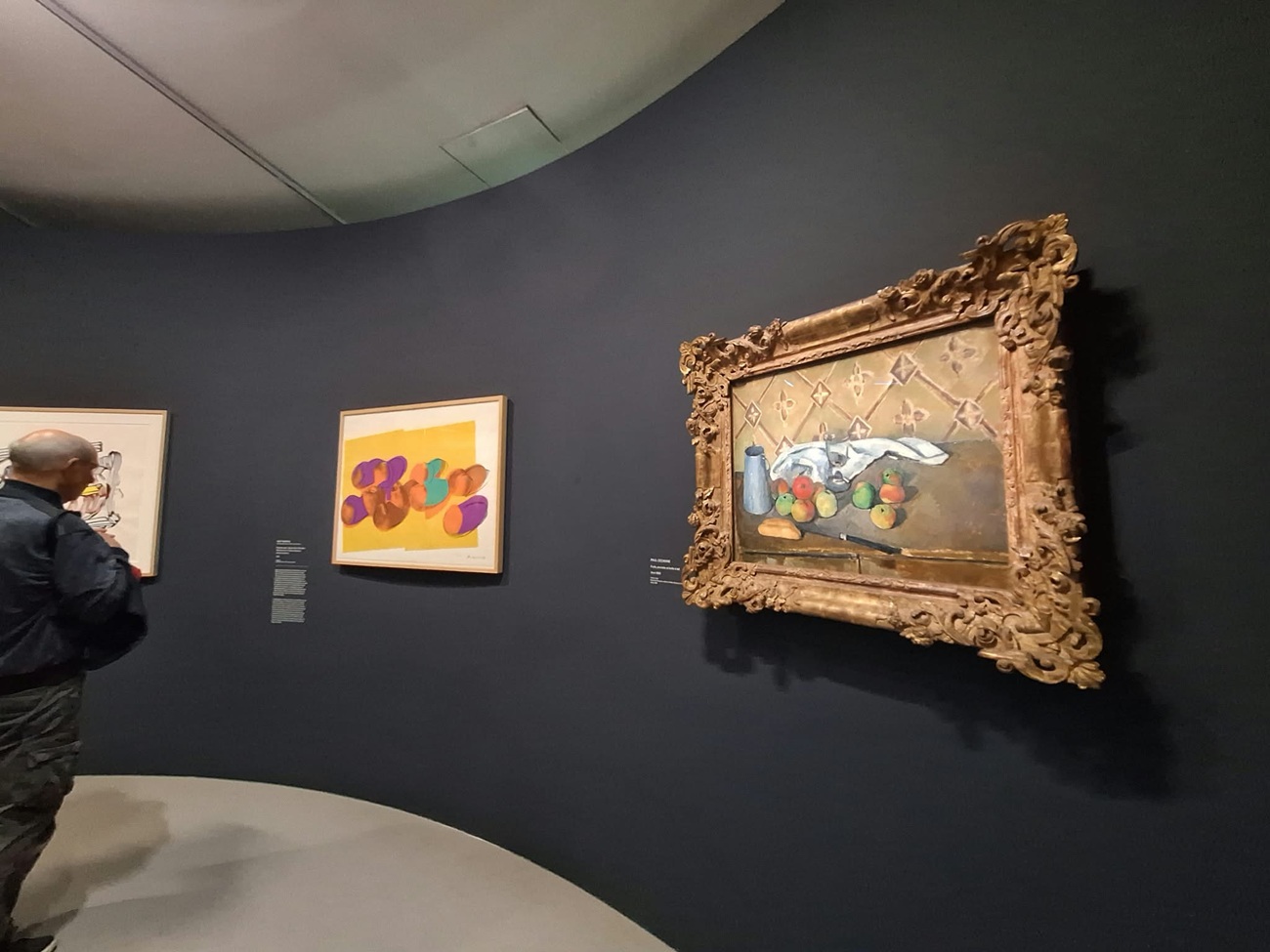
“Cezanne et nous”; curatorial
The exhibition illustrates the diversity of interpretations of Cézanne’s work within the European and international avant-garde movements of the 1910s, which called into question the relationship between art and reality and, alongside Cézanne, on the idea that “art is a harmony parallel to nature.”
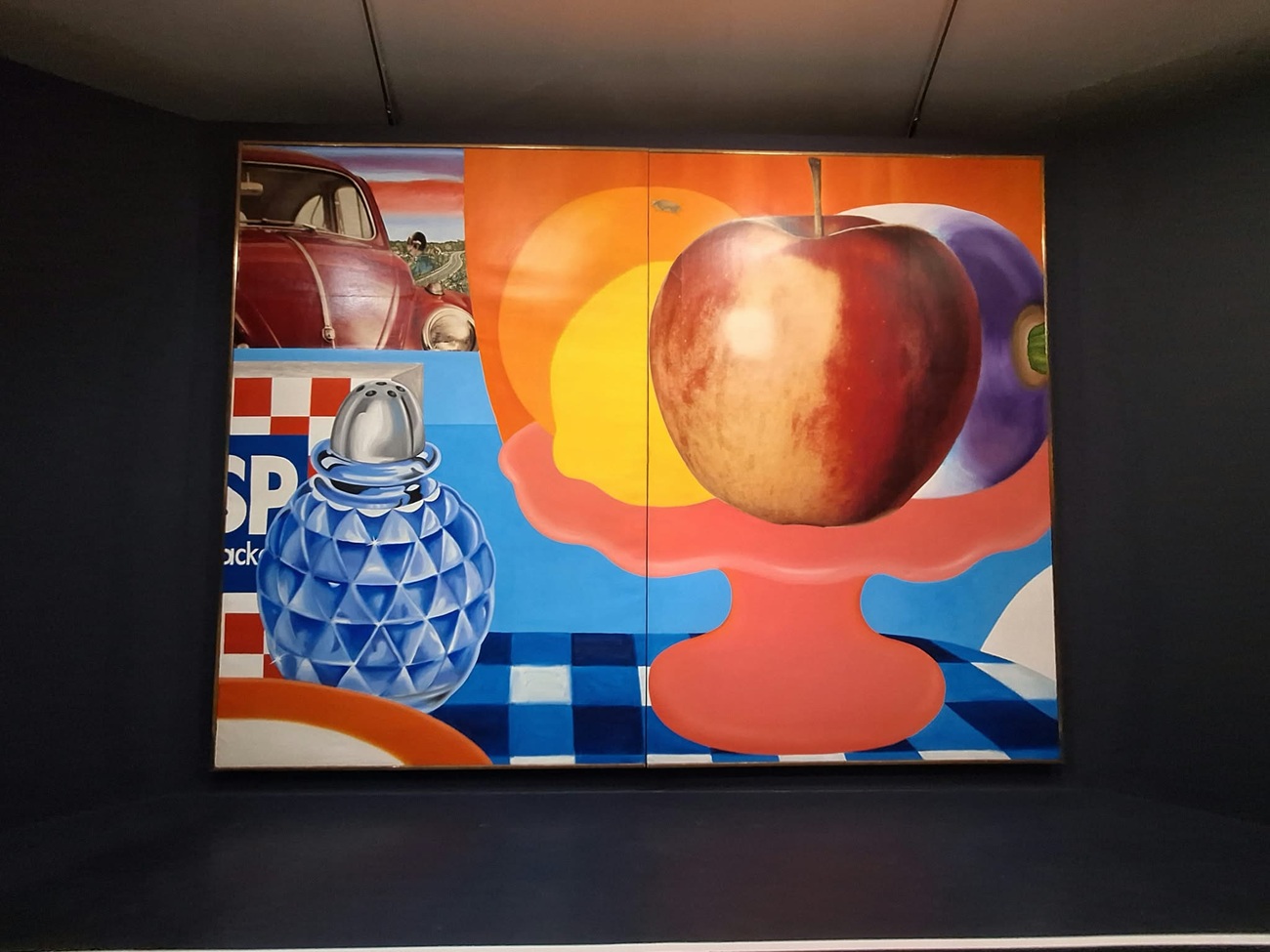
“Still Life #29,” Tom Wesselmann; curated by
This rich interpretation, present from the very beginning, serves as the central theme of the exhibition. It shows how, beginning with Cézanne, the triumph of modern art and the formalism associated with it—the reduction of painting to its fundamental compositional elements—are constantly being reinterpreted or transcended.
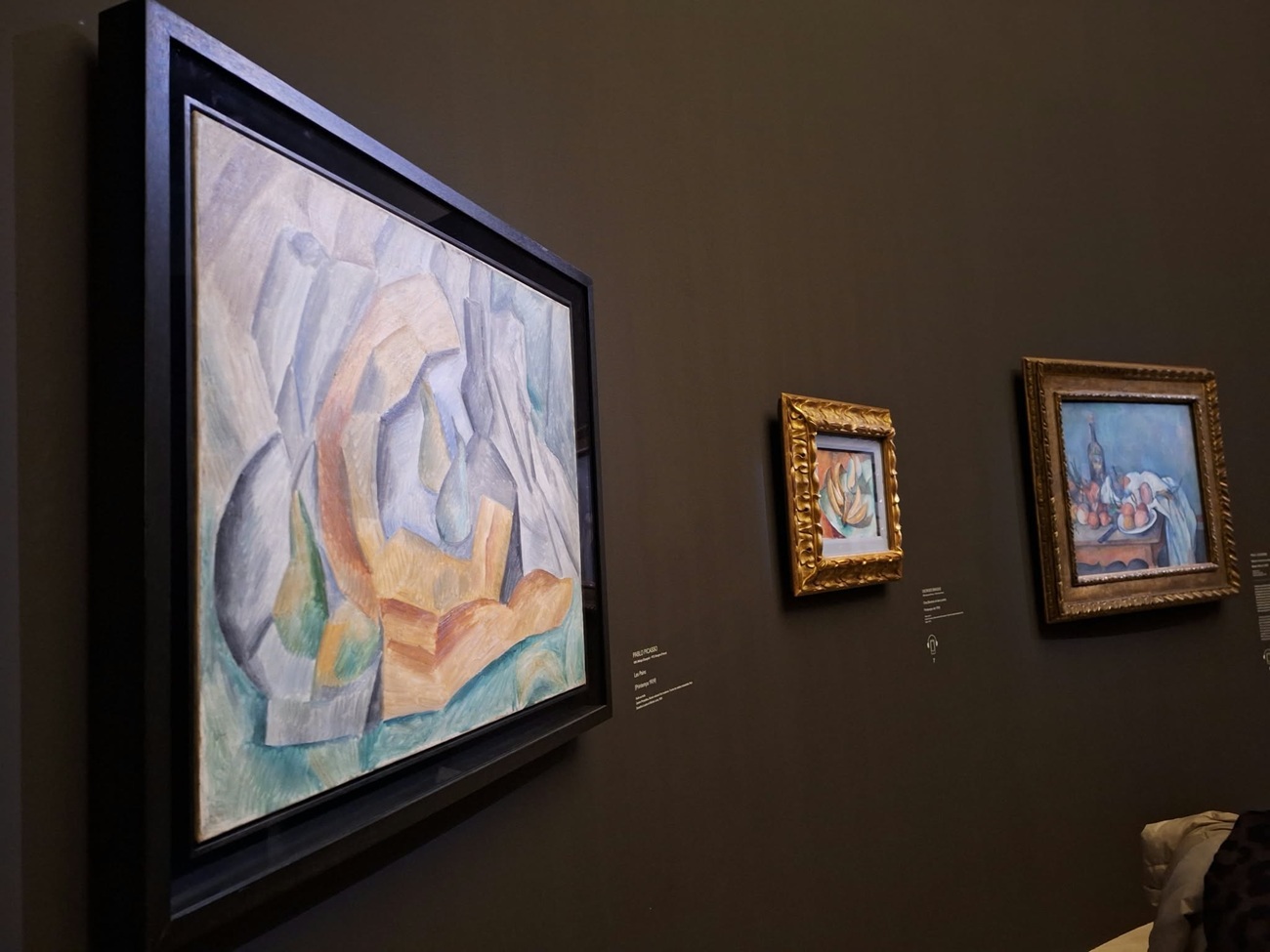
“Les Pains,” Pablo Picasso; curatorial
The artist has become one of the undisputed pioneers of modern Western art and continues to be regarded, in the postwar period, by the key figures of a revival of abstractionism in Europe and the United States—including both adherents of lyrical and optical abstractionism and those of “hard-edge” painting. This nuanced history, in which everyone defends their own Cezanne just as much as the path they are exploring, is presented here.
The exhibition “Cezanne et nous” is on view in Paris through January 17, 2027.
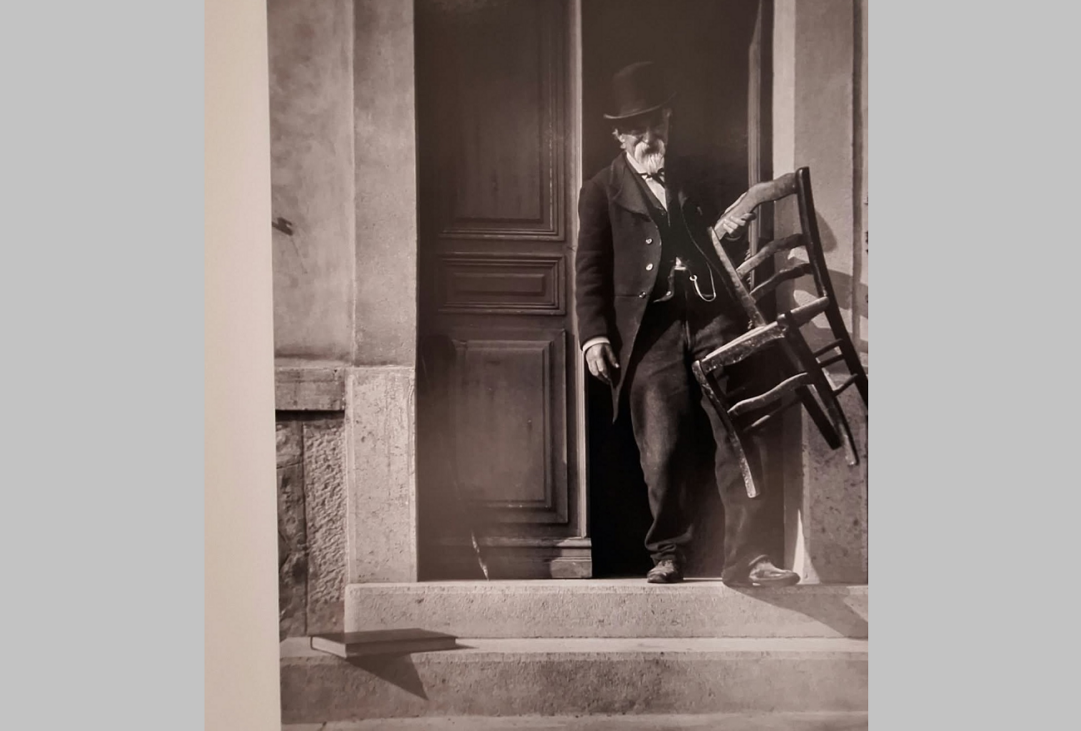
Main photo: Paul Cezanne in Aix-en-Provence, by Gertrud Osthaus; curatorial