


INTERVIEW – Alejandra Moros on physicality, reality, and science fiction
American artist Alejandra Moros considers physicality to be of enduring importance. In an interview with Curatorial, she talks about her obsession over small details, about Florida as a source of inspiration—“a place that is ecologically and politically precarious”—and about the real world, which has much to offer, noting that the stories and futures imagined by people are far more valuable to her than those invented by something powered by artificial intelligence models.
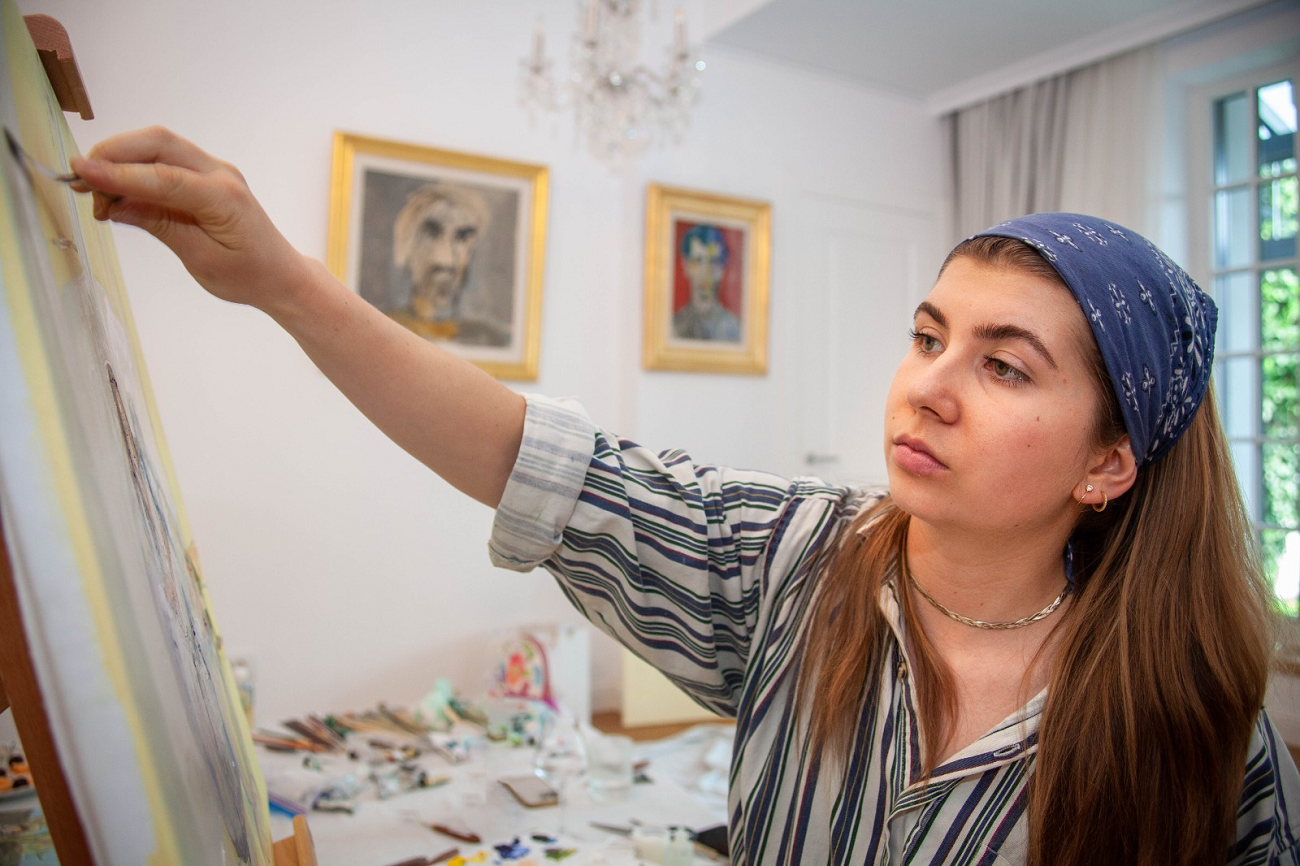
Alejandra Moros (b. 2000, Miami) uses painting, drawing, and found objects to explore themes such as transformation, science fiction, and adaptation, drawing on her interest in how bodily alteration can serve as an indicator of time, place, and intention. She lives in Miami, exploring the connections between these themes and the Florida landscape.
Following exhibitions in his home county, as well as in Los Angeles, London, and Amsterdam, she is currently participating with works in the group exhibition “In the Body Lies the Truth” at the IOMO Gallery in Bucharest, which explores the body’s involuntary language.
The works of the nine artists selected by Thom Oosterhof can be viewed through June 13 at the Combinatul Fondului Plastic venue.
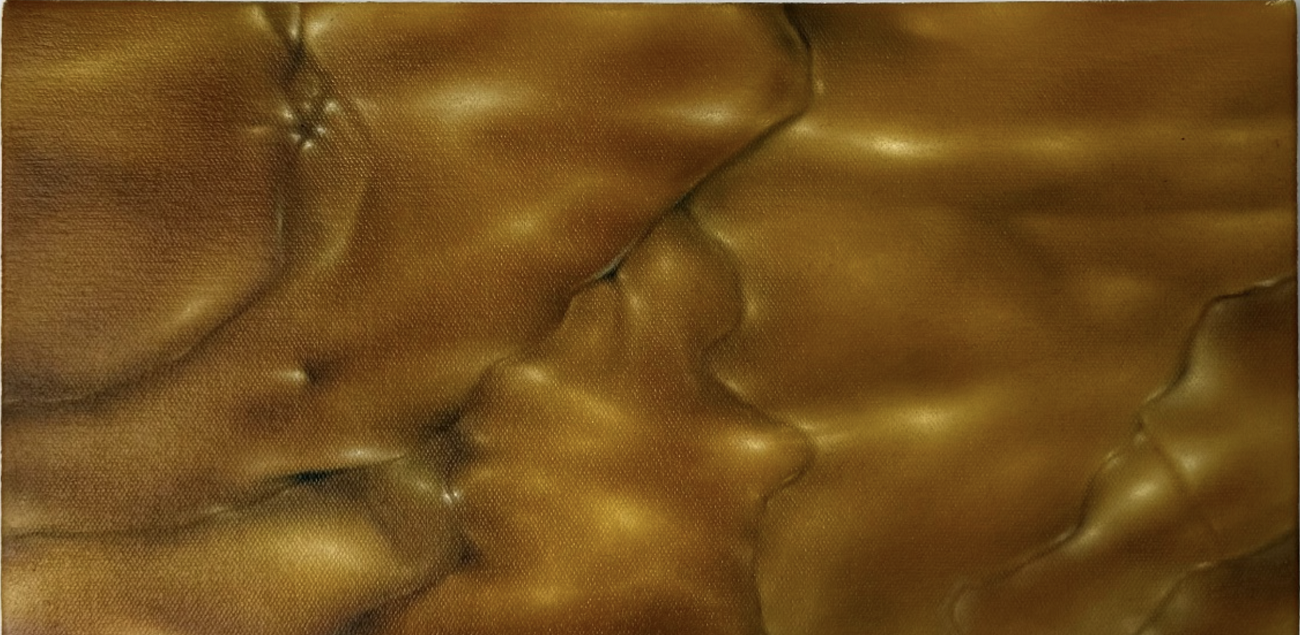
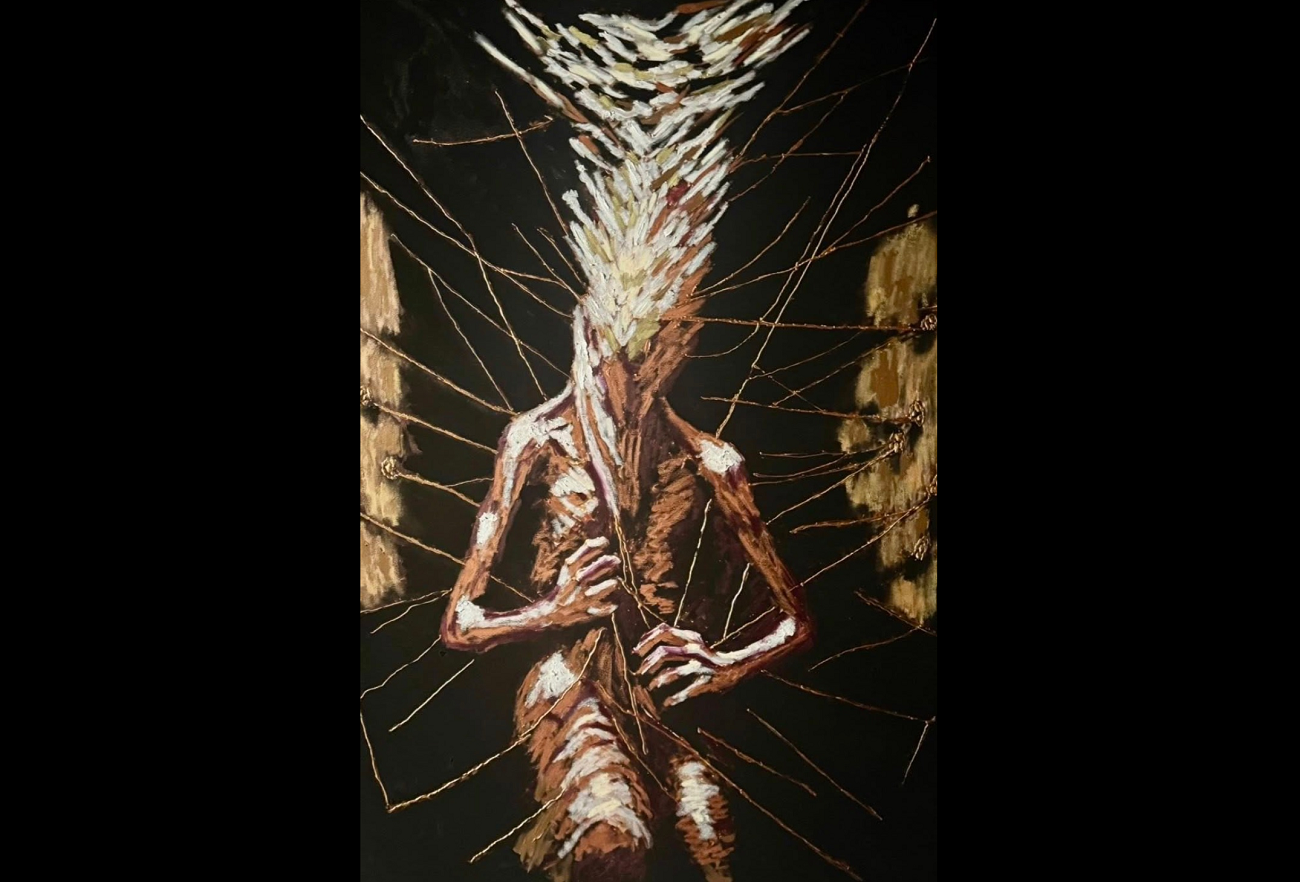
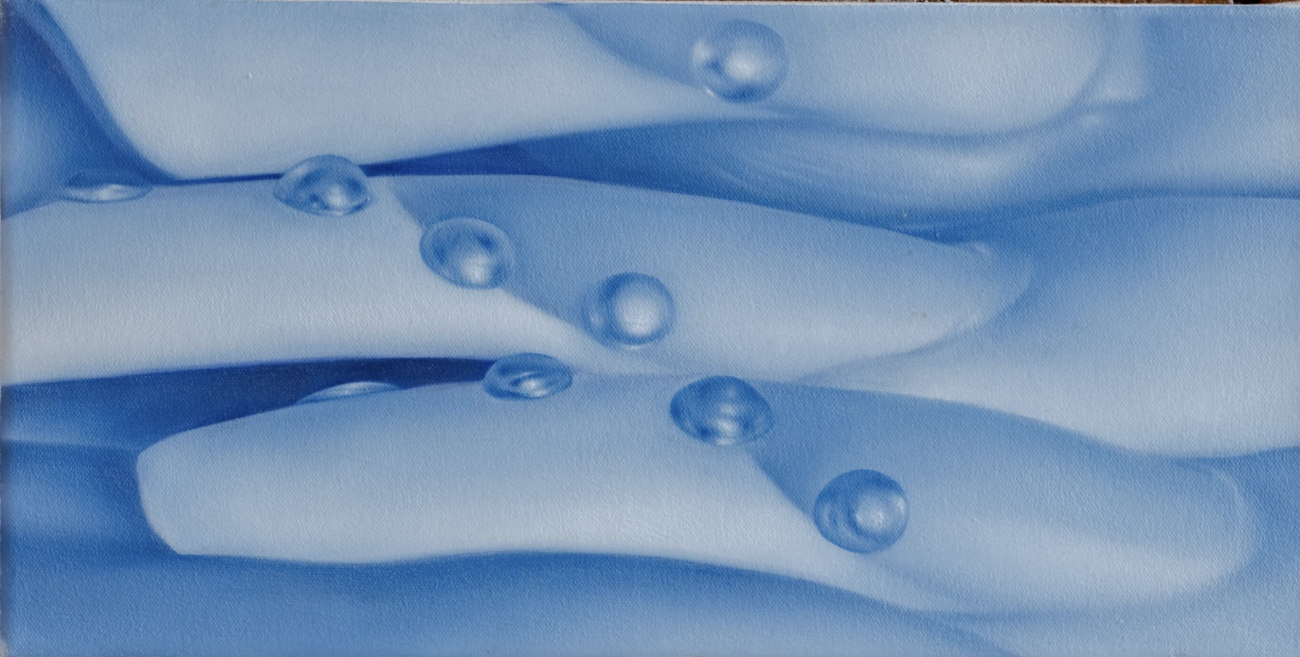
Alejandra Moros, „Arranca Acompaña”, 2025
Your work often treats the body as something fluid and adaptable rather than fixed. What first drew you to the body as your primary subject?
Alejandra Moros: I’ve always joked with friends that we’re playing a constant association game – “this looks like that, which reminds me of that other thing, which looks like this…” — and zooming in on parts of the body that drew me in to begin with feels like letting others in on the game. From there the web of interests and influences on the work expanded greatly, but the focus on the body was initially born from my tendency to obsess over small details and what they remind me of.
Are you interested in the body as a kind of archive?
Alejandra Moros: Definitely, and when I speak about bodies I don’t just mean human ones. The hyperspecificity of individual bodies, the hyperspecificity of groups of bodies of a time/place/belief/necessity, it will never stop being fascinating to me.
In what way do you combine painting, drawing, and found objects – archaeological or speculative? How do you decide when an idea belongs to one medium versus another?
Alejandra Moros: I’ve always collected objects, and they’ve always informed the paintings, but I’ve only recently started altering those objects in any way. I’ve always loved a search – for an image, a stone, an interesting line – and figuring out exactly how much of that I feel comfortable sharing versus how much I want to keep to myself is something I’m constantly figuring out. Sometimes painting something makes it feel more like a secret, sometimes keeping a rock for myself for years keeps it feeling precious. Sometimes altering an object feels evil. Sometimes painting something feels too revelatory, other times an image is so exciting that I can’t imagine not revealing it fully. Different things give me different things; I try to do what feels right for each image/object/idea. It’s subjective and silly but I love my things.
Your practice touches on transformation and adaptation. Do you see these ideas as personal, political, biological, or all at once?
Alejandra Moros: It’s all of it…one doesn’t exist without the other. The ways bodies (human or otherwise) have been pushed to transform/adapt/evolve/integrate/etc, whether long term or short term, is one completely defined by ecological, political, biological, individual, societal factors. Between that and the association game I mentioned, nothing is insular – it all inevitably becomes tied to something else, whether that be by a real, tangible connection or an imagined, comparative one. And a great majority of the work ties back to Florida, which is a precarious place ecologically/politically/etc. The work is found here and created here. I have to think about all of it.
How much does contemporary technology — cosmetic procedures, prosthetics, bioengineering, AI — influence the way you imagine the future body?
Alejandra Moros: I love science fiction, specifically le Guin’s writing, because of the ways in which the things idealized now can be done away with, and alternate stories of living can be imagined. What if what we wanted already existed, what if we didn’t have to feel so jaded. It’s also why I’m so interested in prosthetics, procedures, body modification – how necessary is replication as opposed to functionality, what is functioning as a placeholder, what is getting the individual closer to their internalized perception of themselves, and why does that perception or need lie where it does? The “future body” can feel like such an insurmountable thing to think about; I think I always tie it back to my fascination as a child with biology and evolution, and maybe that makes this a childlike way to think about it, but as much as I can try to imagine it, as much as science fiction gives me a million different realities to pick from, the reality of how bodies, human or otherwise, have already survived and thrived and transformed in order to do so is crazier than anything I could come up with for the future body.
Respectfully (or not), I don’t think about AI much. The things that are real have enough to offer, and the stories/futures imagined by individuals are much more valuable to me than those fabricated by something fed by them.
Bodies are increasingly mediated through screens, filters, and virtual identities. Do you think physicality is becoming more important or less important today?
Alejandra Moros: Physicality will always be important.
You are part of a group exhibition in Bucharest. Is this the first time you show your works in Eastern Europe? Have you prepared a specific project or series?
Alejandra Moros: Yes, this is the first time my work is exhibited in Eastern Europe. When Thom reached out to me with the show’s idea, it felt so tied to everything I already think about, that I was able to send recent work that was made not for the show specifically, but with the show’s themes constantly on my mind.
What conversations do you hope your work opens around identity, autonomy, and the future of the human body? When viewers leave your exhibition, what feeling or question would you like to stay with them the longest?
Alejandra Moros: I feel like most conversations I hear about my work are speculations about what the paintings and drawings depict, which I always love hearing. I hope the association game goes on forever, because I can only feed it so much. I hope everything connects, because it already does. I hope there’s wild explanations and speculations, because wilder things have already happened, and wilder stories have already been told. I hope it doesn’t stay human centric, and I know I have no control over any of this, because once I present it it’s no longer mine, but it was also never mine to begin with.
What is next for you after Bucharest?
Alejandra Moros: I just opened a solo exhibition here in Miami at Tunnel Projects that runs through June 12th, titled “chicle y polvo.” I’m now starting to work towards a show that will open in September: a two-person exhibition with someone whose work I’m a huge fan of. Very very very excited.