



Nicolae Stoica, the Last Great Interwar Figure – A Historical Rediscovery After More Than 80 Years
“Nicolae Stoica—The Last Great Interwar Artist,” an exhibition that opened on August 12 at the National Museum of Bukovina, marks a milestone in the history of Romanian art, bringing back into the spotlight the work of one of the most remarkable painters of the interwar generation, an artist whose career was brutally cut short after the establishment of the communist regime and who, for more than eight decades, was virtually absent from major exhibitions.
Organized by the Jean Louis Calderon Foundation, in partnership with the National Museum of Bukovina in Suceava, the exhibition is curated and documented by Damian Florea, the foundation’s president.
It will be accompanied by a comprehensive monographic catalog authored by Damian Florea, the result of research conducted over several years in archives, libraries, and museums both in Romania and abroad. The volume traces, for the first time, the artistic and personal journey of Nicolae Stoica, from his rise to prominence during the interwar period to his dramatic fate in the postwar years.
The most comprehensive presentation of the artist’s easel paintings
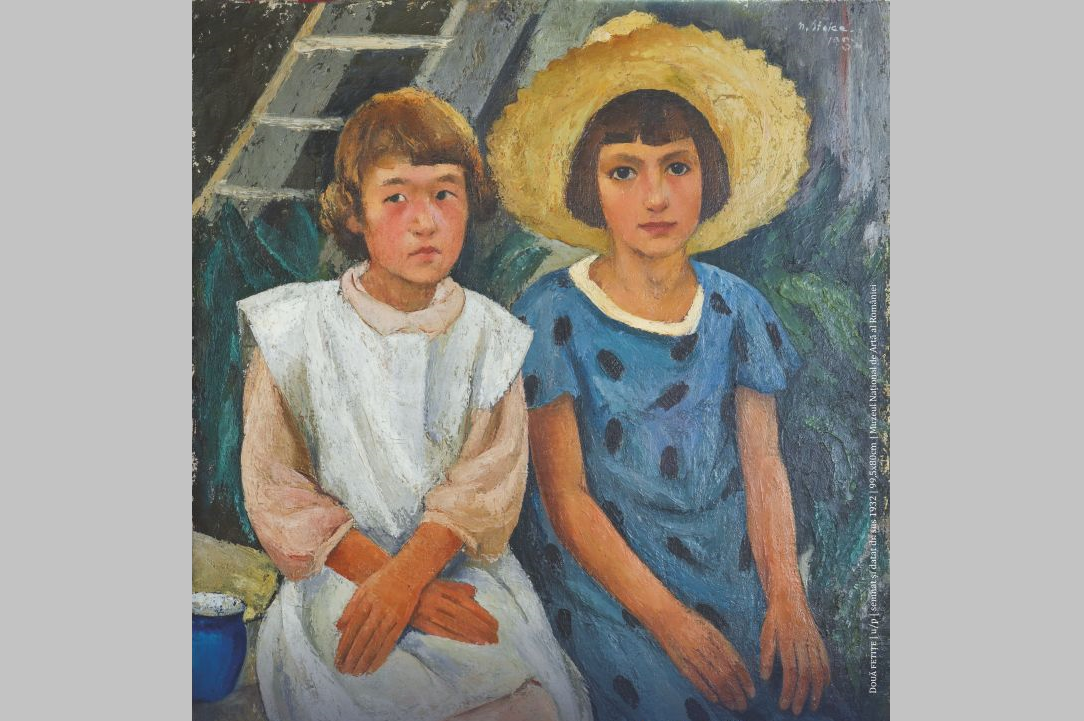
The exhibition brings together 39 oil paintings and 10 drawings from major museum and private collections, offering the most comprehensive presentation to date of the artist’s easel paintings.
The following institutions contributed to the creation of the exhibition: the National Museum of Art of Romania, the Cluj-Napoca Art Museum, the Craiova Art Museum, the County Art Museum – Baia Mare Art Center, the Bucharest Municipal Museum, and the Vasile Pârvan Museum in Bârlad.
Beyond the artistic value of the works on display, the project aims to restore to Romanian cultural memory a name that, during the interwar period, stood naturally alongside the most important artists of his generation, participating in the Official Salons, international exhibitions, and the 1942 Venice Biennale.
Postwar marginalization led to his easel paintings being all but forgotten, despite their undeniable value.
The exhibition “Nicolae Stoica—The Last Great Interwar Artist,” on view through August 30 in the Ground Floor Hall of the Suceava History Museum, is not merely a retrospective, but also an effort to reclaim history and restore artistic truth. It invites the public and experts alike to rediscover an artist who, through the power of his work, claims his rightful place in the heritage of Romanian painting.
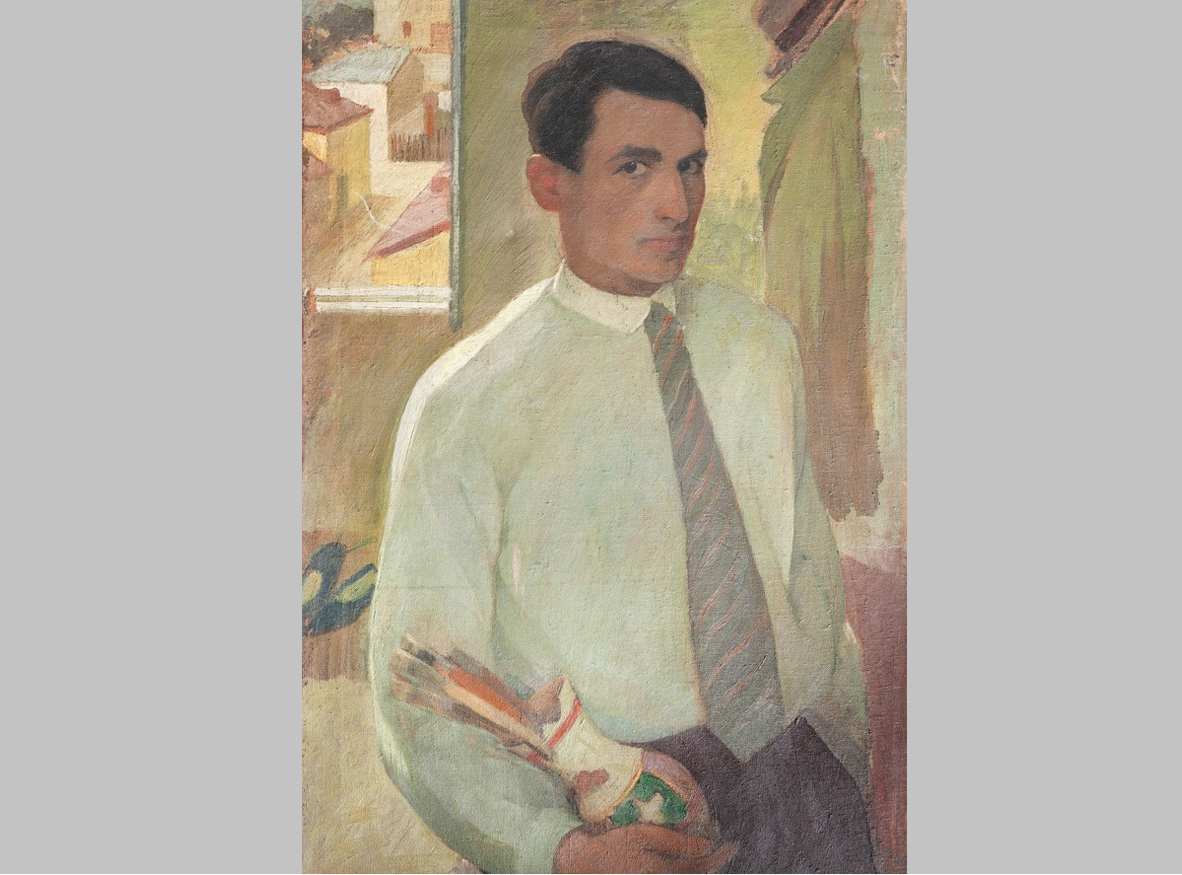
Self-Portrait, Nicolae Stoica, 1928 (reproduction from the monographic catalog edited by Damian Florea)
About Nicolae Stoica
Nicolae Stoica, born in Brăila on March 28, 1903, graduated from the Academy of Fine Arts in Bucharest in 1925, after studying for two years at the Faculty of Medicine. That same year, his participation in the “Tinerimea Artistică” exhibition, with the work “Portrait of a Child,” earned him the praise of historian Nicolae Iorga and a scholarship to the Academy of Arts in Rome, awarded by the Directorate of Historical Monuments. There, he specialized in both the visual arts and the conservation and restoration of works of art, delving deeply into the mural painting techniques of the great Renaissance masters. Later, he continued his studies in France, at the Sorbonne, in the field of mural painting.
Between 1926 and 1944, Nicolae Stoica regularly participated in the Official Salons, both as an exhibitor and as a member of the jury, distinguishing himself through the balance he achieved between easel painting and mural painting. After his expulsion from the Union of Fine Arts in 1945, the artist devoted himself to religious painting and the restoration of important heritage monuments in Romania.
The highlight of this phase was the decoration of the Orthodox Cathedral in Târgu Mureș, created using various techniques—fresco, oil tempera, mosaics, and stained glass—a monumental work completed two years before his death in 1988.