



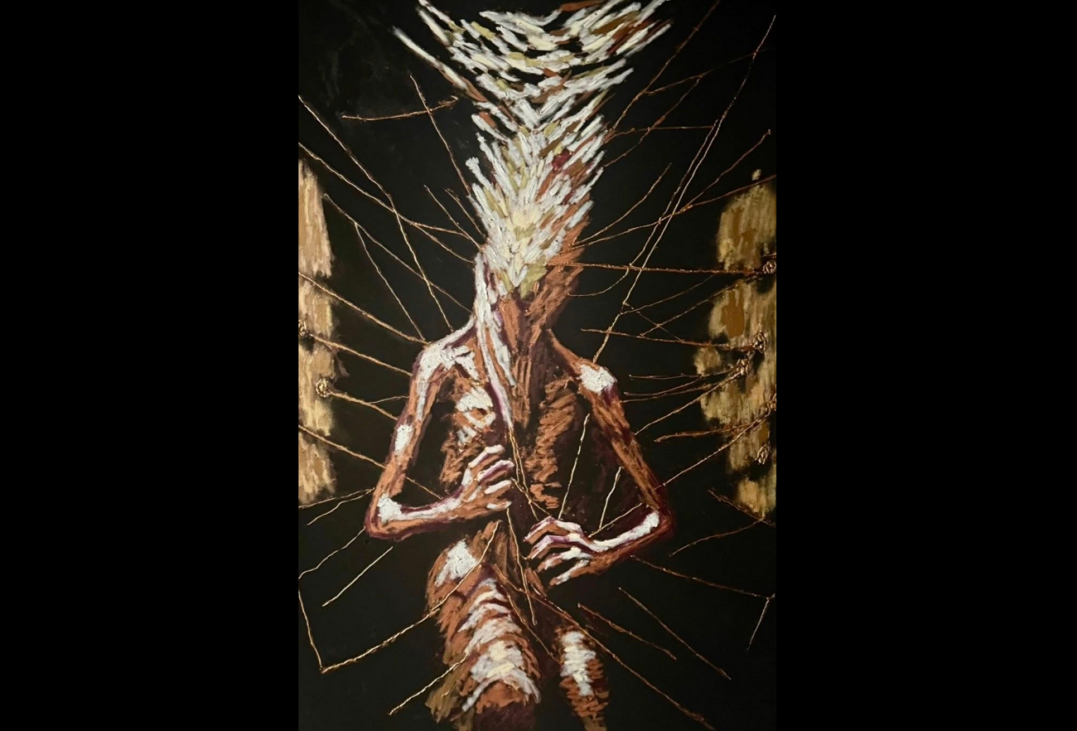
“Bad Boy” Alexa and transparent sales at outrageous prices
One of Romania’s best-selling emerging artists is looking for the perfect spot for his spectacular series of paintings dedicated to the late lead singer of The Cranberries.
Liviu Alexa recently turned 47. A tenacious investigative journalist, he cemented his reputation as a “bad boy” this year when, without any warning to the quiet world of Romanian art, he opened not one, but two solo exhibitions almost simultaneously, each with a different theme. Both impressed not only the public but also collectors. According to statements from the organizers—the Cluj Art Museum and the Kulterra Gallery in Bucharest, respectively—80% of the works on display were sold during the exhibitions.
Alexa’s painting style is unusual and provocative, but even more provocative is the way the artist has chosen to reveal herself to the public. She tells the story behind each piece on social media, directly involves her followers in the creative process, shows them step by step how she conceives each painting, and publishes the proceeds from each piece sold, accompanied by a bank statement.
“People lie a lot around here. I want to make it clear that I’m not lying—that I really do get 15,000 euros for a painting, which is an incredible amount for an emerging artist,” he says.
Over the course of this year, Liviu Alexa has publicly disclosed the proceeds from the sale of his paintings, totaling 250,000 euros, which likely makes him the best-selling emerging artist in Romania. With the same boldness that has marked his entire career as a writer and journalist, Alexa wants more: he wants to conquer the world, but not just any old way.
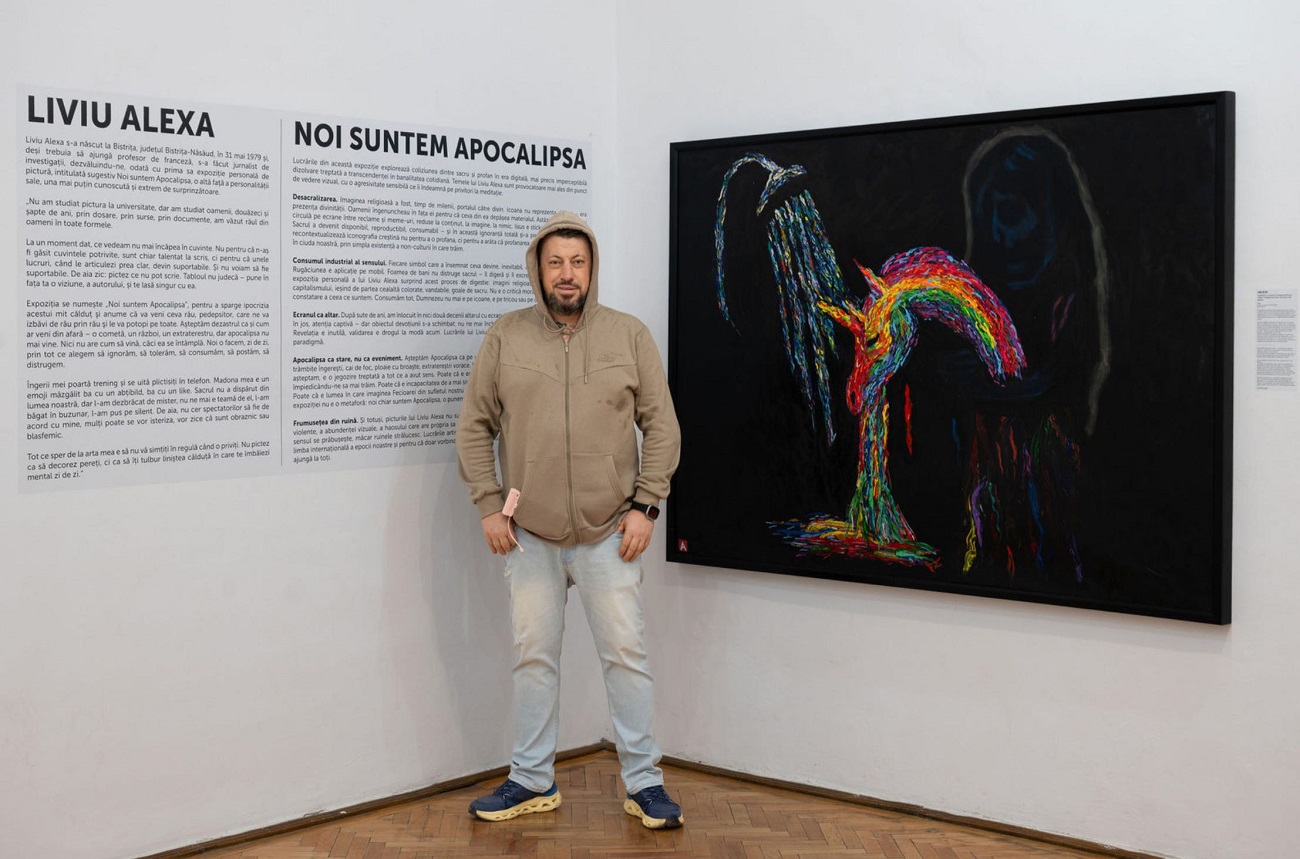
Liviu Alexa’s exhibition at Cluj-Napoca Art Museum
You’ve wrapped up your second solo exhibition and finished your third series of works, dedicated to the late Dolores O’Riordan, the lead singer of the Irish band The Cranberries. How are you spending your time off to recharge?
Liviu Alexa: Look , I was born under communism, in the Balkans, in a country where someone who’s grown up in the depths of poverty doesn’t really have time to relax if they want to survive. Besides, I’m not 20 anymore, so I can’t tell myself, as an artist, that I have my whole life ahead of me and that I can take it easy.
When I look at my idol, Anselm Kiefer—the German painter whose work I just admired at the Palazzo Reale in Milan in the extraordinary exhibition “Le Alchimiste”—I think that if he’s working at this pace at 81, I really have no reason to slow down.
Do you dream of becoming as famous as Kiefer or as rich as Dalí?
Liviu Alexa: Honestly, what genuine artist wouldn’t want that? What kid who plays tennis doesn’t dream of being like Novak Djokovic? Succeeding as an artist today is very different from what it was 60 or 150 years ago.
On the one hand, the art world remains insular and, to a large extent, snobbish. On the other hand, this shell is being cracked more and more by extremely talented artists who, for example, no longer need galleries to represent them and earn more money by promoting themselves through social media, which has become a giant magnifying glass through which the public views their art.
I don’t have a gallery representing me. Not yet, anyway. Maybe I never will, though I’m not ruling out that possibility. But if I decide to offer a gallery a 50% commission on my sales, I want to know that I won’t be treated like just another dietary supplement on the shelf, like the ten brands of condoms displayed in the same pharmacy.
Some might say you’re too cheeky…
Liviu Alexa: I’m not being rude. I’m incredibly passionate about what I do. And my work as an investigative journalist—which I’ve been doing for 28 years—makes me view the art market with both cynicism and objectivity. It’s a market that has become rife with routine, complacency, overvaluation, and prejudice.
Today, if you’re not an LGBT, African, or Ukrainian artist, you’re about 80% less likely, as an emerging artist, to be promoted by major galleries and the art press. And that makes me wonder what chances I have—as a heterosexual, religious artist who, on top of that, carries the “Balkan” label. In fact, I would never deny my Balkan origins. I love them. But if extraordinary Romanian artists like Adrian Ghenie or Victor Man have made it “abroad,” I take heart. If I whine, I won’t solve anything. Ghenie didn’t whine, and today he’s on everyone’s lips. Man didn’t whine, and today he has an entire floor in the massive Pinault Foundation building in Paris. And he sells paintings starting at one million euros and up. 90% of the Romanian art scene reeks of that nasty kind of envy, a stench of frustration, instead of being proud that Ghenie and Man have not only become blue-chip artists but are Romanians in the stratosphere of Art with a capital “A.”
You’ve chosen to do something unconventional for the traditional image of an artist. On Substack and, more generally, on your social media accounts, you show the paintings you’re working on week after week and share the details of your success…
Liviu Alexa: …and the failures. I even showed how, one evening, I used a knife to cut up a painting that wasn’t working and was getting on my nerves. I think the era of the intangible, reclusive, melancholic artist—convinced that his image must be built according to the principle of “less is more”—has largely come to an end.
I want the people who follow me to know what I read, what excites me, what irritates me, to know that I have an extraordinary child, a beautiful and intelligent wife, or that my heart is filled with sadness because my dog—whom I rescued from the street— Alo, now has cancer and doesn’t have much time left to live.
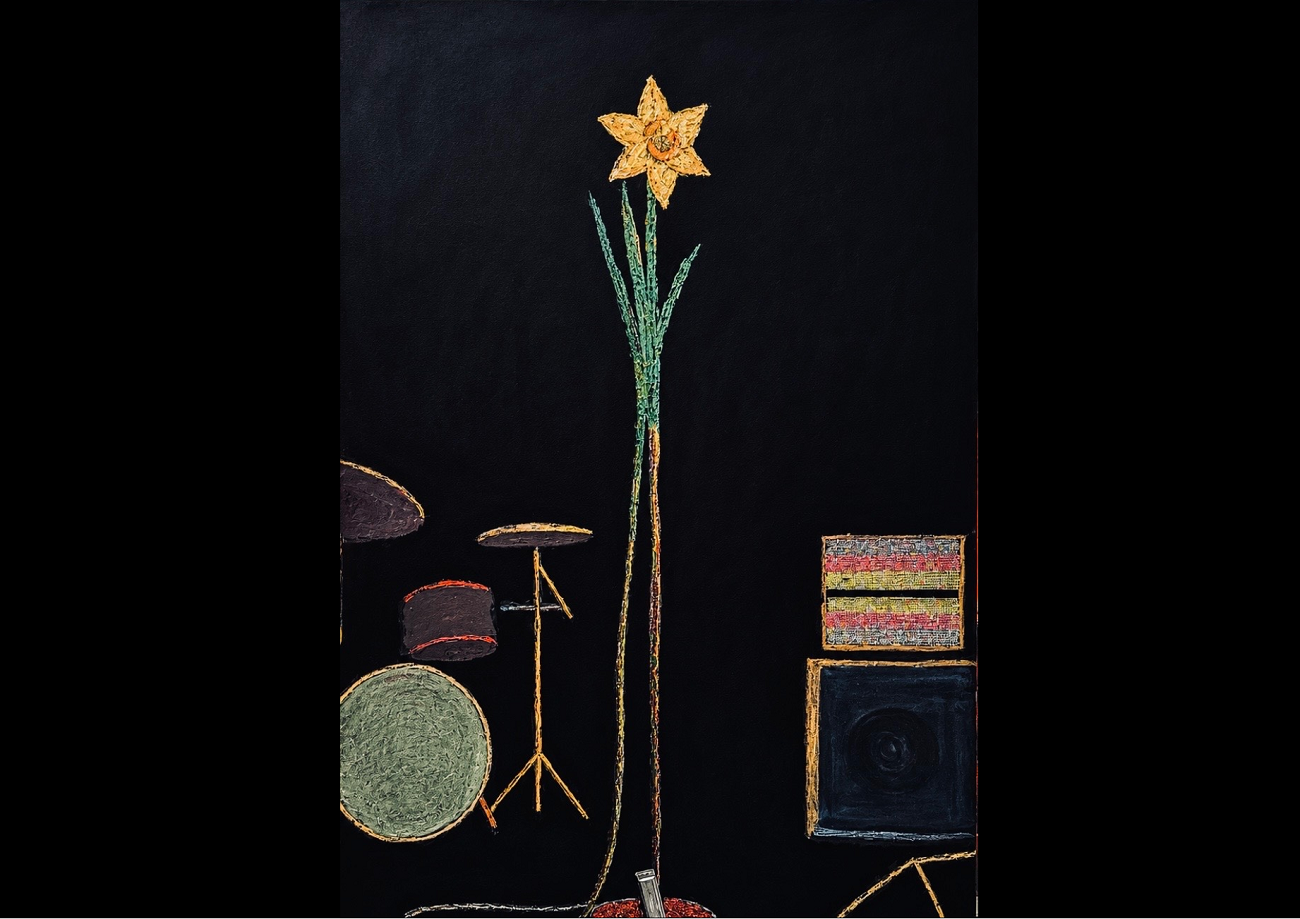
“And the Daffodils Look Lovely Today (The Dolores Portrait),” by Liviu Alexa
You’ve said that you want to reach beyond the country’s borders with your third series, titled “The Daffodil Lament,” dedicated to Dolores O’Riordan and her tumultuous life. The 21 announced works are complete, you don’t have a gallery representing you, and you don’t seem very interested in finding one—how can you expand into other markets?
Liviu Alexa: You know what’s funny? Even though the series isn’t finished yet and I’m not represented by any gallery, six of the 21 paintings have already been sold and paid for in full. It’s incredible what’s happening to me.
Yes, I hope to catch the eye of a major figure in Europe or the United States. But I don’t want to draw attention to myself. I believe this series is an exceptional artistic tribute to a unique voice, a brilliant composer who has touched the hearts of tens of millions of people, including my own.
Dolores is no longer with us, but I’ve been listening to her for thirty years, week after week, and I’ve passed her music on to my ten-year-old son, Ștefan. That’s what I think is truly important when you’re a great artist: the legacy you leave behind. And Dolores and The Cranberries have left the world something truly remarkable.
My paintings are sad, alluring, and haunting—just like her songs—and reflect the extraordinary fragility of an exceptional artist. In these works, I explore depression, doubt, suicide, disappointment, isolation, the fear of loving, anger, and hope—all themes that ran through Dolores’s life and work. Check out my artist website— alexa.space —I think you’ll like it.
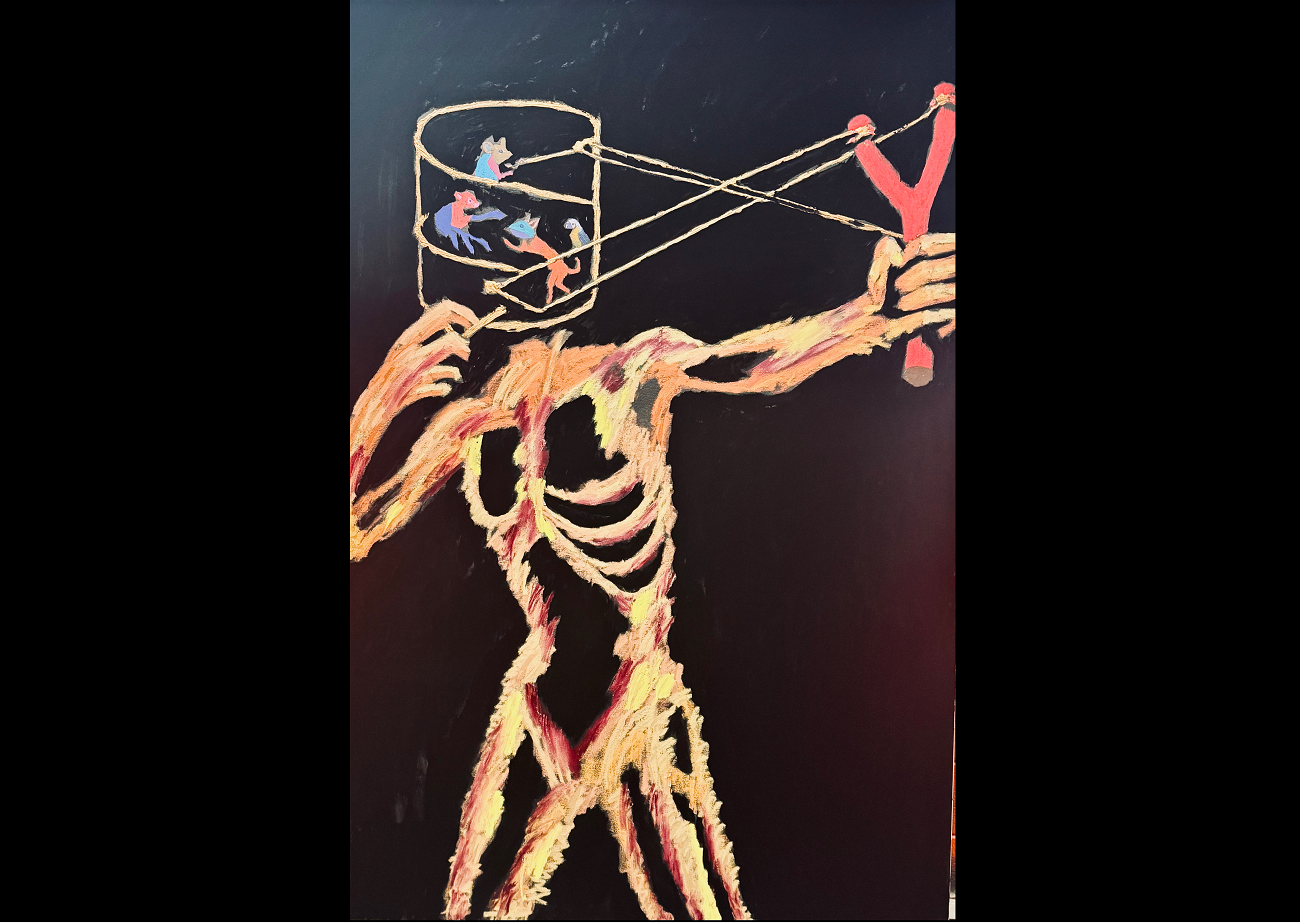
Zombie, by Liviu Alexa
Have you tried getting in touch with anyone else in the band?
Liviu Alexa: Sure , I reached out to the remaining members. I asked them for a kind of artistic blessing. They didn’t reply. It’s a shame, because Dolores is no longer with us, and the band, in its former form, no longer exists. I thought that any sincere gesture paying tribute to her memory was at least worth considering.
Maybe they thought I was just an opportunist trying to cash in on her name. I’m not. I have The Cranberries’ lyrics tattooed on my body. Seriously. Dolores is my everything. I wish she could have seen my paintings. She would have understood how serious I am.
With or without them, I’ll exhibit this series at some point, and I’ll do everything I can to make Dolores proud of me, up there.
What is your biggest dream for this third exhibition? Where would you like to present it: in Rome, in Paris, or maybe in Berlin?
Liviu Alexa: You’re going to laugh, but I’m not interested in simply exhibiting in this or that art capital. And I think I’m a bit atypical in that regard.
For example, I would like to exhibit the Dolores series at the spectacular Prada Foundation complex in Milan—but not just anywhere; specifically in the space called the Cisterna, a place that only those who have visited it can truly understand.
Or, for example, I dream of making it to White Cube in London, even though I know that, right now, it seems beyond my reach. I’m an artist from the far corner of Eastern Europe—what would I even be doing there, right?!
But just as Salvatore Ferragamo—a poor 16-year-old boy who worked as an apprentice in a shoe factory—dreamed day after day of conquering the world and went on to design shoes for legendary women like Greta Garbo and Sophia Loren, so I, a 47-year-old kid, have every right to dream.