



INTERVIEW – Lea Rasovszky: Femininity is a vibrant, contradictory, and ever-changing realm
In an interview with Curatorial, Lea Rasovszky discusses her most recent artistic project, which emerged from a new encounter with herself—motherhood—as well as femininity and feminism, the freedom to reinvent oneself, identity, and transformation.
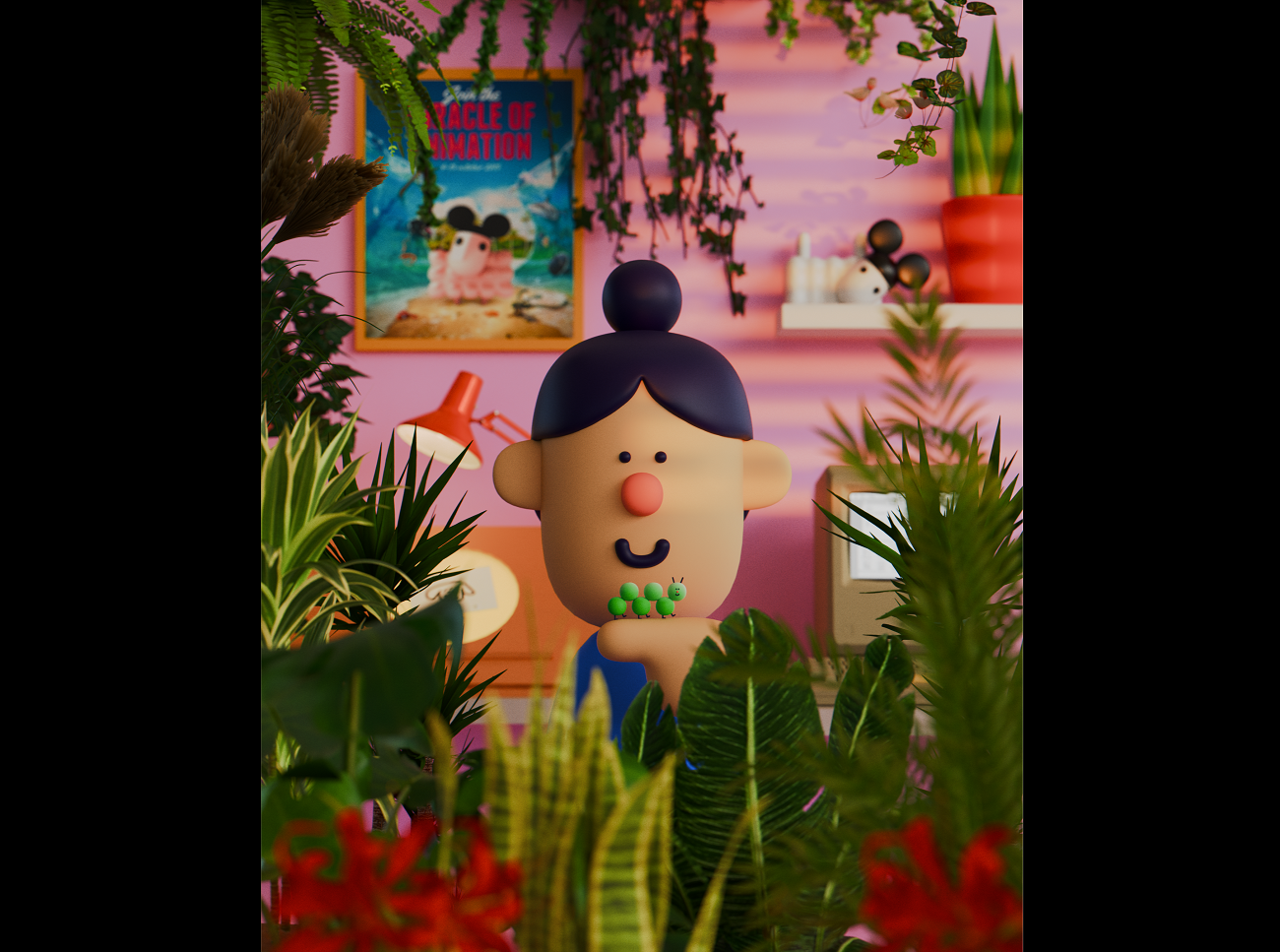
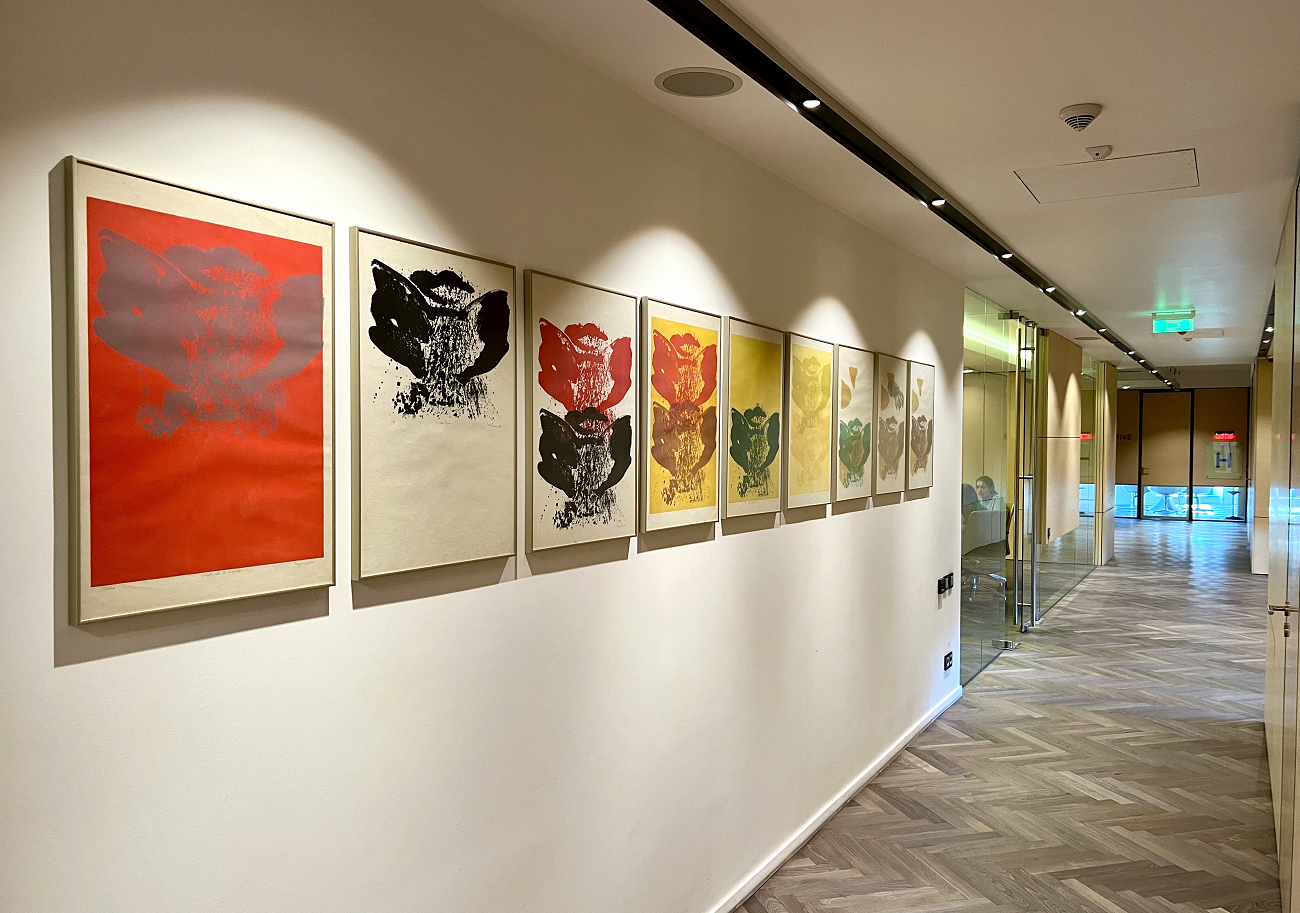
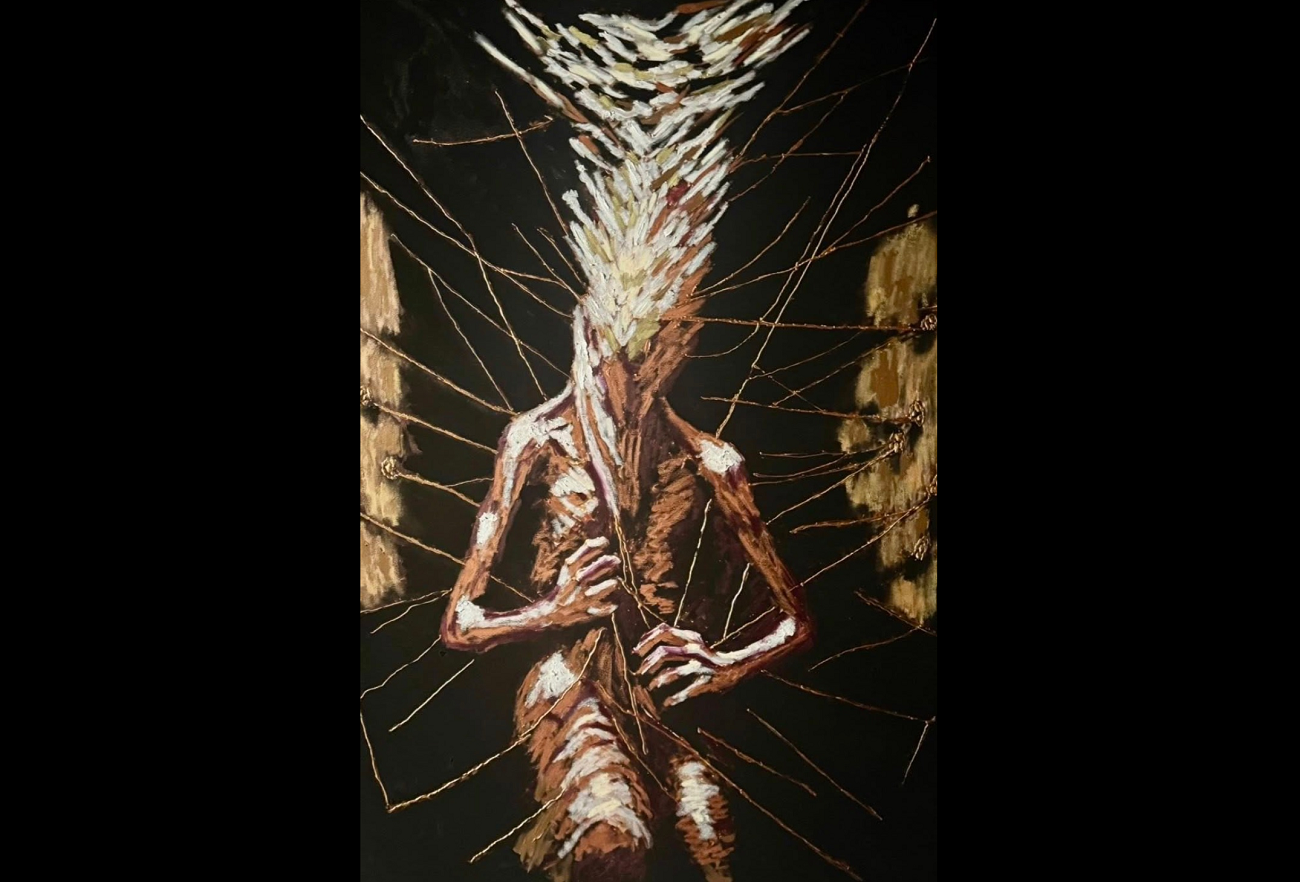
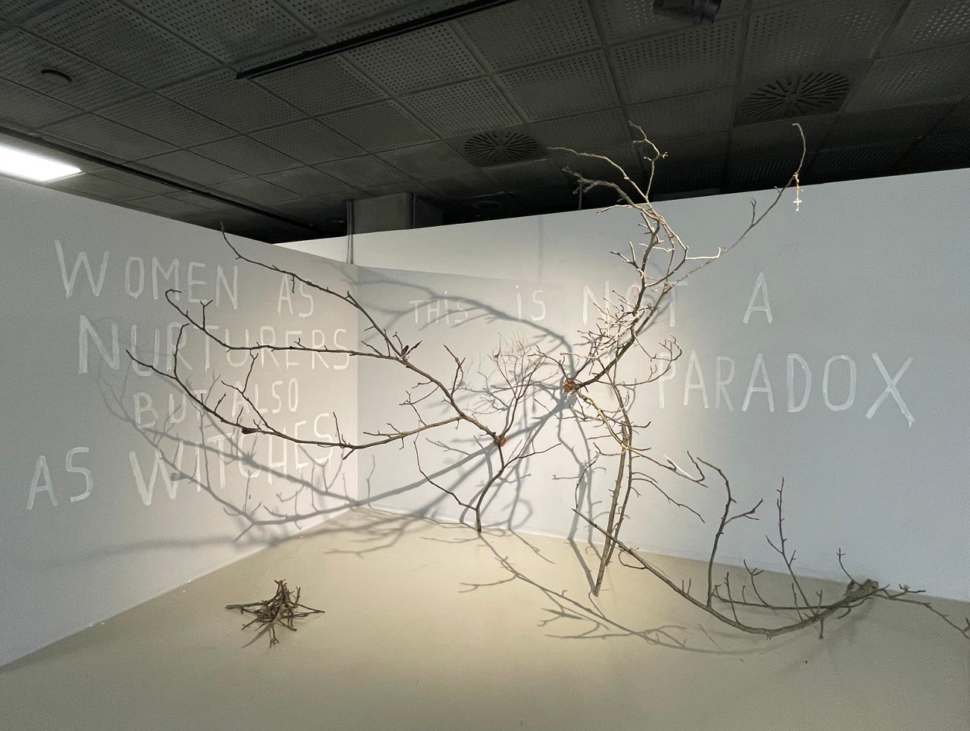
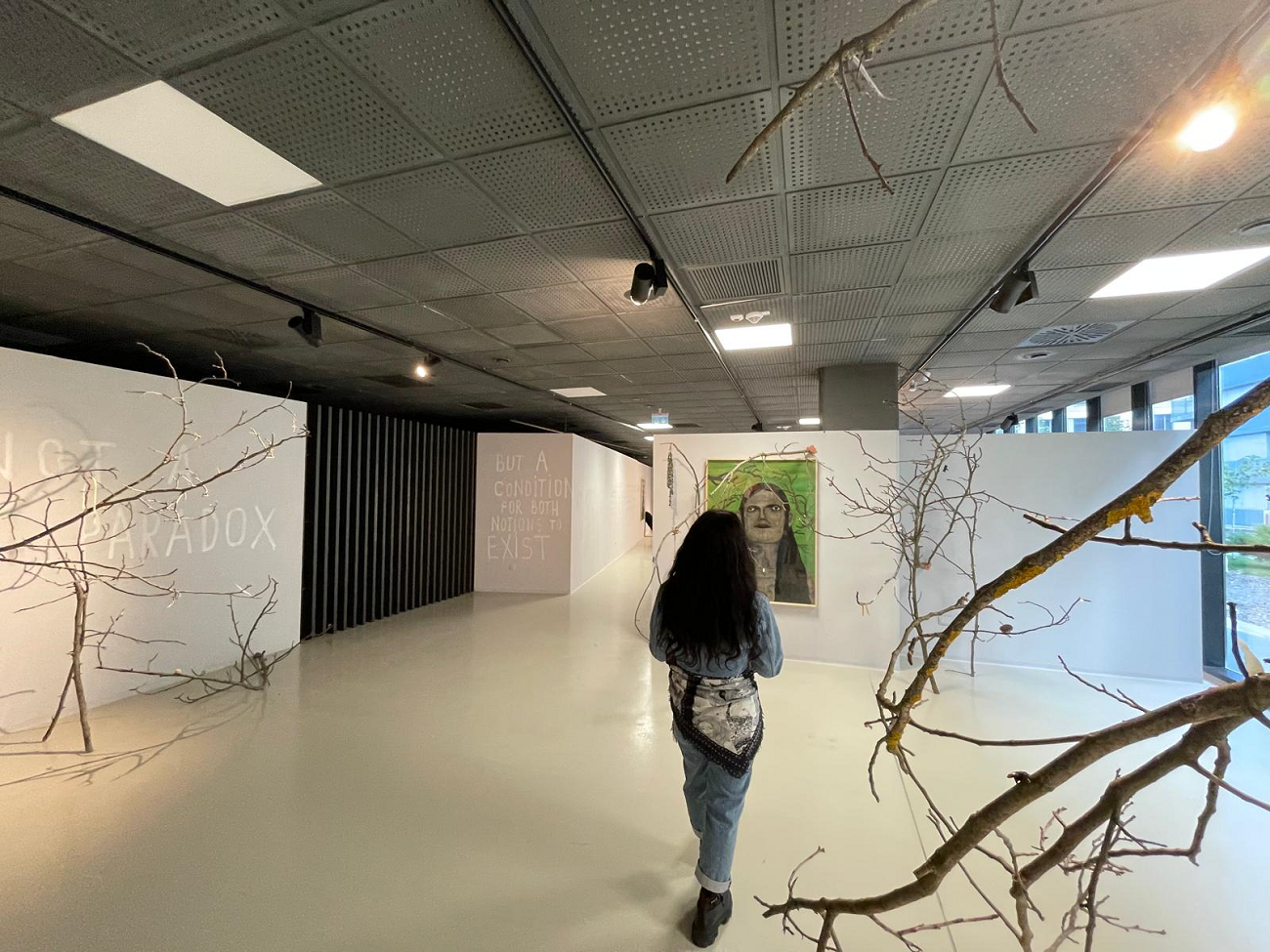
Installations featuring paintings, ready-made objects, and insects depict real and imaginary female figures, inspired by dreams and memories. Together, they speak to the continuity and solidarity among generations of women.
The autobiographical exhibition “I Met You Later in Life” by artist Lea Rasovszky is on view at ISHO Office 1 in Timișoara through mid-October, after which it will move to Mobius in Bucharest.
Lea Rasovszky, born in 1986 in Bucharest, studied at the National University of Arts and held her first solo exhibition in 2004. Since then, she has held numerous other solo exhibitions and participated in dozens of group exhibitions. Among other things, in 2015 she was included in the exhibition “Inventing the Truth. On Fiction and Reality,” alongside Michele Bressan, Carmen Dobre-Hametner, Alex Mirutziu, Ștefan Sava, and Larisa Sitar, as part of Romania’s presentation at the Venice Biennale.
He is a co-founder of the nongovernmental organization MATKA, which has been promoting education through art and creativity since 2015, focusing on disadvantaged areas of Bucharest and involving visual artists and other members of the creative community. In 2020, he co-founded the Atelierele Malmaison collective alongside other artists, and he is also a co-founder of the L1 Artist Collective.
“I Met You Later in Life,” curated by
What sparked this journey of self-discovery, and how did it evolve from a personal experience into a public artistic endeavor?
Lea Rasovszky: I believe I have encountered myself many times throughout this ongoing process of growth and transformation. There have been various moments in my life when I felt that one stage was coming to an end and that I had to leave it behind in order to begin another—with a different version of myself, unified at a deep level, yet with many ripples on the surface—a self that is gradually becoming more capable of letting go of what no longer serves it, enriched by accumulated experience, and more deeply and irreversibly connected to myself. I’ve always felt that it’s a difficult process, sometimes even Heartbreaking, but inevitable—and, little by little, I’ve learned to recognize the signs, trust my instincts, and move on.
I believe that each of these encounters with me has left something behind and made room for something else. Sometimes with losses, other times with revelations, almost always with the feeling that what is being built isn’t necessarily a new version, but one closer to who I already was—hidden beneath layers of experiences, expectations, fears, and ways of adapting. A process of letting go, but also of drawing closer.
The most important experience—the one in which I truly felt the weight lift all at once, leaving behind only a visceral, raw core—was motherhood for me. This experience was—and still is—a turbulent yet sweet blend of asserting a mature self, with a complex array of emotions I’ve navigated, yet one that is firmly anchored in a stable essence of my own. An experience that did not come with a definitive version of myself, but rather, on the contrary, with a multitude of questions and transformations, through which I was forced to look at myself anew, in a different context and with a different sense of responsibility.
And, of course, like anything that captures my heart and mind, it has turned into an artistic endeavor: “I Met You Later in Life,” a project I’ve been developing from the ground up for five years and which, for me, marks a pivotal moment in my personal and professional development.
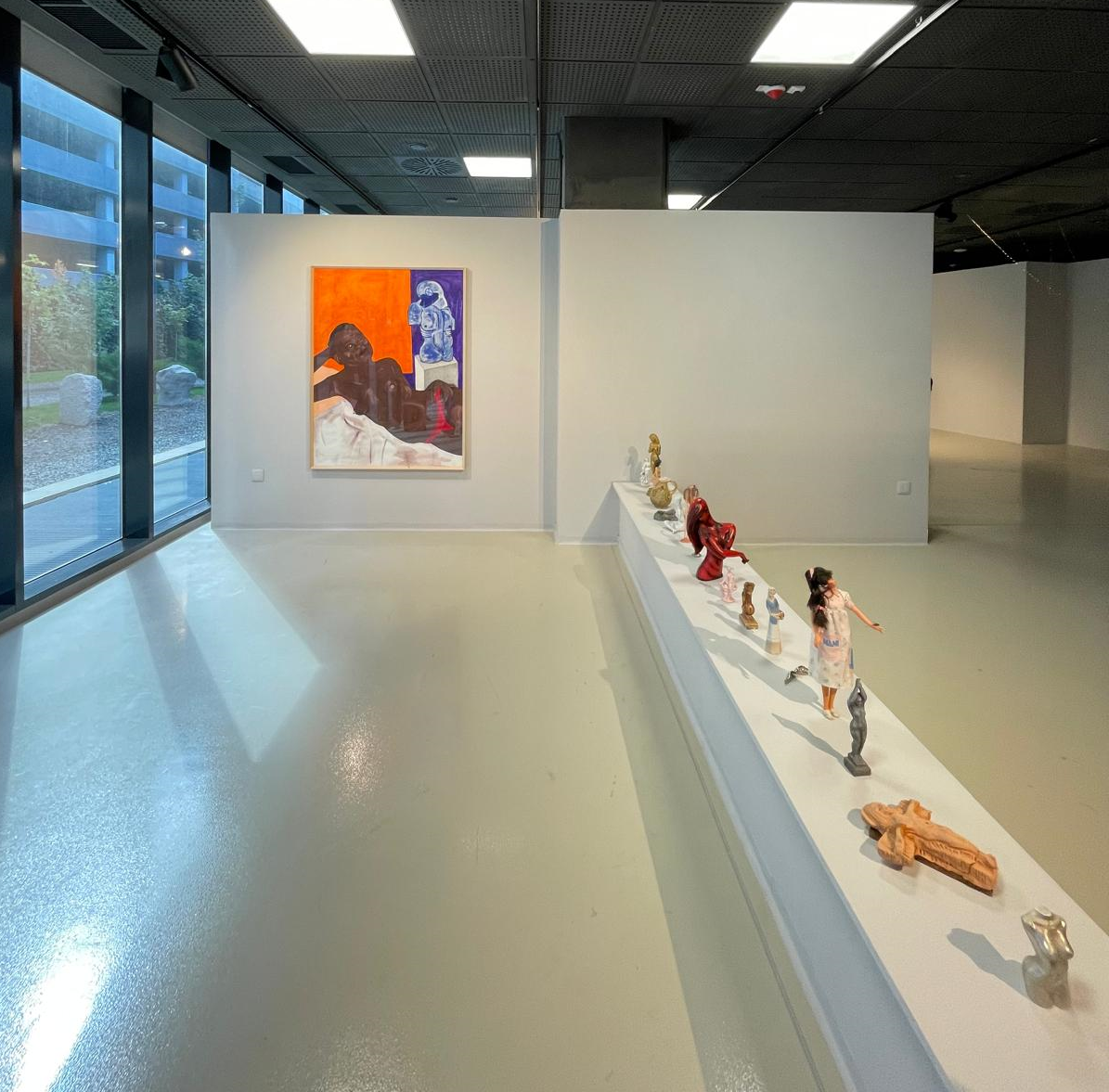
I Met You Later in Life, curated by
You combine painting with found objects in installations that evoke both reverie and the reality of today’s society. What is the relationship between what it means to you to be a woman and what society says it should mean?
Lea Rasovszky: Objects are sentimental artifacts of our personal histories. I am fascinated by this sensitive and slightly magical form of archaeology in which objects serve as witnesses straddling the boundary between our inner and outer worlds. They preserve traces, gestures, attachments, and stories—sometimes even when we no longer know how to put them into words. I find it fascinating how a seemingly mundane object can become an extension of a person and carry with it an entire emotional history.
Society has many problems that I’ve been noticing for a long time—ever since I began to understand what society means and this set of rules, explicit or implicit, that define our place in the world. For me, being a woman means being a human being in the fullness of my feelings, emotions, and freedom. I do not accept any form of restriction imposed by society; I do not accept the constraints and customs that insist on taking over women’s bodies, hearts, and minds, and I question everything that is blindly presented to us as the “right” path.
I believe there is constant pressure to fit women into a set of recognizable and acceptable roles, to tell them how to look, how to love, how to be mothers, partners, daughters, professionals, or simply how to exist. I’m interested precisely in the space that emerges when we reject these predefined definitions and begin to construct our own ways of being. For me, the freedom to continually define myself, to change my mind, to transform myself, and to never be completely “settled” is part of this experience of being a woman.
Every day, I’m glad to be surrounded by women who feel and act just like me and who, simply by their presence, redefine what it means to be a woman. Women who don’t necessarily conform to a predefined image, who embrace their contradictions, vulnerability, strength, anger, tenderness, and all the shades in between. I believe that this solidarity—this ability to see and recognize ourselves in one another—is also a way to slowly change the narrative of what we’re told we’re supposed to be.
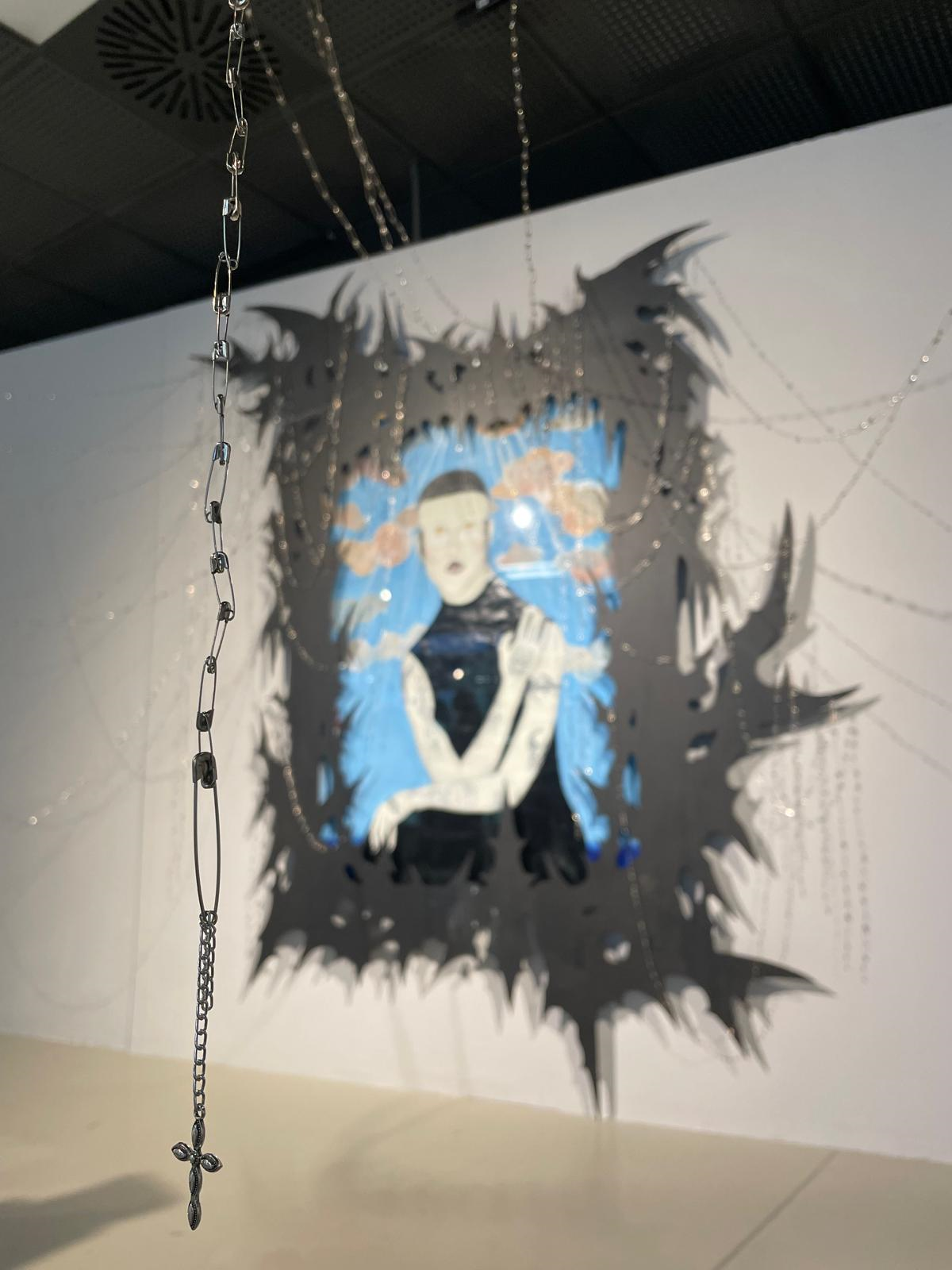
I Met You Later in Life, curated by
Do you think there is still a great deal of pressure on women—and, by extension, on female artists? What impact do you think the women’s rights movements have had and continue to have? What has changed in terms of equal opportunity?
Lea Rasovszky: Women have been and continue to be under pressure from so many directions. Almost everything we do and everything we are is scrutinized and analyzed according to standards imposed by capitalism, churches, and other oppressive structures. Our bodies, our choices, the way we love, work, raise children, or choose not to have them—all of these are constantly subject to judgments and expectations that tell us what we’re supposed to be.
In this context, I think the importance of the women’s rights movements is clear. It is 2026, and we have reached this important juncture thanks to all these powerful impulses toward change, thanks to the women who refused to accept the roles assigned to them and who, through their own lives and voices, created space for the generations that followed them. Nothing that we take for granted today came about on its own, and nothing can be considered a permanent victory—as we have been reminded all too often lately.
My sense is that something is changing at a deeper level. I see more and more women finding and rediscovering their voices, asserting their autonomy, and no longer feeling the need to conform to predefined molds in order to be validated. However, this is a very long-term struggle and must be supported much more firmly through legislation and the active involvement of institutions and authorities. Cultural change is essential, but it also requires structures to provide concrete support, protect hard-won rights, and create real conditions for autonomy and equality.
I am incredibly excited to see how some of the most powerful figures in music, art, and literature are women. I’m glad to see that we’re not only occupying these spaces, but also transforming them from within in such a substantial way, bringing into them experiences, perspectives, and forms of expression that have long been ignored or marginalized. For me, this proliferation of voices is one of the most important forms of change: not a single story about what it means to be a woman, but a multitude of stories—contradictory, vulnerable, powerful, and free.
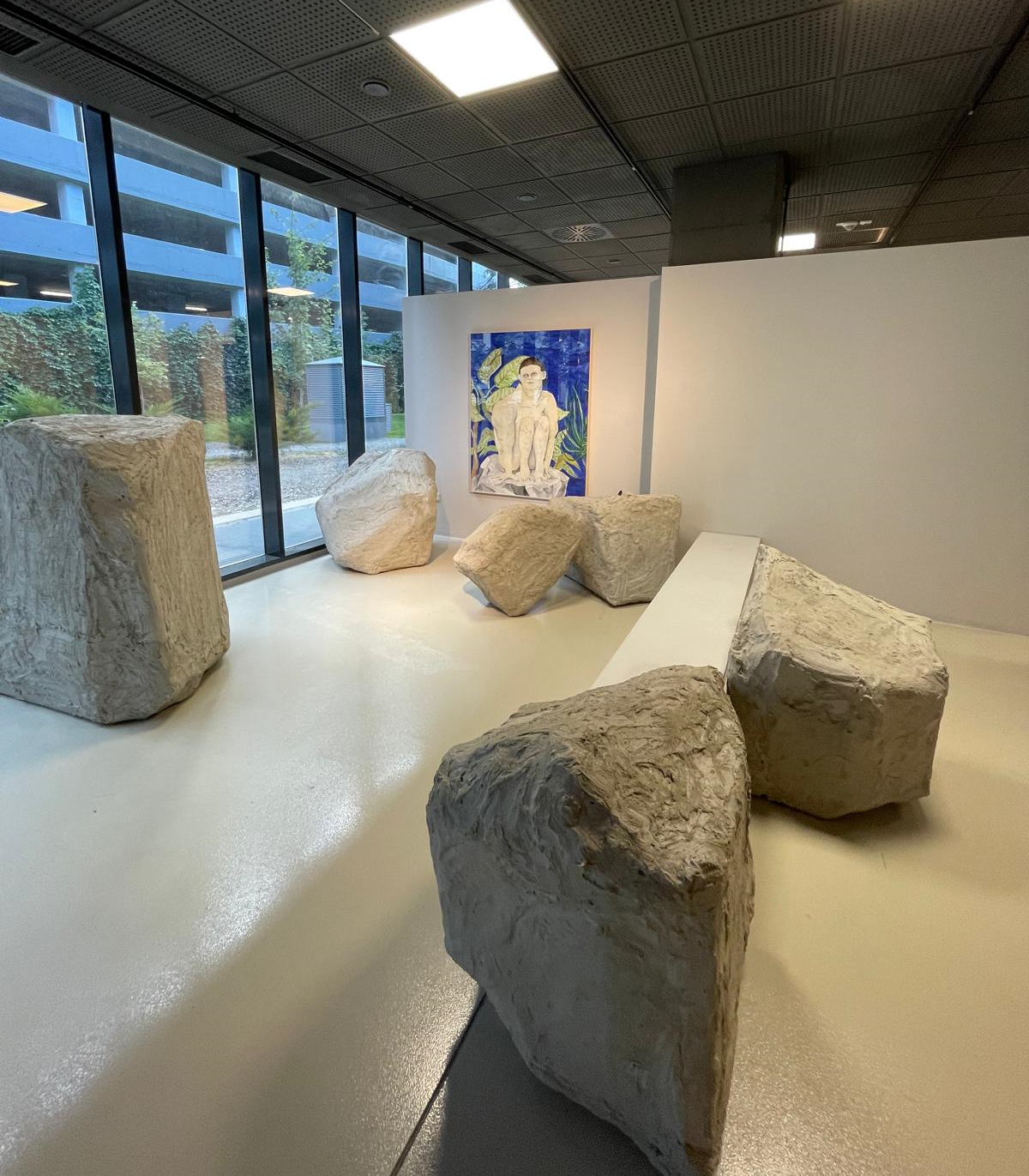
“I Met You Later in Life,” curated by
Compared to your other exhibitions, which part of yourself is much more on display now? How would you describe this encounter with yourself?
Lea Rasovszky: “I Met You Later in Life” is part exploration, part tribute, and part celebration of everything that a deep connection to femininity—in its broadest sense—means to me, transcending norms, stereotypes, and the desires of others.
It is an exploration of femininity as a living, contradictory, and ever-changing territory, beyond the definitions that have been attributed to it and the frameworks within which it has been confined for so long. I am interested in femininity as a personal experience, but also as a shared space where the body, memory, motherhood, vulnerability, strength, desire, anger, tenderness, and all those things that cannot be reduced to a single definition come together.
At the same time, this project is a tribute to the women who shaped me —my mother, grandmothers, aunts—to those I’ve met, and to those who, through their very existence and voices, have broadened my understanding of what it means to be a woman. It is also a celebration of the freedom to create our own definitions, to change, and to encounter—sometimes much later in life—parts of ourselves that we could not see before.
How do your roles as a professional artist and as a mother overlap now?
Lea Rasovszky: Both roles coexist strongly within me, so they will always intertwine. I weave them together; they intersect, separate when necessary, but also nourish one another. I’m glad to be the mother of this wonderful person, from whom I have so much to learn, and I’m glad to be able to practice my profession with enthusiasm and energy, because it, too, defines me just as much.
The beginning was very difficult, because motherhood turned my world upside down and then put it back together again, as if to show me that I should trust my imperfect strengths and the immense love I feel. It was a time when many of the things I thought I knew about myself were shaken up, I temporarily lost my independence—which is so important to me—and had to relearn how to relate to my own body, my own time, my desires, and the idea of who I am. Motherhood didn’t come as a peaceful addition to my identity, but as a force—an earthquake that shook it to its very foundations.
Over time, I’ve learned that I don’t have to choose between these two parts of myself. I don’t have to be any less of a mother to be an artist, nor any less of an artist to be a mother. These two identities don’t cancel each other out; rather, they coexist and transform one another. Sometimes one needs more space, other times the other, and this ongoing negotiation is part of who I am.
I believe my artistic practice has also changed as a result of this experience. Motherhood has given me a new understanding of vulnerability, responsibility, and love, as well as a different perspective on my own body and the way I relate to the world. And the fact that I can continue to create, explore, and transform myself through my work is, in turn, a way of showing my child that there are many ways to be, to love, and to build a life that is truly our own.
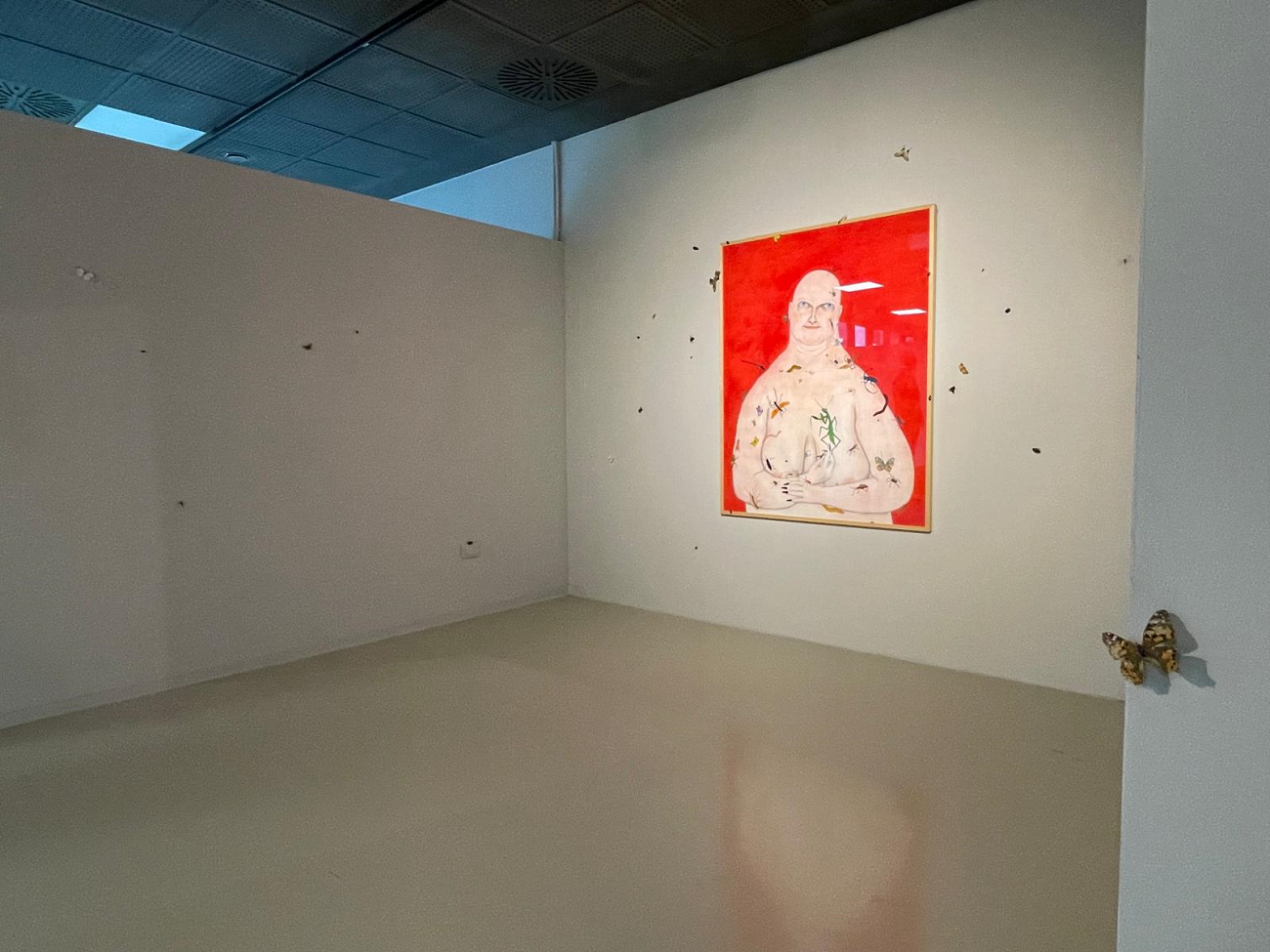
I Met You Later in Life, curated by
The same exhibition is coming to Bucharest next month. What will be different from the one in Timișoara?
Lea Rasovszky: This exhibition is like a living organism that can expand or contract depending on the space available to it. I don’t see it as a definitive form, but rather as a structure that adapts, breathes, and transforms along with the space in which it is situated. For me, every place it goes changes the story in some way and creates the possibility of a new relationship between the works.
In Bucharest, the space will be smaller, and perhaps for this very reason, I expect the exhibition to have a more intimate feel. In Timișoara, I liked that we had a huge space where the stories could flow smoothly into one another, while still offering moments of respite, accumulations of emotion, and distances where the gaze could linger longer. There was something almost organic about the way the works could occupy that space and carve out their own paths. In Bucharest, I think it will be a more intimate space, where the stories will embrace one another, perhaps creating a warm circle with many arms. The proximity between the works will likely also change the way they are perceived, and this density may generate a different kind of energy—one that is more concentrated and more personal. Perhaps some works will need to speak more softly, while others will become more powerful precisely because of their proximity.
I can’t wait to see how it will evolve. Part of my enjoyment comes from rearranging the pieces of this story in new ways—moving them, bringing them closer together, or giving them space to breathe—while maintaining the original spirit. I believe that an exhibition is never truly finished: it continues to exist and evolve with every space, every perspective, and every encounter with the public.
What is the main message you want to convey to the viewer?
Lea Rasovszky: I would be delighted if everyone who visits the exhibition, but especially women, girls, and people who identify with these experiences, could leave with their own story, feel seen, appreciated, and loved, and feel that the sisterhood and support among us are something active, not just a mere statement.
Our stories are unique, yet similar, connected, and intertwined. I would love for this exhibition to create a space of recognition, where we can see ourselves in one another and feel that, beyond the differences in our experiences, there is unity and a shared strength that can even change the world.