



Five Years in the Wild Delta — Dan Dinu: “We must let nature work in peace and sustain itself”
“Wild Delta/ Delta Salbatica,” the first major Romanian documentary dedicated to the Danube Delta, is a story told from the perspective of water. Produced by the team behind“Wild Romania,”the most ambitious documentary on biodiversity in Romania, “Wild Delta” captures the distinctive features of this unique European landscape, designated a UNESCO World Heritage Site.
The story, told from the perspective of water and brought to life by actress Medeea Marinescu, was filmed over the course of five years with great care for the natural environment. The documentary, which bears the mark of cinematographer Cosmin Dumitrache and features a soundtrack composed by Alexei Țurcan, will be released in Romanian theaters on October 23, 2026.
Dan Dinu, who directed the documentary he co-wrote with Codruța Florea, talks in an interview with Curatorial about what went into this production, the wildlife discovered in the Delta, promoting the area, and what tourism there should look like, and the crucial importance of environmental education, without which the area cannot be protected.

Dan Dinu and Cosmin Dumitrache in the Danube Delta © Dan Dinu
You’ve invested a lot of time in this project, but what kind of financial investment are we talking about? What is the budget for a large-scale production carried out over five years, and where did the majority of the funding come from?
Dan Dinu: Abroad, productions like this have much larger budgets, but we managed to do everything with about 300,000 euros. The budget came from a grant from the National Center for Cinematography, which paved the way for much greater financial support from Cinema City. Of course, our team also contributed to the total amount with a great deal of equipment and hard work.
It has been and continues to be a huge effort, but we really love this field and are trying to develop it as much as possible, so personal commitment is also necessary.
Where was most of this documentary filmed, and what was the most technically challenging part?
Dan Dinu: The film was shot mostly in the Danube Delta and several other similar wetlands. Our base was at Mila 23, a town located in the heart of the Delta, from where we constantly traveled to other locations as needed. Important scenes were also captured in the Letea Forest, and some sequences were filmed in Vadu and Sfântu Gheorghe.
I think the biggest technical challenge was the underwater filming. The Delta is truly spectacular underwater, so we needed special equipment to capture the landscape and the wildlife that live there.
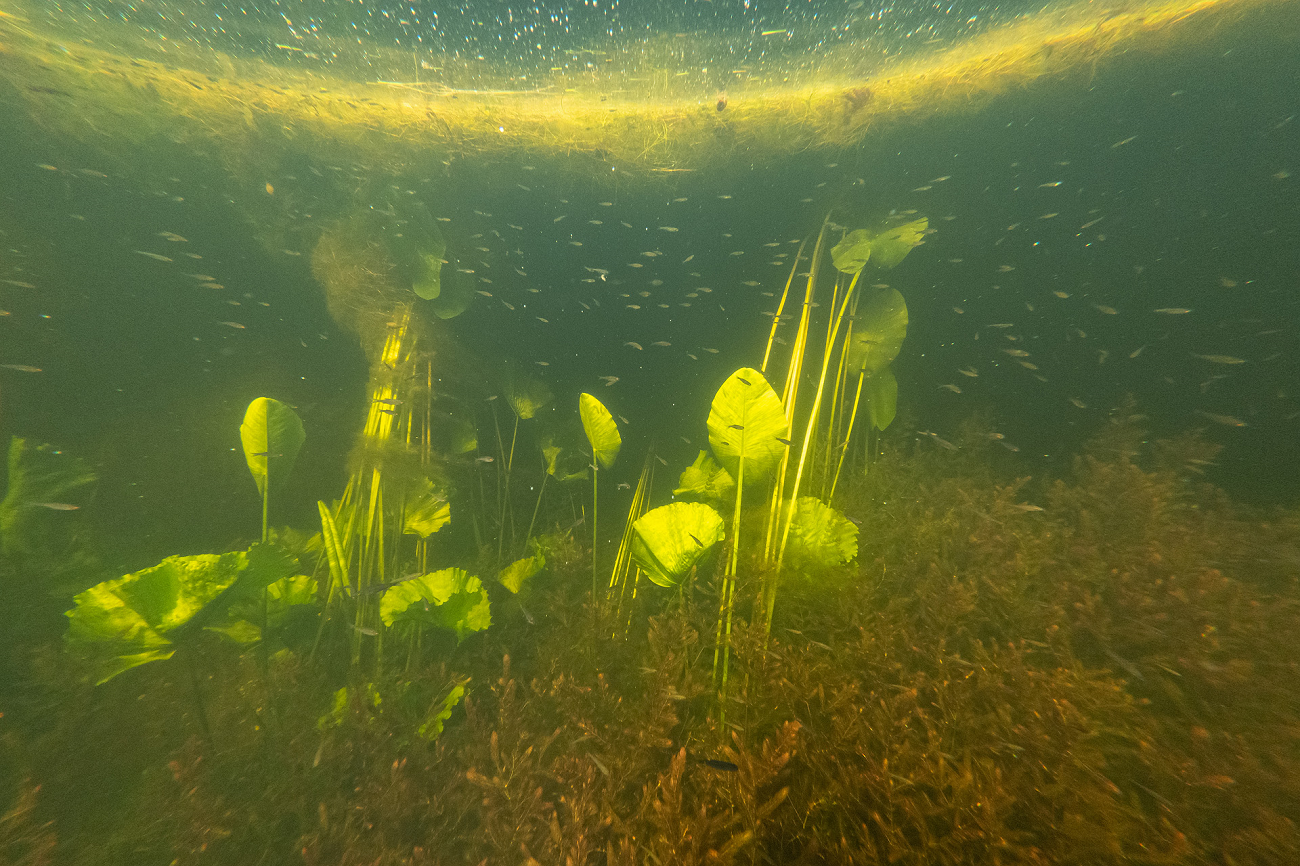
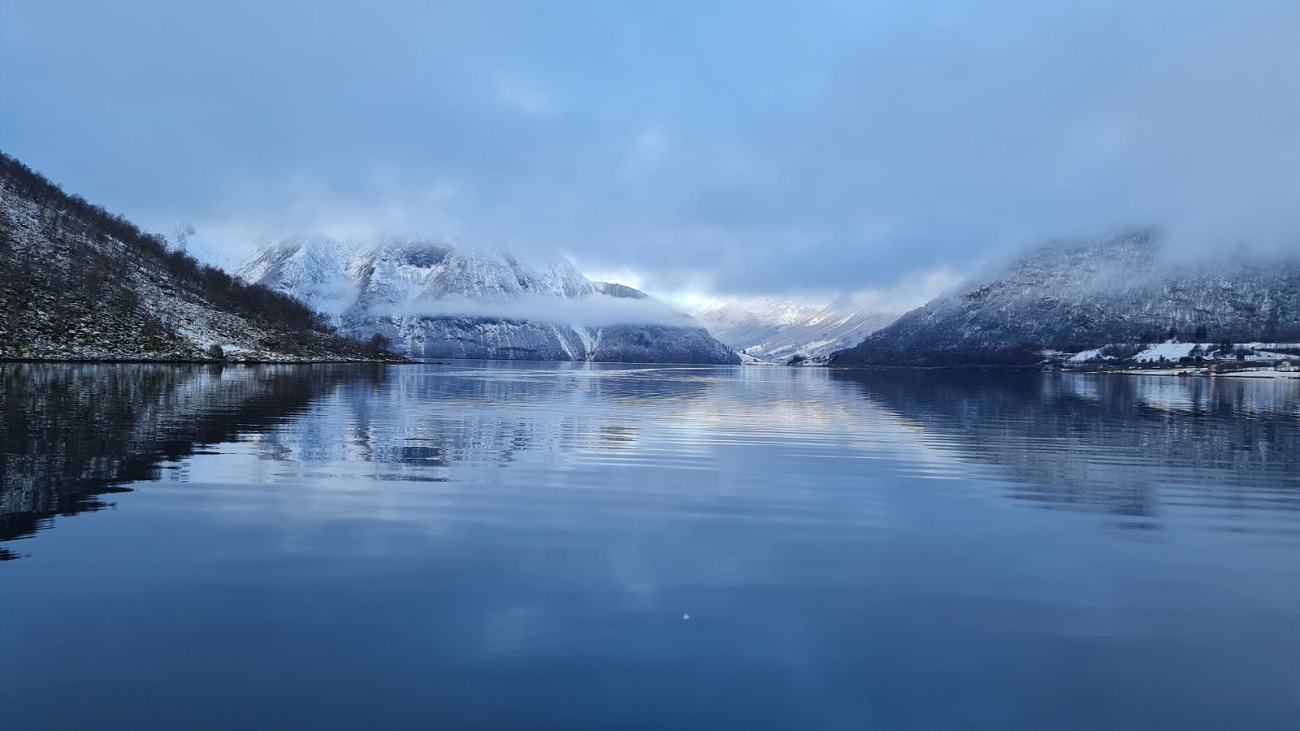
Danube Delta © Dan Dinu
What is the most moving discovery or event that has happened over the past five years that has left—and will continue to leave—a lasting impression on you? And what was the one that marked or changed the production in some way?
Dan Dinu: I don’t think it was a major discovery during all this time, because I’ve been going to the Delta for over 15 years and have come to know this place quite well, but that doesn’t mean there weren’t some fascinating moments. One of them was discovering the miniature underwater world of this place. There were times when I was filming certain creatures and had no idea what they were. This ongoing discovery keeps you curious and makes you want to learn more. Some scenes just happened on their own, because while we were filming one subject, something else would appear that caught our attention and might have been even more fascinating. To give just two examples—while filming some aquatic plants, a river mussel appeared in the frame and completely captured my attention, and when we were filming mosquito larvae transforming into adults, some aquatic springtails were moving rapidly across the water’s surface and thus found their way into the film with a brief story of their own.
Why did you choose to tell the story in the first person, from the perspective of water, and how does this change the way we view the ecosystem?
Dan Dinu: We spent a long time thinking about whether this was a good idea—after all, it’s not at all easy to tell a story about the Danube Delta without using the word “water,” because water is the narrator, and it would be strange to talk about it in the first person. But we found a very personal narrative thread that fit perfectly. Although we faced some major challenges along the way, everything came together beautifully in the end. I must also mention Codruța Florea here, who helped me write the screenplay.
Medeea Marinescu took on this role very well and brought it to life with an excellent performance. She didn’t overdo it with her voice or overact; she found the perfect balance. Her warm voice goes a long way toward moving the audience, and the fact that she speaks in the first person resonates even more deeply with viewers—and we hope it will also make them feel a sense of responsibility. Above all else, water is the foundation of life, and the Delta teems with life, so it needs our understanding now more than ever.
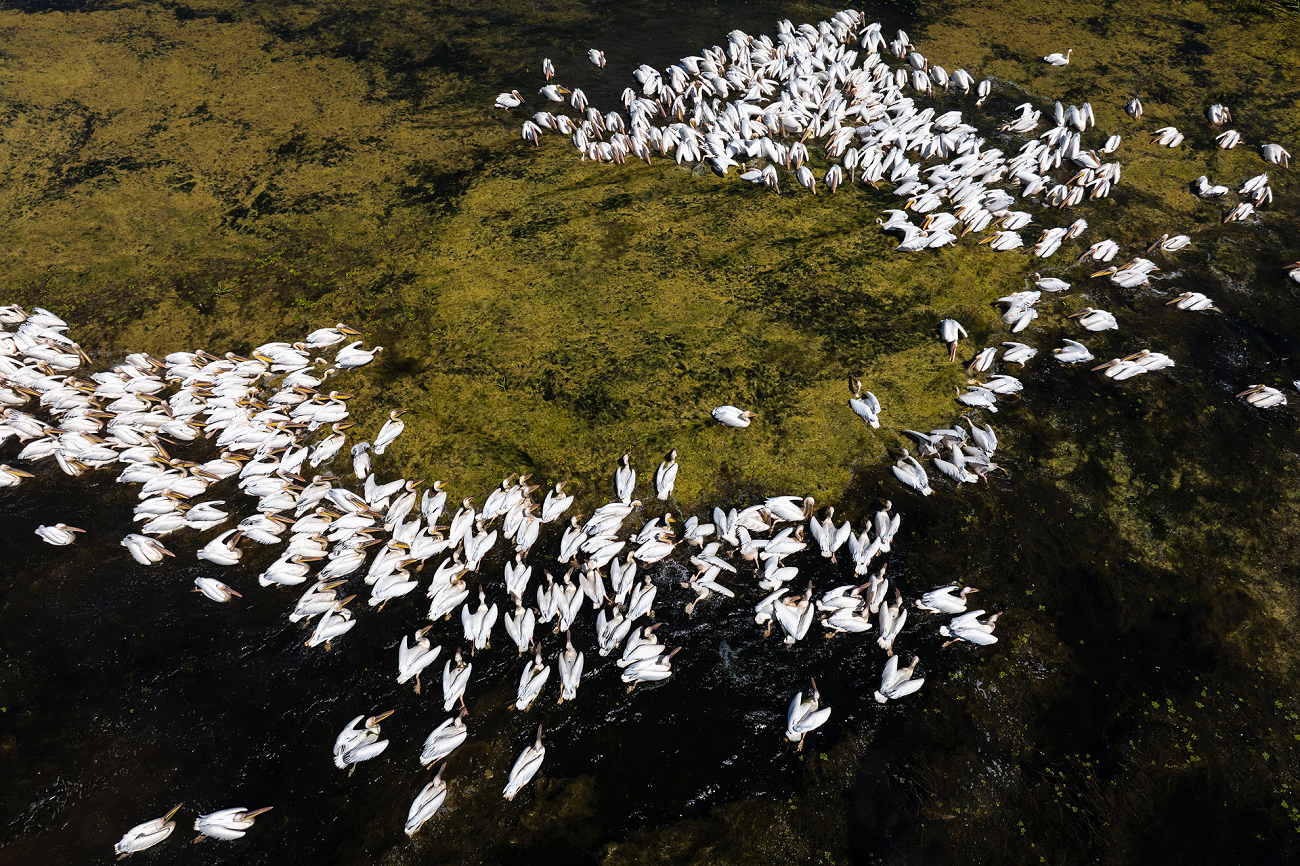
Common Pelicans © Dan Dinu
How did you manage to capture wildlife in an ethical manner, without interfering with the animals’ behavior, and what were the biggest challenges of filming?
Dan Dinu: This is something I care deeply about, and all our films are designed to disturb the animals as little as possible. It’s not really hard to be responsible—you just need to know a little about animal behavior and be able to tell when they’re bothered by your presence. We’ve used all kinds of hides, from camouflage tents to various structures, or even a floating tent, but many scenes were also shot from a boat, in plain sight. Sometimes, if you stay in one place long enough without disturbing them, the birds get used to you and accept you. Of course, you shouldn’t intrude on nests or colonies; it’s important to always find the optimal distance so that you can film properly while allowing the animal to go about its business undisturbed. I think that’s the secret. If you push too hard, you’ll no longer capture natural behavior—and nobody wants that.
The biggest challenge came from filming mammals, which are much rarer and harder to find in the Delta. We used motion-activated cameras and specialized observation posts, but it wasn’t easy at all. That’s usually the case, but we love a challenge.
Which of the species presented was the most difficult to track?
Dan Dinu: I’d rather start with a behavior. I really wanted to include a scene in the film where crows come to prey on the bird colonies on the lakes. I’d seen this behavior some time ago and was impressed by the crows’ strategy. I wanted to include it in the film, and it took us a whole week to get the sequence right. If I had to name one particularly challenging species, I’d say the jackals gave us quite a bit of trouble. They’re quite oppressed in the Delta because they aren’t fully understood, and that makes them very skittish around people. Of course, there have been other mammals that were difficult to film, especially the rare and hard-to-find ones—I’m thinking here of the otter or the European mink.

Jackal © Dan Dinu
Do you think a film like this could also serve as a tool for promoting the area? Does the Delta need to be promoted, beyond the need to preserve it?
Dan Dinu: Of course. A film like this promotes the area, but I would say it also has another extremely important aspect—an educational one. It’s important to promote a natural area as accurately as possible, so as not to put even more pressure on it. The film highlights the importance of the area in terms of biodiversity and also draws attention to several issues. For me, nature conservation must go hand in hand with a lot of education, not just coercive measures. The Delta needs more responsible tourism—based on nature and the empowerment of local communities—and less on mass tourism, speedboats, and noise. And here, we must educate not only those who provide the services but also the tourists who use them. I hope this film will open some eyes.
What do you consider to be the most harmful practices affecting the Delta today? What is the main threat to the reserve?
Dan Dinu: I don’t consider myself an expert on these kinds of issues, so I can’t give a very detailed answer to this question, but what I do notice is that there’s quite a lot of pressure from mass tourism. I believe that the Delta should embrace a form of slow, sustainable tourism that encourages more active tourism and less of the rushed kind involving large boats. There are certainly other threats as well, such as climate change or the lack of sediment carried by the Danube when the river’s flow decreases.
If viewers were to leave the movie theater with just one idea about the Danube Delta, what would you want that to be, and what responsibility does each of us have toward this place?
Dan Dinu: I’d like to think that viewers will leave the theater not only better informed, but with a little more empathy for what water manages to create in the Delta. There is no excuse for us not to do more to protect the Delta; it is a duty we must not shirk. I hope this film will help in this regard as well, and I hope this place remains as wild as I had the chance to discover it.
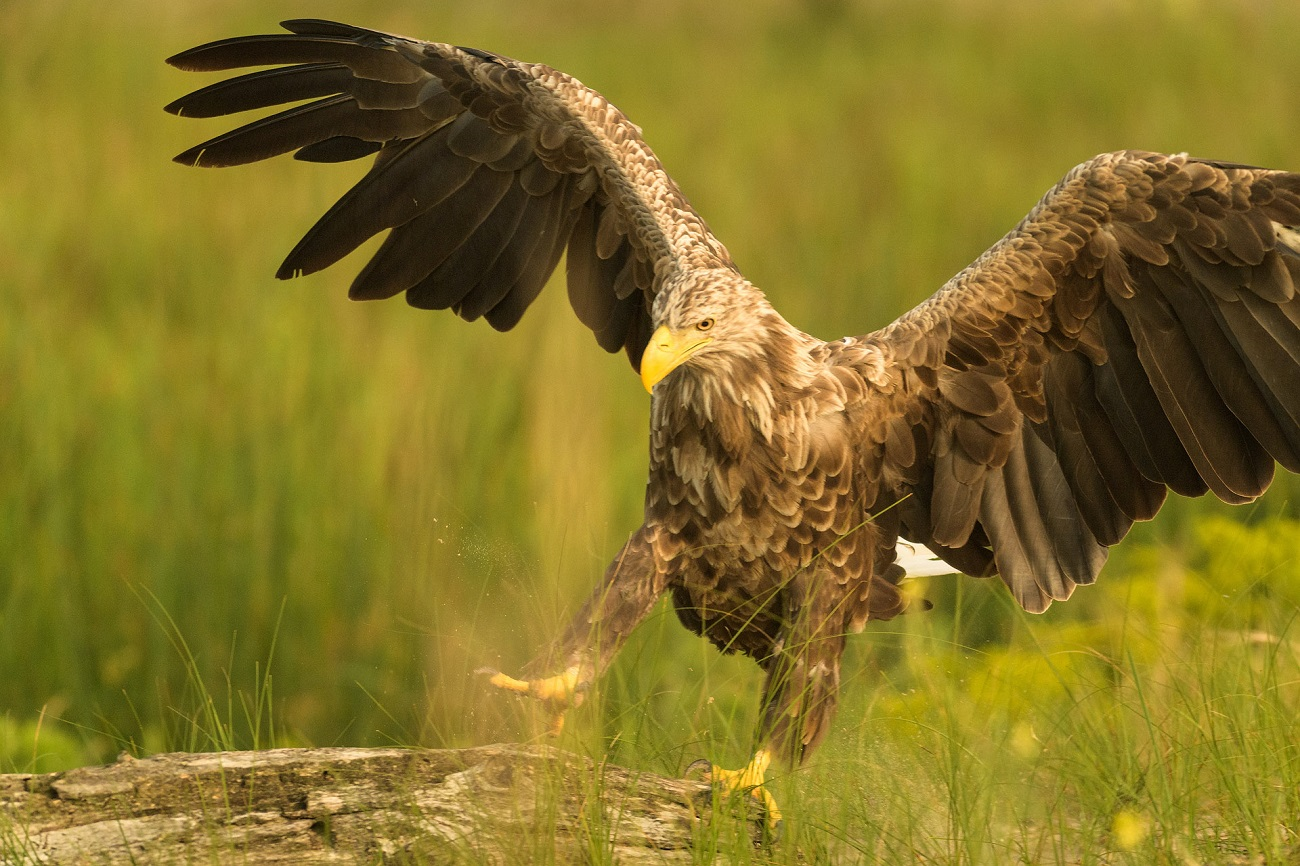
Codalb © Dan Dinu
How has your perspective on the Danube Delta changed over the five years you’ve been filming it?
Dan Dinu: Nature shouldn’t change over the course of five years; it changes over a much longer period of time. We, too, don’t think we should do this very often; on the contrary, we should remain advocates for nature from the very beginning and not turn into irresponsible exploiters at all. We all see, however, that these things are difficult to achieve, and changes in nature are never for the better when human pressure is too great. We must allow nature to work undisturbed and sustain itself; in this way, the benefits we receive will be greater and more enduring.
After so many years spent in the midst of nature, what have you come to see differently about the relationship between people and the wild?
Dan Dinu: I like to think that nature changes people for the better, so it’s very important for us to spend as much time as possible in nature. We need to understand it better and be more empathetic. I think younger generations are developing a different relationship with nature than the one we had at their age. They’re more aware than we were of how things work, and they operate from a different set of values. Environmental education should be much better understood, because you can’t protect something you don’t know.