



INTERVIEW – Attorney Florian Nițu on Collecting as a Mission and the PNSA Artistic Ecosystem
With more than 700 works gathered over the course of three decades, the PNSA (Popovici Nițu Stoica and Associates) collection is one of the most important selections of postwar and contemporary Romanian art. It focuses on artists who were active and made their mark between the 1960s and 1980s.
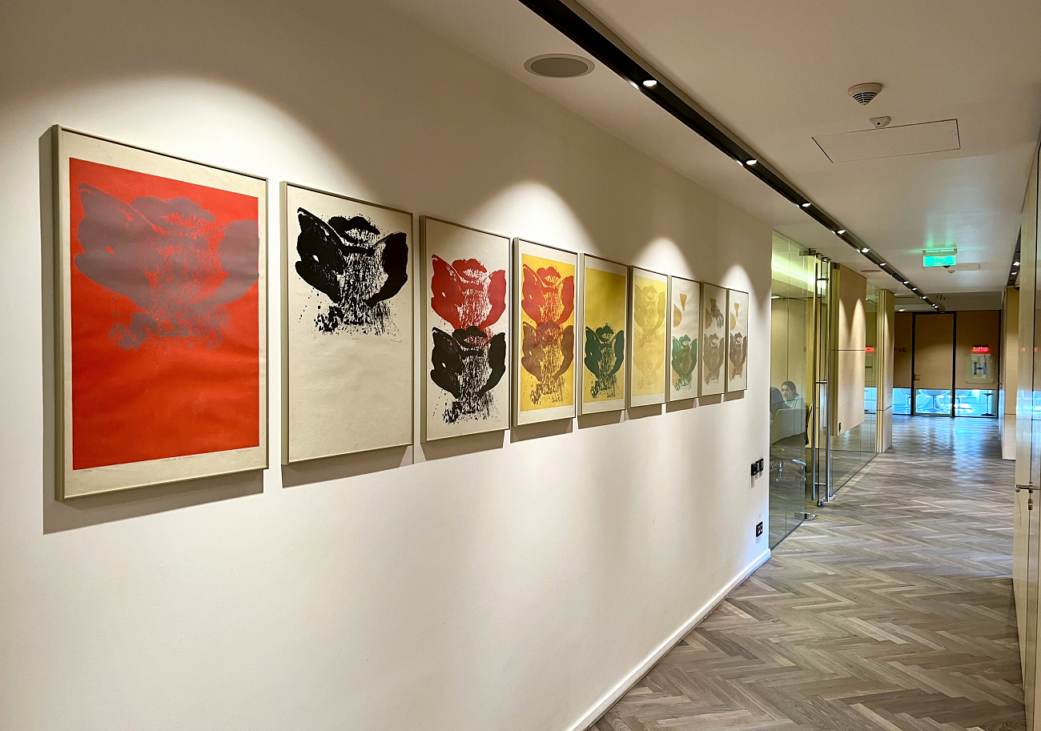
From time to time, works from this collection are exhibited at the law firm’s offices in Bucharest and are also loaned out for events such as Art Safari. The ultimate goal is to present the collection to the public—first in part, then periodically, and eventually on a permanent basis.
Many of the works belong to attorney Florian Nițu, and among the artists he admires most are Henry Mavrodin, the Prolog group, Eugen Popa, and Gina Hagiu, whose works are currently on display at the firm’s offices—pieces that were difficult to acquire, rarely seen by the public, and which become topics of conversation regardless of the clients’ cases.
The most recent acquisition is a series of works by Vladimir Setran from the mid-1960s, which is part of a project on the origins of the new Romanian artistic avant-garde, to be launched under the code name Seed ’67 —works created by several artists in 1967 that, together, represent the seed of the new Romanian avant-garde.
There is a genuine tradition of collecting in the business world—one that has become institutionalized and has even given rise to a specific market. In Romania, this tradition began in the last century, particularly among lawyers. After the Revolution, the relationship between the lawyer-collector/promoter and the artist was revived, and the last few decades have allowed for the formation of major collections, marking a revival of a historical cultural model. One of these is the PNSA.
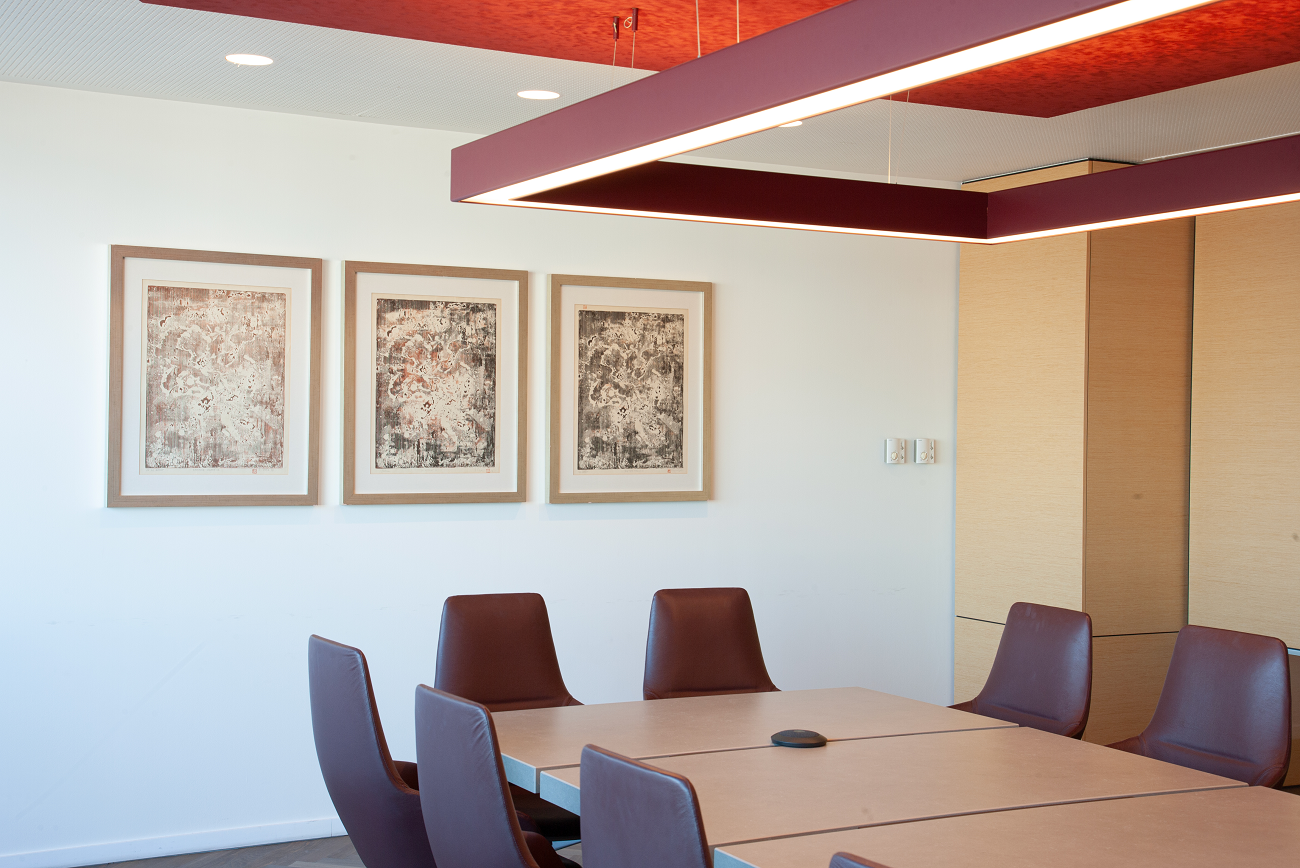
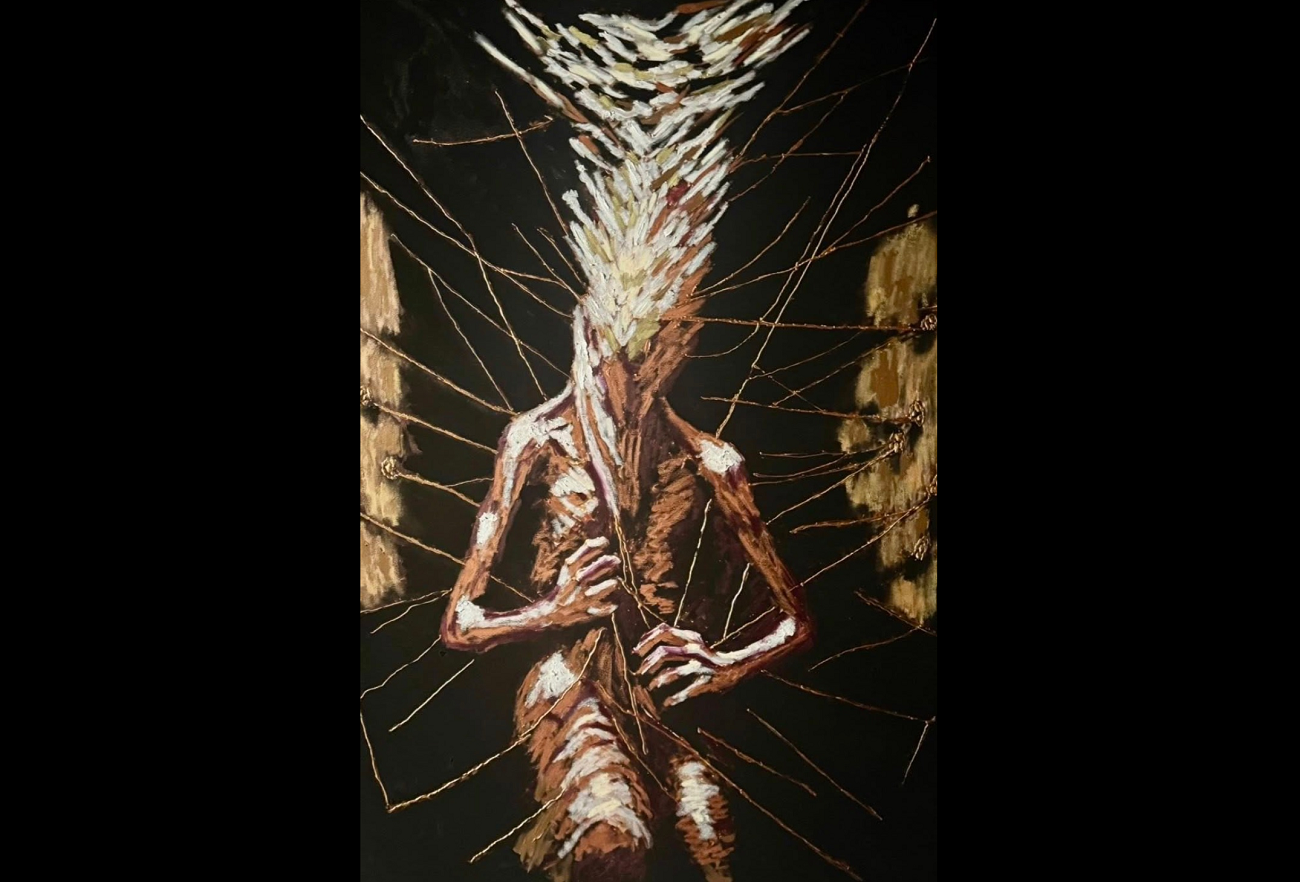
Works from the PNSA Collection
How and when did you discover art?
Florian Nițu: My passion for art actually dates back to my childhood. In the early 1980s, I discovered Ilya Repin in an album published with exceptional graphic design—or at least that’s how I perceived it at the time—by a Russian publishing house; I believe it was called Aurora Publishing. It’s incredible how we remember details like that. I think the subject of the painting was a religious procession.
And what exactly impressed you?
Florian Nițu: What still impresses me—presence. My connection to art is defined by the artist’s presence. I truly believe—I’ve even heard Lucian Freud say this—I truly believe that art is life. It’s a concept, an idea, or it’s life. I experienced that moment as if I were part of the work; I internalized the idea. Now I can say that I’ve internalized the idea and that I experienced that work—I lived it alongside the artist. I think that’s what sparked my passion. And from that moment on, I’ve been interested in every form of artistic expression. And I’m interested in practically every form of artistic expression—absolutely every form.
Tastes can certainly be cultivated, and the process of cultivation never ends, because the new and the shocking in art are constantly emerging, so there’s no risk of ever being too well-educated in art. So happiness lies before us, and the sources of happiness are never exhausted if you strive to cultivate your artistic sensibility. I’ve traveled a lot; I travel the world frequently to experience new phenomena and see exhibitions.
What was the first work of art that made you view art not just as a beautiful object, but as a form of cultural heritage?
Florian Nițu: I think the Romanian artist who first made an impression on me was Corneliu Baba. As it happened, before 1989 I had access to reproductions and was also able to see a few original works. I believe this encounter with Baba was formative. And when it comes to reproductions, I think Henri Matisse is the artist who really excited me as a child. Again, it has to do with that initial exposure. Otherwise, I’d probably name a hundred artists.
The first piece in my collection was a Baba. It was a sketch I bought at a flea market in Obor around 1995–1996, when I was a student. It’s a gouache by Baba, a portrait of his wife, which cost me a fortune back then. I remember that the seller had $100 in cash, and since I didn’t have any, I had to come up with the money. I was afraid he’d sell it before I got back with the dollars… This is the first piece, which I still have today.
Otherwise, I had artist friends—and always have, because I was interested in the field—and I used to buy art from them. I’ve always been surrounded by artists, and I made all kinds of purchases back when I was a student.
As a lawyer, as a professional in this field, what do you look for in a work of art when you’re collecting—precision, a story, emotion, or rarity?
Florian Nițu: In everything I’ve bought or commissioned, without exception, I’ve looked for the idea behind it. Sometimes, perhaps, I’ve chosen based on the artist. I firmly believe that art without an idea is just decoration. I’ve often supported artists and their projects because I thought they had interesting ideas and exhibition concepts, even if the end result wasn’t something I liked—but that doesn’t matter. So, I’ve done these things, but I’ve never bought a piece because I thought it would be marketable or would have value later on.
I’m not saying it’s right or wrong; we haven’t done that. And since we have cultural projects at the company, our goal isn’t to collect for the sake of collecting, but to support cultural projects.
Which ones are the most important?
Florian Nițu: Either we organized them just for ourselves—such as the Dragon Gallery and the exhibitions in our gallery—or we organized them in collaboration with various cultural groups.
About two years ago, I worked on a project with the “I Believe in Romania” Association called “35/35”—marking the 35th anniversary of the Revolution, featuring 35 artists under the age of 35. A very interesting project that generated a lot of buzz, I’d say. And, at the same time, a show of support for young artists here in Romania.
I worked with the Pangrati Association on a project that is very close to my heart, because we carried out many activities. The idea came from none other than the master Henry Mavrodin, who, of course, had a studio on Pangrati Street, and the goal was to create a video documentary on the history of the studios there and, of course, the work of the artists in residence at Pangrati. We managed to produce seven documentary films featuring seven artists and four albums, including an excellent album by Henry Mavrodin.
The videos are available on YouTube. Unfortunately, we weren’t able to include them all, because many of the artists have passed away over the past 15 years.
But it’s an ecosystem. Neither as a company nor as individuals are we particularly motivated by the idea of collecting for its own sake, but rather by carrying out cultural projects and supporting initiatives.
A lot of support is needed. Young artists need backing. Without the support of the business community—and society at large—they risk falling by the wayside. There are young people who need to spend a lot of time working in their studios but can’t do so because they have to work at advertising agencies or in other fields. And while it’s great that they’re working, their time is limited.
How different is the company’s collective collection from your personal collection?
Florian Nițu: At home, I have many pieces that are a bit shocking—as art generally is—but they aren’t necessarily sordid; still, they’re not really to everyone’s taste. In a professional setting, you can’t propose ultra-avant-garde themes or the most radical of the avant-garde. My personal collection also includes many extremely daring themes.
I generally focus on living artists. For me, the relationship with the artist is important. I want to understand the work; I don’t believe in separating the artist’s biography from their work. I am absolutely convinced that the work and the biography are inseparable. Getting to know the artist—understanding how they think—is essential to appreciating their work, first and foremost. I collect works by living artists or, in any case, postwar art. There are few pieces of a different kind—a Petrașcu from the 1930s and a Tonitza from the same period. I have a few pieces from that era, out of nostalgia for the early days. Otherwise, many young artists—most of whom are still alive, including some who are still students—whom I support and believe in. And because, obviously, I like what they do or see the potential in what they could do. But, again, it’s not an investment. I didn’t do this as an investment.
Do you work with an art consultant or a gallery owner?
Florian Nițu: I haven’t actually worked with anyone as a consultant. But I’ve consulted—and still consult—with many friends, collectors, and gallery owners. There are several important private galleries in Bucharest, with very good owners and curators. I think I know all of them, to a greater or lesser extent, and of course you seek their advice. There are also groups of artists who work with a specific gallerist and a specific curator or who have specific agents.
It’s also a matter of access, at some point, because they want to work through galleries—and I think that’s a healthy approach—and a matter of respect. I believe artists need this kind of support, and they should be helped.
Even though I have a personal relationship with most of the artists whose work I support and collect, if they have a relationship with the gallery, I also work with the gallery and respect that relationship, because it’s important. My goal is not to bypass the gallery. I truly believe that’s wrong for the market.
The gallery needs to be supported because it puts on exhibitions and supports artists. At the end of the day, this entire ecosystem—the gallery, the artist, the secondary market, the primary market—benefits the final product. In other words, you have more and more high-quality art that inspires you, because the system makes it possible.
The artist is motivated because he has to produce work for exhibitions and so on. Everyone benefits from this collaboration. I don’t see any other way.
Right now, we have a very strong secondary market—it’s not the primary market. I mean, there are still plenty of galleries, but not 300. Still, there are success stories. There are galleries that have managed, over time—through exhibitions and international participation—to elevate an artist from an average sale price of 5,000 euros per work to an average sale price of 30,000 euros per work. Just as there are auction houses that have succeeded in promoting such artists.
So, the market has become much more professional, and that’s thanks to the players. Auction houses have really professionalized the market. Even though gallery owners often complain that the auction houses have “taken their place”—that’s not true; everyone has their own niche, and I don’t think a respectful collaboration is detrimental to anyone. On the contrary, it benefits everyone. Of course, there are self-managed artists who represent themselves and exhibit their work on their own. There are even associations of independent artists who don’t want to work with galleries. That’s not a bad thing either; it’s great that this approach exists as well. Economically, it requires more effort, but it offers greater freedom and so on. So, artists should be supported in every way possible, if feasible, and treated as fairly and transparently as possible from an economic standpoint.
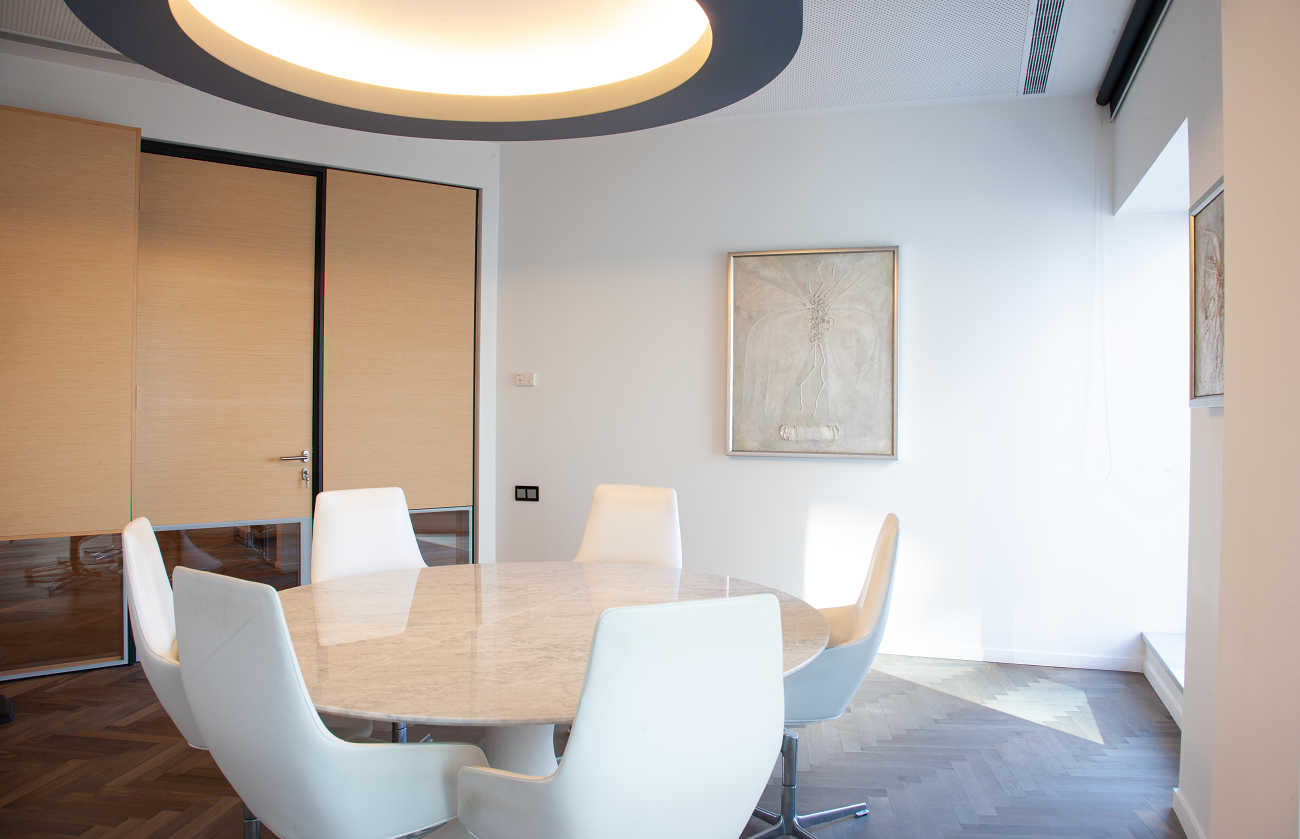
Works from the PNSA Collection
Returning to the collection currently on display at the gallery, there are few sculptures. Have you decided to focus more on painting?
Florian Nițu: That comment is correct. It’s much harder to make an event or exhibition centered on sculpture accessible—that’s the truth—because, apparently, the public is better equipped to appreciate painting than sculpture.
I have works, for example, by Cornel Medrea, Ion Irimescu, and George Apostu, whom I like very much, but I believe that Romanian sculpture lacks the breadth that Romanian painting possesses. And from an organizational and logistical standpoint, it’s also more complicated to put together a sculpture exhibition. Yes, it’s a matter of perception and logistics.
Unfortunately, sculpture does not enjoy the same status as painting. And that’s generally the case around the world. But here, in particular, sculpture does not have the same audience as painting.
How do your visitors react when they see the works on display? Do they spark conversation?
Florian Nițu: First of all, foreigners are amazed. There are many businesspeople who are collectors. Art is a passion for many people in the business world.
And I specifically chose themes related to our origins. The current theme is the origins of Romanian abstract art, Romanian conceptual art, and Romanian pop art. I wanted to shock a foreign audience that couldn’t imagine that in the 1970s, people were creating serial painting That’s how it was in Bucharest—no one could have imagined that Romul Nuțiu was creating, in 1975, a form of abstract expressionism that ranks among the very best of American abstract expressionism. In general, foreigners are absolutely shocked by the level and quality of Romanian art from the 1960s and 1970s.
We also select themes for promotional purposes. In addition to the arts, we invest heavily in other Romanian artistic events.
We have been partners with the Stradivarius Tour and Alexandru Tomescu since 2018, when the Romanian government launched a campaign to mark the Centennial of the Great Union. At that time, we produced an album, “Balada,” and managed to distribute thousands of copies to our contacts around the world—a CD featuring Tomescu’s performance, an exceptional recording, for which we received absolutely incredible feedback from all over the world.
We often choose a theme with the aim of promoting a Romanian interest, which also encompasses our identity as a local company. We are an independent local company, and—I don’t want this to sound like anything other than what it is—but it is a matter of identity. And promoting Ciprian Porumbescu or George Enescu—or classical, art music from Romania that isn’t widely accessible around the world—is always a pleasant surprise.
Speaking of Romanian cultural projects, I put a tremendous amount of effort—unrelated to art—into a study of the orchids that grow in Romania. That was an absolute success. I remember that the publisher I worked with even received congratulations from Prince Charles at the time. And I’ve worked on many projects, ranging from music to nature and art.
And now, based on what’s displayed in the store, what exactly are you trying to promote?
Florian Nițu: The central idea is that, although Romania is on the periphery in many respects, in reality the avant-garde is born on the periphery. It’s not an original idea; it’s the idea of an American researcher who wrote a book. I’m adapting his thesis on Dadaism in Romania, which states that “Dadaist” means “Dada comes from the East.” To paraphrase, I’d say that even though we’re on the periphery, we can still be at the forefront. We may be outsiders, but we’re not necessarily marginal.
We want to say that this is high-quality art, almost in tune with its time, right here.
Of the 700 works in the collection gathered over the past 30 years, which one would you consider the most emblematic—one that could define the collection’s evolution?
Florian Nițu: I can’t really point to any iconic works. But I think what endures—what defines these 30 years of interest in Romanian art—is that I’ve learned that, in the end, everyone collects their own kind of art. I mean, even if you’re interested—let’s say you have the financial means—you’re not going to buy Anish Kapoor. No matter how sensational Anish Kapoor is in many respects—in terms of sculpture and how his work is displayed—you’re not going to collect Frida Kahlo, for example. As a Romanian, you’re more likely to collect Adrian Ghenie. Because, whether we like it or not, there’s a sense of identity at play, and once again, the work and the artist’s biography are inseparable. And so, after 30 years, you look to see what the prevailing trend is or what the defining element is for Romanian art during this period.
I’d say that an element that comes to mind is the most enduring artistic theme and the most enduring artistic movement, embodied in an artistic work. That is, the Prolog group. In Romanian art, there is no theme that has endured for 40 years, no artistic concept that has been both expressed and renewed over such a long period of time as prologism. Well, Prolog and the group’s associates, such as Horia Bernea and Marin Gherasim. If there’s one thing that’s emblematic of a collection of postwar Romanian art, I’d say that what’s emblematic is prologism. And I don’t think there is any other theme in postwar Romanian art that has such substance. And that is a form of ideological unity.
There is another theme invented by critics and posterity: the Balchik School. But it never existed ideologically. It is a past that was never present. Artists would go there and paint, but on their own. Prologism, on the other hand, is a school, an ideology.
Of course, there are other movements, but none with this level of substance—so consistent and long-lasting.
Why wouldn’t you leave your job, no matter what offer you receive?
Florian Nițu: There are many works I could never part with—by Horia Bernea, Mirel Zamfirescu—both because I knew them personally and because I share a personal connection with them. I was very close to Mirel Zamfirescu; I was privileged to be his friend—he was an extraordinary man, a great painter, and a great teacher. I have works by Mavrodin that I would never part with.
Maybe not even that Baba, the first one.
Florian Nițu: Yes, I have that Baba that I wouldn’t part with. But, again, not necessarily because of its artistic value, as I was saying.
And there are many. It’s a matter of personal connection. For example, I have works by Gina Hagiu that I would never part with, even though they aren’t, first and foremost, commercial at all. In fact, I remember Ms. Gina Hagiu’s last exhibition at Căminul Artei—it must have been 20 years ago now—which was essentially a retrospective. Some absolutely extraordinary pieces. I went to the opening; there were a few people there, but mostly friends. To me, she’s a great artist, but she had absolutely no public success. And there are many like her. It’s hard for me to make a list of 100 artists I like, whose work I collect, and whom I wouldn’t part with.
And what does the future hold for the collection? Are you thinking of making it accessible to the public at some point?
Florian Nițu: It will certainly become public, because it was never motivated by economic considerations. So, it is the fate of any collection to become public—all the more so for a collection that was not motivated by economic interests. It’s just a matter of time.
It will be made public in stages and on a temporary basis, and at some point it will be made public in its entirety and on a permanent basis. It is essential that it be seen.
In the standard art sales contracts we have drafted for artists, the buyer’s obligation, for example, is to make the artwork available for exhibition at the artist’s request. We support artists in asserting their rights.
As a collector, it is your obligation and your duty to make these works accessible. That is the purpose of a collection: to be open to the public.