


INTERVIEW – Lia Perjovschi: The artist’s role is to contribute as little as possible to the chaos
Lia Perjovschi, a renowned international visual artist, speaks in an interview with Curatorial about experimentation, turning points in her artistic development, the status of women in art, and the role of the artist.
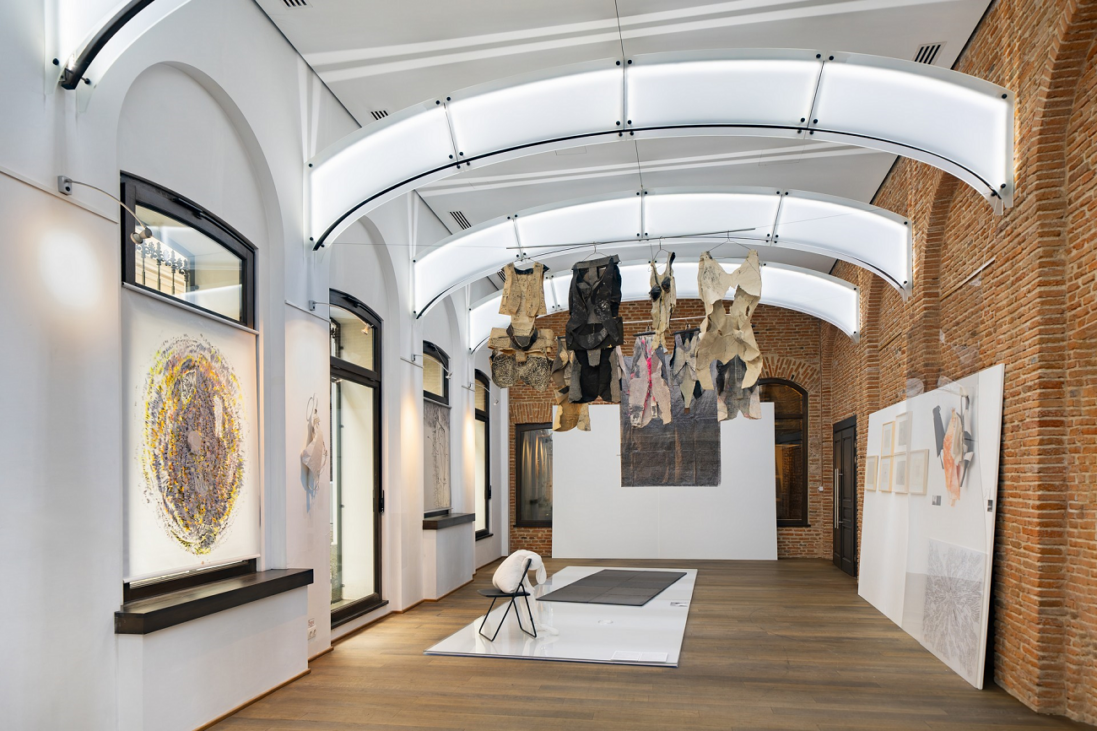
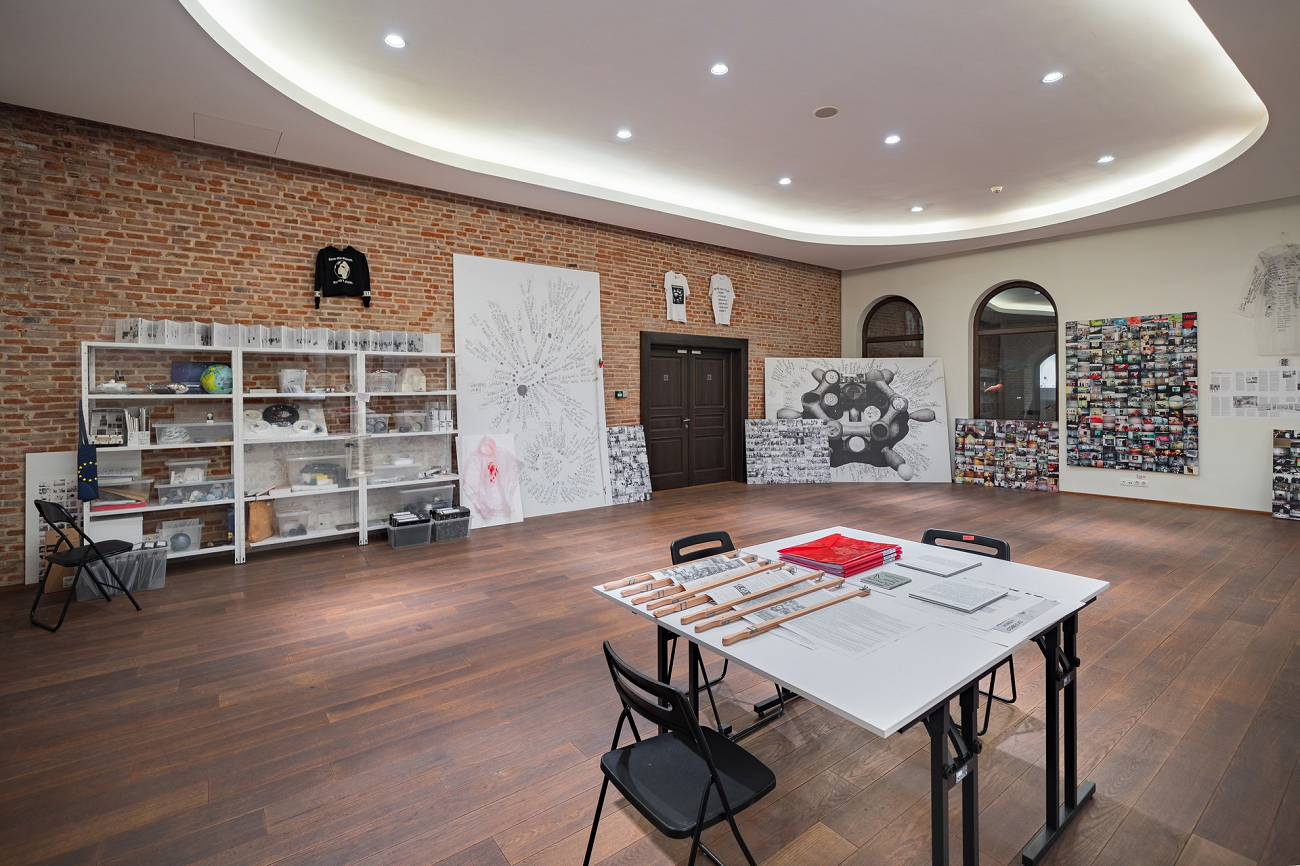
Together with Dan Perjovschi, they are marking four decades of activity in the public sphere and in socially engaged art. The two are presenting a retrospective of their work together for the first time in Romania.“DRAFT for a Joint Retrospective,”which brings together the most representative works that have influenced the local scene and strengthened the presence of Romanian art on the international circuit, is on view at ARCUB – Hanul Gabroveni through July 26.
Lia Perjovschi (b. 1961, Sibiu) is the founder and coordinator of AAC and CAA (the Contemporary Art Archive and the Center for Art Analysis), an ongoing organic project (which has existed under various names since 1985), and of KM (the Museum of Knowledge—an interdisciplinary research project, from 1999 to the present). Her work can be summarized as a journey from her own body to the body of knowledge and has been presented in more than 700 exhibitions, conferences, and workshops around the world.
Her artistic practice integrates diverse media, ranging from performance to assemblage, from drawing and text to site-specific installations featuring objects, data, diagrams, mind maps, and timelines. From the early days of her career, when she staged performances and exhibitions in her apartment, at the university, or in public spaces around the city, to her plans for the Museum of Knowledge, Lia Perjovschi has been committed to creating opportunities for intellectual exchange.
Lia Perjovschi, represented by the Ivan Gallery, has exhibited, among other venues, at the Cukrarna Gallery, Ljubljana, Slovenia (2021–2022); Tallinn Art Hall, Estonia (2021); Muzeum Susch, Switzerland (2020); Kunsthaus Hamburg, Museum der Moderne Salzburg (2016); MUSAC, León, Spain (2015); Nasher Museum of Art, North Carolina, USA; São Paulo Biennial (2014); MACBA, Barcelona; Künstlerhaus Vienna (2011); Van Abbemuseum, Eindhoven, Netherlands; Cabaret Voltaire, Zurich; Jamaica Center, New York (2010); Mumok, Vienna; the Incheon Women Artists’ Biennale, South Korea (2009); Sydney Biennale, Jumex Foundation, Mexico (2008); Tate Modern, London, Kunstmuseum Liechtenstein, Centre Pompidou, Paris (2007); Royal College of Art, London (2006). She lives and works in Sibiu and Bucharest.
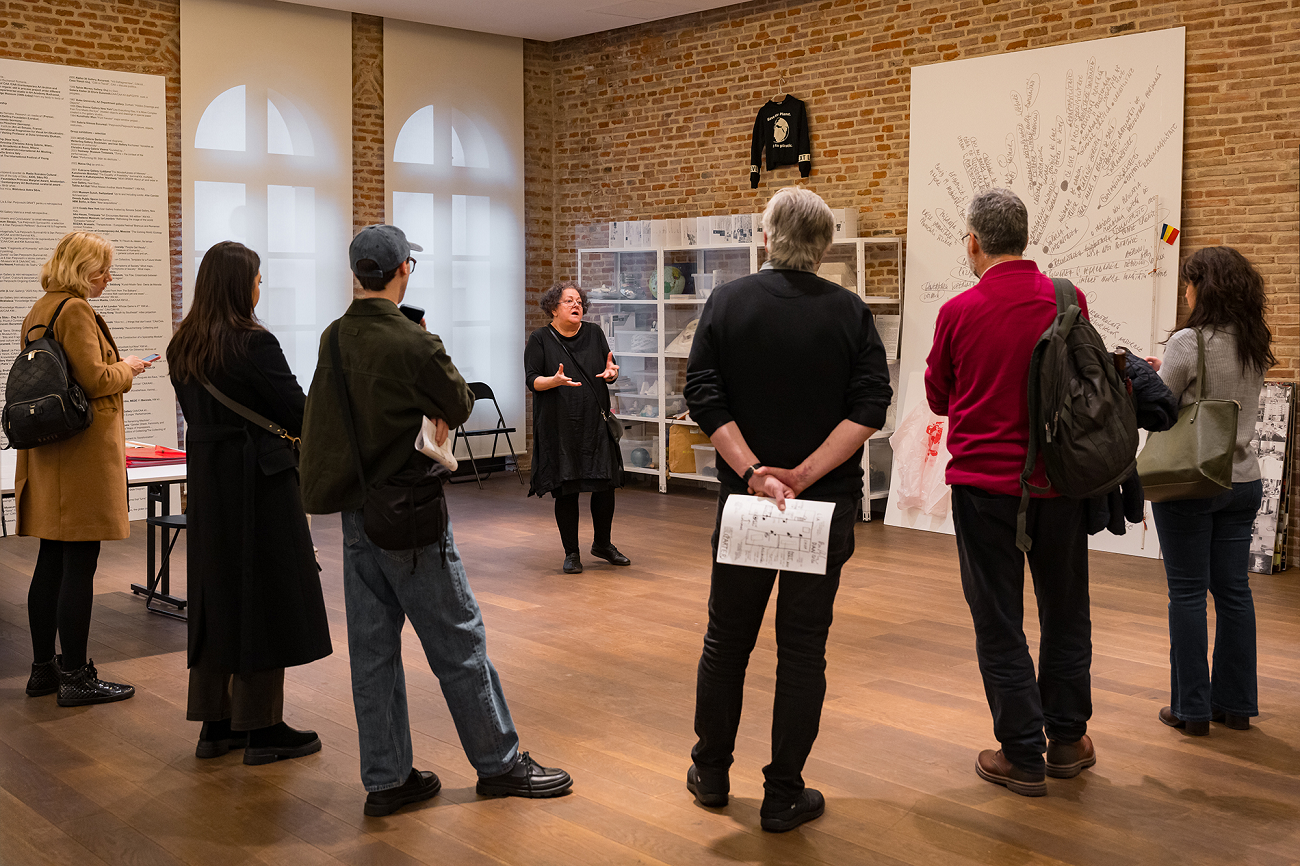
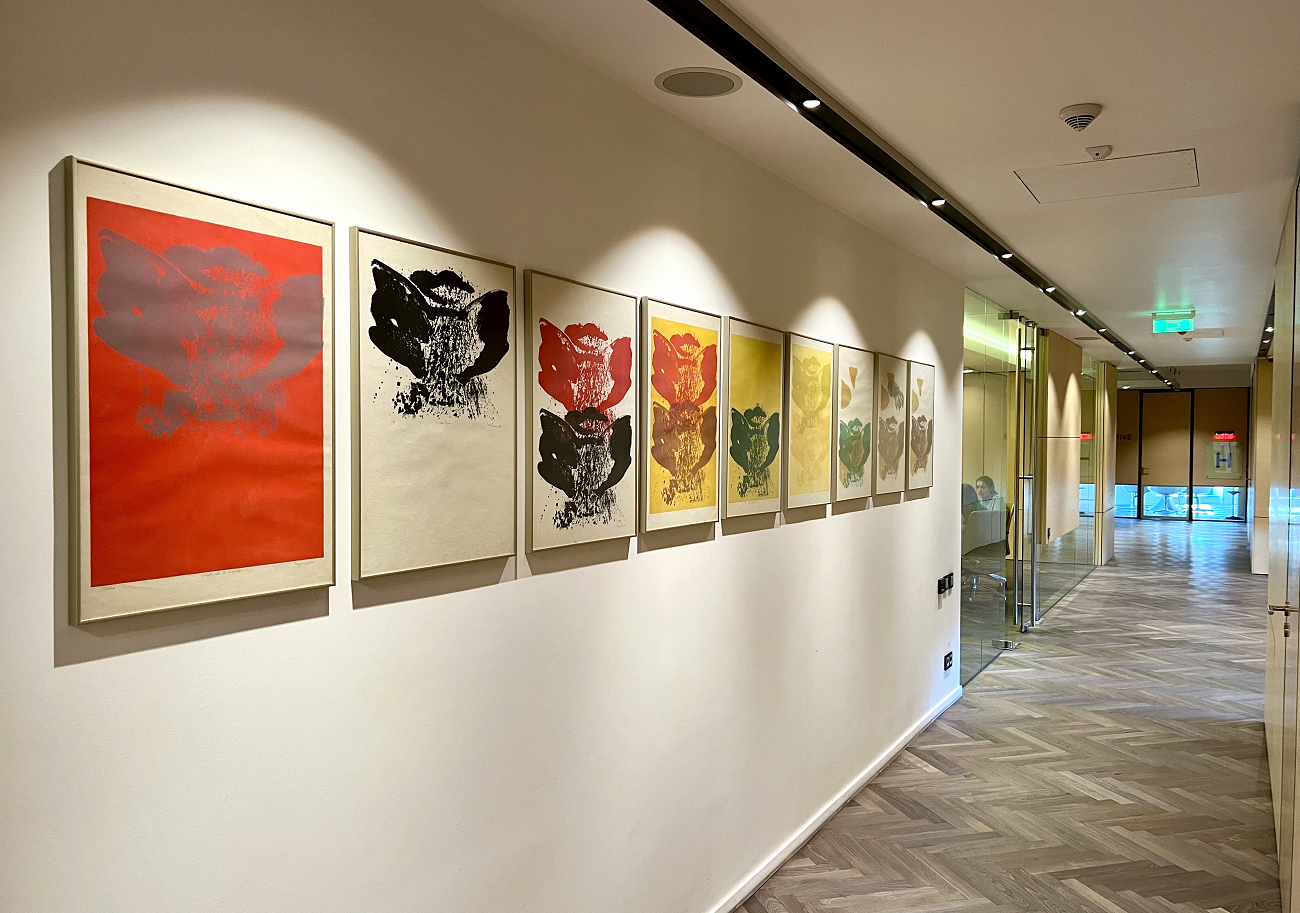
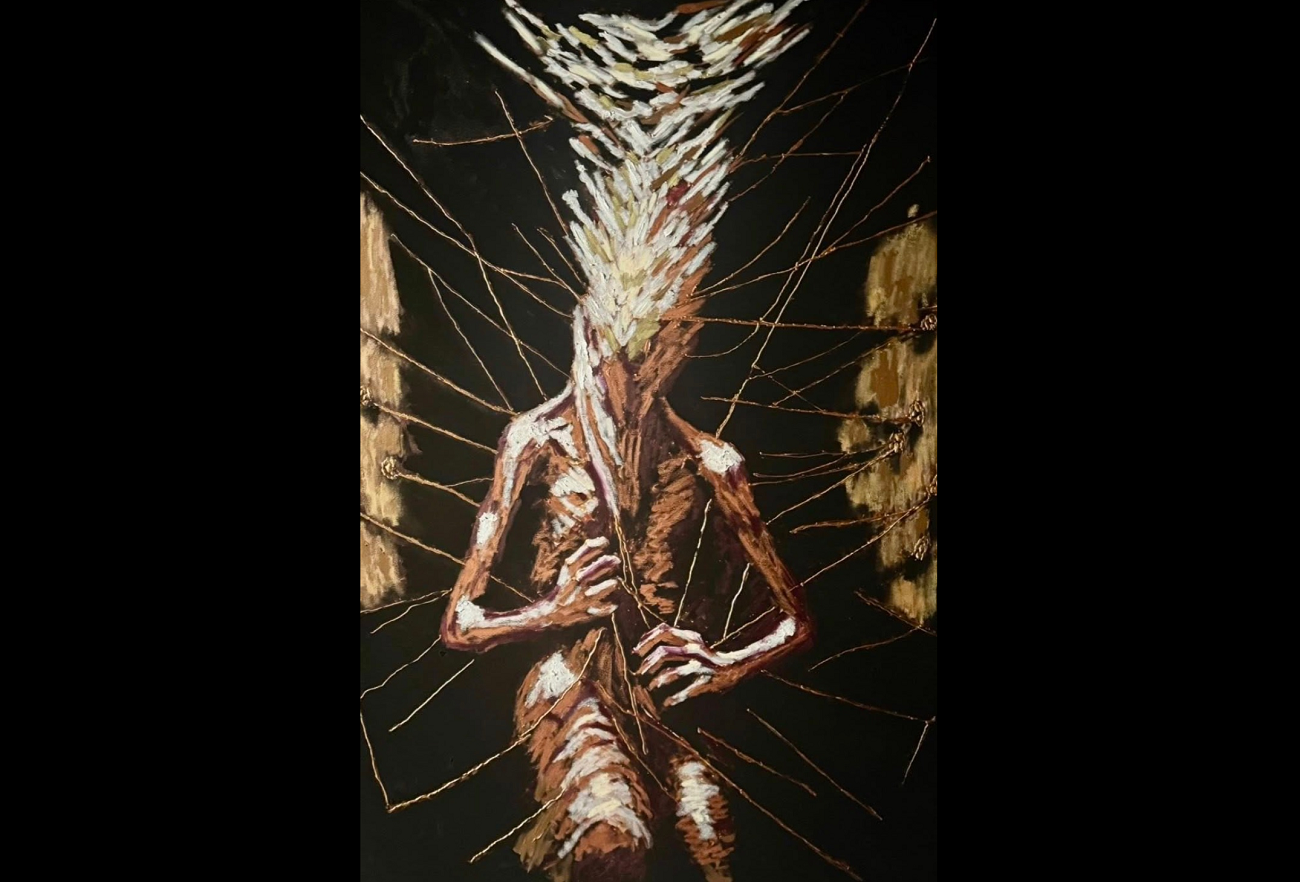
Lia Perjovschi in “DRAFT”
Looking back on your 40 years of work, what were the turning points in your artistic development?
Lia Perjovschi: The last ten years of communism, 1980–1990, marked by shortages; 1980–1985: failing the entrance exams for the Art Academies in Bucharest, Iași, and Cluj (due to corruption—too many connections vying for just five spots per year); informal gatherings in our apartment in Oradea, 1985–1987; in 1986, employment at the Oradea State Theater; the experimental workshop I initiated, organized, and maintained from 1987 at the Bucharest Academy of Arts until 1993; The 1989 Revolution (and all the social, political, and cultural engagement that followed); the studio we obtained from the UAP in 1990, which became a meeting place and a platform for alternative education, not for artistic production…; the exhibitions held in the West, beginning in 1990, which gave us the chance to see major exhibitions such as Documenta 1992 and the 1993 Venice Biennale; the meeting with theorist and curator Kristine Stiles in 1992, when I realized that 50 years were missing from my education—1950–1990 (“the years of our interrupted history”), the formative period of contemporary art and culture; the Kulturkontakt Vienna Fellowship in 1994; ArtsLink NY in 1996; teaching a course on contemporary art at Duke University (one semester) in 1997; in 1998, the CAA Archive/CAA in Public Space A35 Eforie, Bucharest; Mid-career retrospective at the Nasher Museum, Duke University, 2007; @007 Knowledge Museum project; loss of the studio in 2010 (after 20 years of history); European Cultural Foundation Award in 2012; the Tranzit.ro network in 2012; the COVID-19 pandemic in 2020 gave me time to rest, reinvent myself, revisit, and imagine; in 2026, “DRAFT” at ARCUB, with Dan.
How has your visual language evolved over the years?
Lia Perjovschi: From subtle gestures to an increasingly vocal expression… from the body to the body of knowledge.
Did you feel the need to expand your means of expression over time, or was this openness there from the beginning?
Lia Perjovschi: I love everything new; I don’t like routine, rules, or conformity.
What elements have remained constant in your practice, despite changes in the environment and context?
Lia Perjovschi: Curiosity, experimentation.
How do you view older works today—as documents, as starting points, or as completed works?
Lia Perjovschi: As documents, beginnings, tentative explorations with a great deal of truth in them—works without any particular purpose—I had to create them; I couldn’t express what I had to say any other way than the way I did.
Is there still room for experimentation, or does it take on a different meaning in light of this experience?
Lia Perjovschi: I think there’s still room. Let’s hope there’s still time.
What still surprises or challenges you in your daily work today?
Lia Perjovschi: Space, Context.
How have you experienced being a female artist at different stages of your career—were there any obstacles or specific circumstances that visibly influenced your practice?
Lia Perjovschi: Sure, a long period of invisibility… certain expectations that I didn’t want to meet.
How do you view the position of female artists in Romania’s contemporary art scene today? Do you think there have been real changes in terms of visibility, recognition, and access to resources?
Lia Perjovschi: It’s much better—there’s no comparison. Female artists are managing to make their mark; they’ve found ways to persevere and collaborate. Recognition? Who’s supposed to provide it? Based on what criteria? For what purpose?
In general, what do you think is the role of the artist in an increasingly polarized society?
Lia Perjovschi: The role of the artist—like that of the citizen today, in the 21st century—is to try to understand what is happening locally and globally, existence, their role in society, and their responsibility; to be informed, educated, and authentic; to propose solutions rather than merely criticize—I believe we must build more than we tear down—and to contribute as little as possible to the chaos. We’re training our powers of observation and learning to survive; we’re finding solutions. Perhaps that’s what we need to do: think creatively about solutions.
If you were to view your entire body of work as a kind of archive, what kind of story does it tell about Romania after 1989?
Lia Perjovschi: It’s an archive, the foundation of a project. It developed as much as my energy and time—and our financial resources—allowed. Post-1989 Romania hasn’t understood much; it remains indifferent. Do we have the institutions we need, at least a few of the basic ones? No!
Photos courtesy of ARCUB