



War: Between Visual Poetry and the Futility of Death, as Depicted by Romanian Painters
Two hundred works of art from institutions and museums across the country, as well as from private collections, are featured in the exhibition “War and Peace,” part of the 19th Art Safari season, which opens on September 18.
War, without which there can be no peace, is depicted in Romanian art first as a visual poem dedicated to the nation’s destiny, with no victims—only heroes— and then, at the beginning of the 20th century, heroism becomes immoral, as artists depict the sadness and futility of death.
“War and Peace” is a reflective perspective on war and peace, says Dragoș Vărșăndan, the exhibition’s curator and a cultural communicator, in an interview with Curatorial. It traces how the relationship between violence and its legitimization has changed over the centuries. The exhibition explores the heroism of violence, how peace has been ideologically appropriated (starting with the first symbolic dove drawn by Picasso in the 1940s), and the horrors of the present day.
It all begins with Trajan’s Column—which, viewed today, also serves as a case study in how a narrative of power is constructed—and ends with the way we relate today to the threat of war and its horrors.
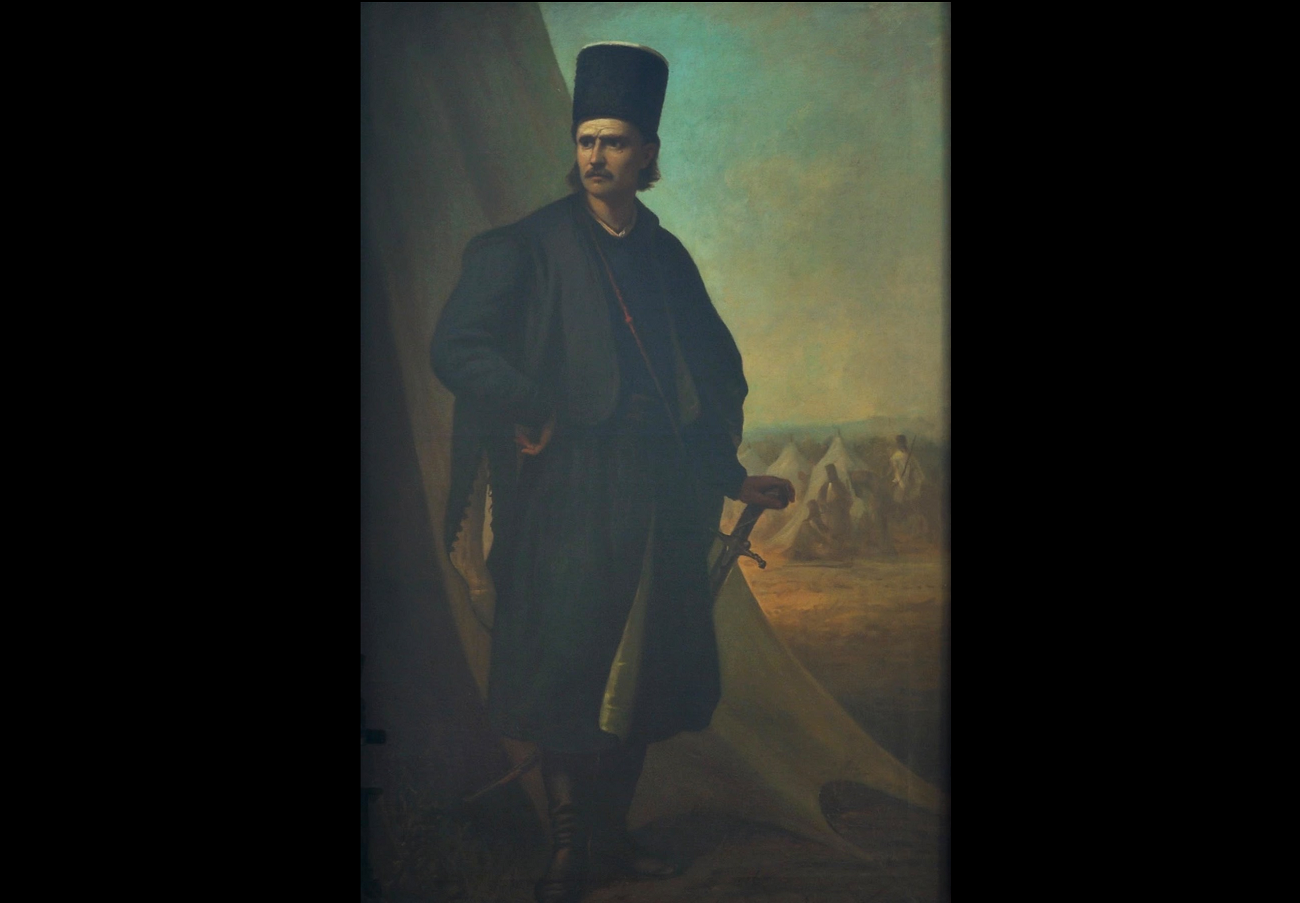
Tudor Vladimirescu (1873), by Theodor Aman, oil on canvas, National Museum of Romanian History
How did you structure the narrative of the exhibition, balancing depictions of war and peace?
Dragoș Vărșăndan: Although the exhibition begins with Trajan’s Column—with the war from which we were born—and concludes with how we relate today to the threat of war and its horrors, I have not constructed a chronology in the strictly historical sense, but rather a trajectory of meaning: how the relationship between violence and its legitimization has changed over the centuries. I was more interested in representations of war in Romanian art—the more or less overt and triumphant propaganda, the national mythology we began to construct starting in the 19th century in Romanian visual art, the traumas of the Great War captured by the artists of the time, who were directly involved in it—but also the way in which peace, which we came to truly cherish only after two world wars, was ideologically appropriated by the communist regime and then used to legitimize another kind of war—the Cold War—or the class struggle that very quickly turned into a struggle of the state against its own people. Consequently, the narrative does not necessarily follow the chronological order of historical events, but rather explores how the art of each era viewed war and how rare and fragile peace was in the way we have represented history.
How many works are included in *War and Peace*, and what are the key points of this presentation?
Dragoș Vărșăndan: The exhibition brings together over 200 works from the collections of several partner institutions—the National Museum of Romanian History, the National Museum of Art of Romania, the Library of the Romanian Academy, other museums across the country, as well as private collections. The major highlights include Trajan’s Column, as a symbolic starting point; 19th-century battle paintings; art and photography from the Great War, propaganda imagery from the communist era, and, finally, a section dedicated to how we view and understand the conflict in recent decades.
To what extent did Romanian artists glorify war, and to what extent did they view it critically?
Dragoș Vărșăndan: There is a very clear generational divide. The 19th-century painters—from Theodor Aman and Constantin Lecca to Sava Henția and Nicolae Grigorescu—do not document, but rather construct a mythology: war is a visual poem dedicated to the national destiny, to the great heroes of our young nation; violence is partially obscured—there are no victims, only heroes. The Great War generation completely breaks this mold. Artists who lived in the trenches no longer paint triumph, but rather the sadness and futility of death. Then the camera dryly records an unfiltered reality. It is a moment of change in European thought; the shock of the Great War is so great that artists consider it downright immoral to continue painting heroism when the traumas of a war that resembles more of a meat grinder are so profound.
At the end of several catastrophic decades, the focus shifts from history to life. Pacifism and existentialist thought affirm the irreducible value of the individual and reject any abstract justification for violence, and this new perspective is also reflected in the Romanian art of that era.
How does the meaning of these works change when viewed in the context of contemporary conflicts?
Dragoș Vărșăndan: Trajan’s Column , as we see it today, is no longer just an ancient monument or a historiographical document, but also a case study of how a narrative of power is constructed—something we immediately recognize in today’s information warfare. Twentieth-century art and the way Romanian artists depicted war take on a disturbing relevance today, when images of the war in Ukraine—which is so close—and endless discussions about armament and the nuclear threat are the order of the day. I invite you to see just how relevant the art of the last century remains. This, if you will, is also the profound meaning of this exhibition: to offer visitors a reflective perspective on these primordial states—war and peace—which have existed since the beginning of time and will likely continue to exist on this earth as long as the earth itself remains.
Which omissions are just as important as the works on display? Are there any perspectives or historical episodes that are underrepresented in Romanian art?
Dragoș Vărșăndan: Broadly speaking , Romanian art has documented leaders and battles far more extensively than the experiences of civilians, women, or those on the “wrong” side of history. Furthermore, communist repression, for example, is almost entirely absent, for reasons that are easy to understand. But the absence of these perspectives often says just as much about the works in the exhibition. The works in the section dedicated to communist propaganda and the way peace was hyperbolized in those days take on downright ridiculous overtones, precisely because of the lack of a reality check—the complete disregard for the reality of those days, which was, in fact, anything but peaceful.
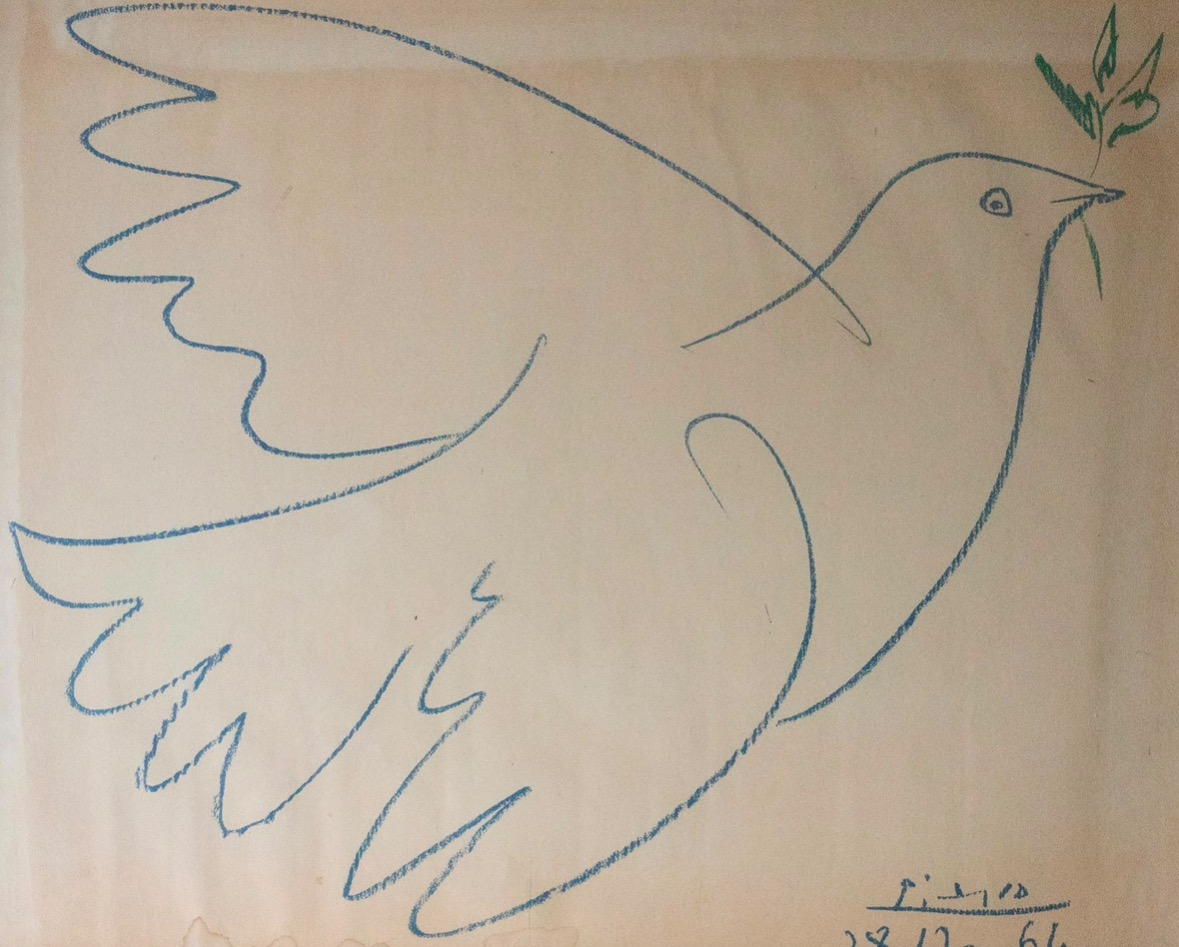
The Blue Dove, lithograph by Pablo Picasso, 1961, National Museum of Transylvanian History
Is peace harder to depict artistically than violence? Why?
Dragoș Vărșăndan: I think so. War offers action, conflict, an adversary, and a visible stake—the ingredients of a powerful image. Peace, on the other hand, is difficult to illustrate other than through the absence of war, the absence of conflict. That is why it was so easily co-opted ideologically—because, being difficult to represent in and of itself, it has always been tempting to fill it with symbols of power, to portray it triumphantly, with slogans and symbols stripped of meaning, as happened during Ceaușescu’s “Golden Age.” Peace is a much more subtle concept and one that is harder to capture in a powerful image. But in this exhibition, you’ll also see works that manage to capture its depth, works that succeed in conveying a powerful message—especially for the future.
If an exhibition were organized a hundred years from now about the conflicts of the present, what kind of images do you think would define our era?
Dragoș Vărșăndan: I believe that the message of art, whatever form it may take, will always be a powerful one. Art, I believe, will always do the same thing: capture in an image, in a form, the spirit of an era—the traumas, anxieties, or hopes of that present moment. And I hope and believe that the art of past centuries will always be a subject worthy of our attention.
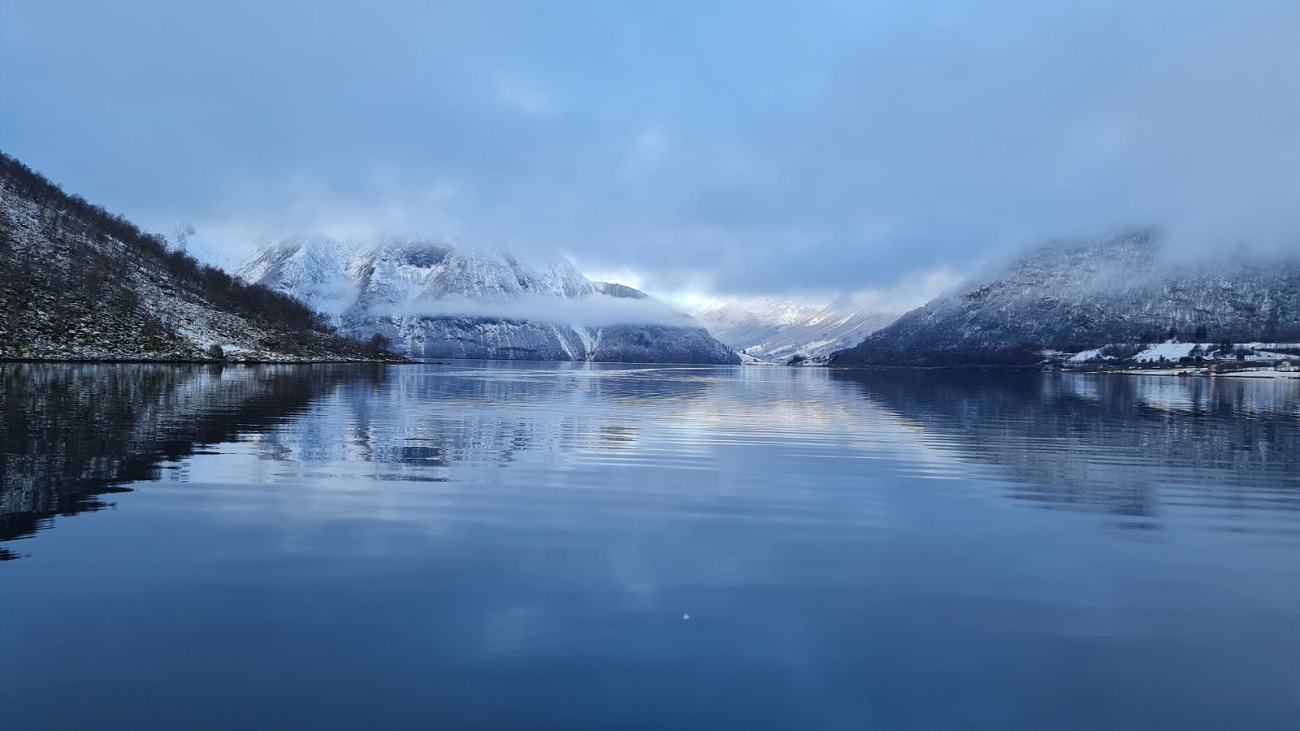
Art Safari is open at 13 Amzei Street from September 18 to December 20, 2026. The main exhibitions are “Brâncuși and His Muses,” curated by Doina Lemny; “War and Peace,” dedicated to the relationship between conflict and peace throughout history; “Pop Art: The World in Colors,” an exploration of the Pop Art movement from its origins to the present, and “Cristian Mungiu: Fjord, Photographs.”
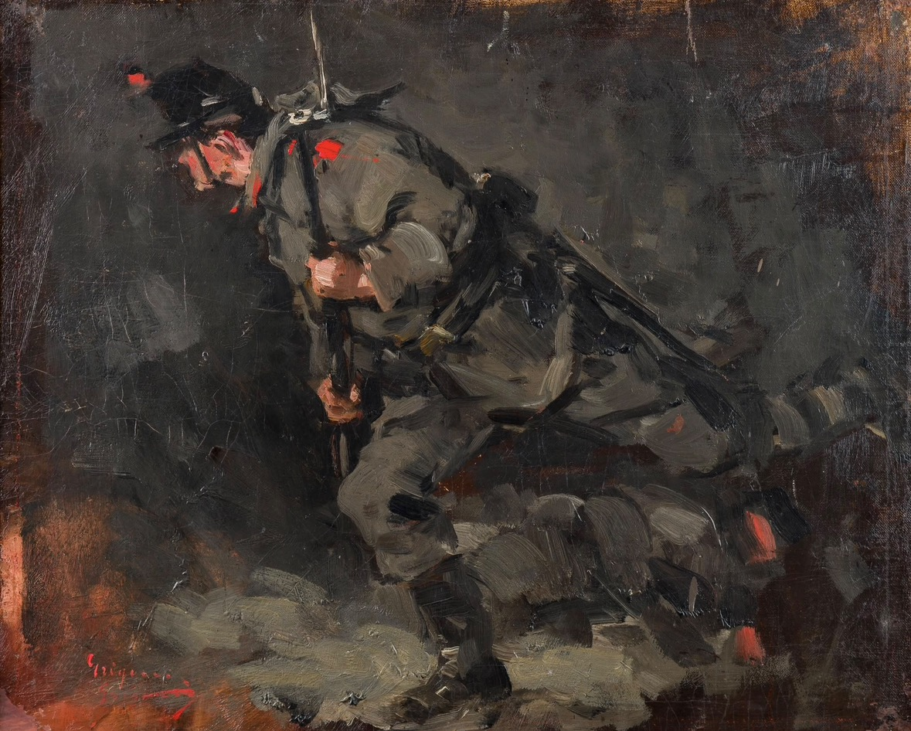
Main photo: *Study for the Attack at Smârdan*, by Nicolae Grigorescu, oil on canvas; Brukenthal National Museum